Bishop Emeritus Giuseppe Franzelli, of Lira Diocese dutring the commissioning of the Irrigation project
By Flavia Oyuu, Communications Office, Lira Diocese
NGETTA, LIRA DIOCESE – Lira Diocese has commissioned a solar-powered irrigation project at Ngetta aimed at enhancing agricultural production and ensuring a reliable water supply for diocesan institutions, in a move that underscores the Church’s commitment to sustainable development and self-reliance.
The project, sponsored by Bishop Emeritus Giuseppe Franzelli, of Lira Diocese, through the support of friends and benefactors from Italy, was implemented under the leadership of Fr. Polycarp Opio, Vicar for the Clergy of Lira Diocese, and Fr. Emmanuel Opio, Chancellor of the Diocese.
The irrigation system is expected to support the diocesan coffee and cocoa farm while also providing water to the students’ hostel at Uganda Martyrs University, Ngetta Campus.
Speaking during the blessing and commissioning of the project, Bishop Emeritus Franzelli described the initiative as a practical expression of faith through action and a demonstration that local communities can actively invest in their own development.
“This project is a sign and proof that our people and our Diocese can do something for themselves. We should not simply wait for assistance from outside, but invest in initiatives that can bear fruit and have a lasting impact,” he said.
The retired bishop expressed gratitude to all those who contributed to the realization of the project and prayed that the irrigation system would become a source of life, growth and development for the people of the Diocese.
“I ask God to bless this enterprise and make it a source of life, water, progress, growth and development for our people,” Bishop Franzelli added.
Part of the 27 acre diocesan farm in Ngetta
Fr. Desiderius Pule, Director of Caritas Lira and manager of the diocesan farm, said the project comes at a critical time as the Diocese seeks to safeguard its agricultural investments against the effects of prolonged dry spells.
He noted that the irrigation system will support approximately 27 acres of coffee plantations, comprising both established coffee gardens and newly planted seedlings.
“This represents a significant investment by the Diocese. The irrigation system and water pump will play a critical role in sustaining these plantations and supporting our long-term agricultural and development goals,” Fr. Pule said.
The project engineer, Mr. Obong Isaac, commended the Diocese and Caritas Lira for their trust and collaboration throughout the implementation process. He described the installation as a dual-purpose project designed to serve both the diocesan farm and the hostel facilities.
The commissioning of the irrigation scheme reflects Lira Diocese’s broader commitment to integrating pastoral ministry with practical development initiatives aimed at improving livelihoods, promoting environmental resilience and strengthening institutional sustainability.
Church leaders expressed hope that similar initiatives can be replicated across the Diocese to support communities facing the challenges of climate change and increasingly unpredictable rainfall patterns.
By Fr. Constanz Opiyo Commission of Doctrine, Lira Diocese
Dear readers,
As we continue our reflection on sacramentals in the life of the Church, it is important that we address a subject that often raises questions among the faithful: the use of holy oils. Many Christians are familiar with the sacred oils used in the sacraments, while others have encountered various devotional oils associated with particular saints. What is the difference between these oils? What does the Church teach regarding their use?
In this reflection, we shall examine the Holy Oils used in the Church’s sacramental life and consider the place of devotional oils within Catholic tradition.
There is widespread use of devotional oils among the faithful. There are such oils as the Oil of St. Michael, the Oil of St. Raphael, and the Oil of St. Joseph. What does the Church teach about these devotional oils? What do we learn from the tradition of the Church?
We can distinguish between two kinds of oils: the Holy Oils used for the conferral of the sacraments and devotional oils associated with certain saints.
1. Holy Oils
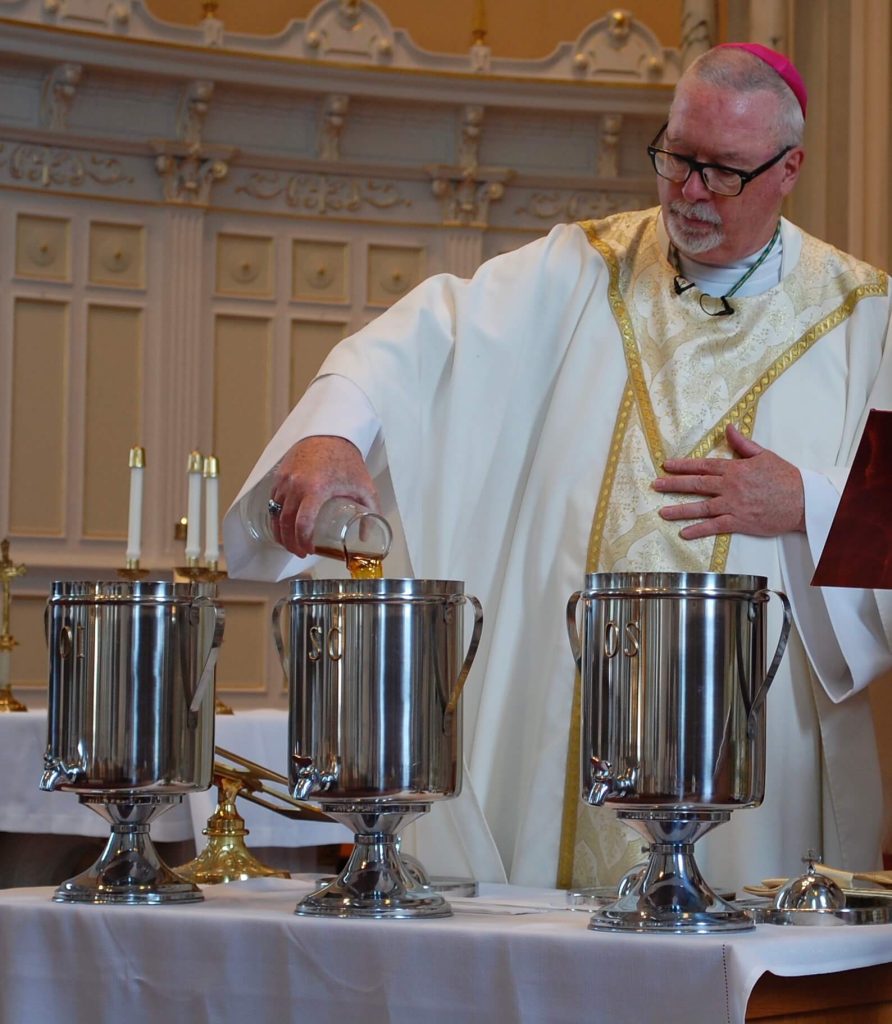
The Catholic tradition recognizes three oils that are blessed or consecrated by the bishop for specific sacramental purposes. These are: the Oil of Catechumens, known in Latin as Oleum Catechumenorum and abbreviated O.C.; the Oil of the Sick, known in Latin as Oleum Infirmorum and abbreviated O.I.; and the Sacred Chrism, known in Latin as Sanctum Chrisma and abbreviated S.C.
Sacred Chrism (S.C.)
Sacred Chrism is made from a mixture of olive oil and balsam (perfume), representing the fragrance of Christ and the gifts of the Holy Spirit. It is consecrated by the bishop during the Chrism Mass and is used to consecrate individuals, objects, and places for sacred use and service in the Church.
It is used in the administration of the Sacraments of Baptism, Confirmation, and Holy Orders, as well as in the dedication of altars and churches.
Oil of Catechumens (O.C.)
The Oil of Catechumens is made from pure olive oil and is used to strengthen catechumens with the faith needed to renounce evil and commit themselves to following Christ.
Oil of the Sick (O.I.)
The Oil of the Sick is made from pure olive oil and is used in the Sacrament of the Anointing of the Sick to bring healing, comfort, and strength to those who are seriously ill or nearing death.
The holy oils symbolize the outpouring of God’s abundant grace upon His people, the strength He grants them, and the seal of the Holy Spirit upon their lives. These oils must be treated with reverence and care and should never be used for non-sacramental purposes. They are ordinarily kept in the ambry, a special cabinet or shelf in the sacristy reserved for the sacred oils.
Where Do We Get the Holy Oils?
The holy oils are blessed or consecrated annually by the bishop during the Chrism Mass. Parish priests then receive them for use in their respective parishes throughout the year.
What Happens to the Old Oils?
When new oils are received, the old oils must be disposed of according to the norms prescribed by the Church. According to the Book of Blessings (No. 1127), holy oils should be burned reverently or buried in sacred ground. Old oils may only be used in cases of grave necessity (Canon 847 §1).
Who Administers the Sacred Oils?
The administration of the sacraments involving holy oils belongs to ordained ministers. The sacred oils are therefore not at the disposal of the lay faithful, since they are intended exclusively for sacramental use.
2. Oils of the Saints
Besides the three liturgical oils, there is widespread use of devotional oils among the faithful. These oils are traditionally associated with certain saints such as St. Nicholas, St. Philomena, and St. Walburga. This practice is almost as old as the Church itself.
From the earliest centuries of Christianity, believers used oils believed to have come into contact with the relics of saints, especially martyrs, seeking through their intercession spiritual benefits such as healing from bodily and spiritual ailments.
The oils of the saints, sometimes referred to as the Manna of the Saints, are not used because of any intrinsic power in themselves, but because of the spiritual benefits sought through the intercession of the saints with whom they are connected.
According to the classification of relics, oils associated with saints are generally regarded as third-class relics. First-class relics are the bodily remains of saints. Second-class relics are objects that belonged to or were used by saints. Third-class relics are objects that have been touched to a first- or second-class relic.
Some devotional oils are believed to have flowed from the relics of saints, while others are obtained from olive oil used in lamps burning before their shrines or statues.
The Catholic Encyclopedia records that:
“In the days of St. Paulinus of Nola (c. 431) the custom prevailed of pouring oil over the relics or reliquaries of martyrs and then gathering it in vases, sponges, or pieces of cloth. This oil, oleum martyris, was distributed among the faithful as a remedy against sickness.”
Likewise, St. Augustine, in The City of God (Book XXII), recounts instances in which miracles were attributed to the oil associated with St. Stephen. He documents several such occurrences, demonstrating the deep veneration of relics among Christians in the early centuries of the Church.
Church Teaching on the Use of Devotional Oils
The use of oils associated with saints continues today among many of the faithful, although such practices do not enjoy official liturgical approval from the Church. Consequently, when devotional oils are used, they belong strictly within the realm of private devotion.
A particular concern today is the growing influence of Pentecostal practices that promote various forms of so-called “anointing oil” which are foreign to the Catholic understanding of devotional oils. Such oils are often marketed under different names and sold at considerable prices, creating confusion among the faithful.
It is important to note that the Church has authorized only three sacred oils for sacramental use: the Sacred Chrism, the Oil of Catechumens, and the Oil of the Sick.
The use of devotional oils is therefore strictly private and falls under the category of sacramentals. Such oils should be blessed by a priest before use. It is not permitted for the lay faithful to anoint a sick person with devotional oil in a manner that could create confusion with the Sacrament of the Anointing of the Sick, whose administration is reserved to a priest.
As with all sacramentals, the faithful should remember that devotional oils are not magical substances. Their value lies in the prayer of the Church, the faith of the believer, and the intercession of the saints, not in any power inherent in the oil itself.
As we continue journeying together through this series, feel free to send in any questions you may have regarding the teachings of the Church on the Sacraments and sacramentals for clarification in future reflections.
Archbishop Wokorach Calls Christians to Become "Peacemakers, Not Peace Keapers at 20th GANAL Prayer Peace Week
At the 20th anniversary of the GANAL Provincial Prayer Peace Week in Lira, Archbishop Raphael p’Mony Wokorach challenged Christians to move beyond silence and passive coexistence, urging them instead to become active builders of reconciliation, justice, mercy, and lasting peace.
By Flavia Oyuu, Communications Office, Lira Diocese
The second day of the 20th GANAL Provincial Prayer Peace Week and Anniversary Celebrations at Lango College in Lira City was marked by a profound spiritual reflection delivered by Raphael p’Mony Wokorach under the theme “Spiritual and Moral Foundation for Peace.”
Drawing from Matthew 5:9, “Blessed are the peacemakers, for they shall be called children of God” and Psalm 85:10, the Archbishop delivered a deeply theological and socially reflective presentation that resonated with more than 400 pilgrims gathered from the four dioceses of the GANAL Ecclesiastical Province together with Kotido Diocese.
Held from 3rd to 8th May 2026 under the overall theme “Peace Be With You” (John 20:19), this year’s Prayer Peace Week carried special significance as the Church commemorated twenty years since the initiative was launched in January 2006 in the aftermath of Northern Uganda’s insurgency.
The annual gathering, first inaugurated by Cardinal Emmanuel Wamala, was born out of the urgent need for healing, forgiveness, reconciliation, and communal restoration following years of violence and displacement in Northern Uganda.
Today, although armed conflict has largely subsided, Church leaders say the region continues to suffer from the lingering wounds of war, including poverty, domestic violence, trauma, suicide, mistrust, mental breakdown, and insecurity caused by cattle rustling in Karamoja and surrounding areas.
In his presentation, Archbishop Wokorach warned against reducing peace to mere silence or the absence of violence.
“Jesus did not say, ‘Blessed are the peacekeepers.’ He said, ‘Blessed are the peacemakers,’” the Archbishop emphasized.
He observed that many societies mistake silence for peace while injustice, corruption, oppression, and fear continue beneath the surface.
Using the image of the “three wise monkeys” one refusing to see, another refusing to hear, and another refusing to speak the Archbishop cautioned that passive silence suffocates true peace rather than building it.
“A peacemaker is never passive,” he said.
The Archbishop also criticized modern approaches that focus only on compensation and legal settlements without addressing wounded hearts.
“True peace comes where reconciliation is attained,” he noted, adding that reconciliation requires metanoia a conversion of heart and mind.
Throughout his presentation, Archbishop Wokorach repeatedly stressed that peace is fundamentally a gift of God and cannot be separated from spiritual renewal.
Quoting St. Augustine’s famous words from The Confessions, he reminded the faithful:
“You have made us for Yourself, O Lord, and our hearts are restless until they rest in You.”
According to the Archbishop, modern humanity often seeks fulfillment in material success, wealth, achievements, or power while neglecting God, the true source of peace.
He challenged Christians to anchor their lives in God if they are to become authentic peacemakers in society.
The Archbishop further explored the biblical understanding of peace through the Hebrew concept of Shalom and the Greek idea of Eirene, both of which describe peace not merely as calmness, but as harmony, justice, wholeness, prosperity, friendship, and right relationship with God and neighbor.
“Peace is more than conflict resolution,” he said. “Peace is linked to justice, prosperity, mercy, and truth.”
Referencing the continued struggles in countries such as the Democratic Republic of Congo and South Sudan, Archbishop Wokorach observed that global institutions often prioritize “peacekeeping” while neglecting the deeper work of reconciliation and justice necessary for lasting peace.
The Archbishop also reflected extensively on Jesus’ relationship with the law, explaining how Christ fulfilled rather than abolished the law by placing mercy at its center.
Quoting Hosea 6:6 “I desire mercy, not sacrifice” he explained that mercy remains the very heart of God and the foundation upon which lasting peace must stand.
“We cannot understand the law without mercy. We cannot fulfill the law without mercy. We cannot know the heart of God without mercy,” he said.
In one of the most striking sections of his presentation, Archbishop Wokorach turned his attention to Uganda’s recent political climate following the general elections.
He called upon the nation to seek God’s forgiveness for what he described as moral failures during the campaign period.
The Archbishop condemned the misuse of God’s name in political rhetoric, where some leaders were equated to the Holy Trinity.
“Let the blasphemy of our time not become an internal scandal,” he warned.
He also lamented corruption, violence, injustice, and the worship of power over compassion.
“We worshipped force, not compassion,” he said. “People were hurt, people were killed, people were jailed.”
Calling for national conversion and moral renewal, the Archbishop urged Ugandans to allow God back into every sphere of society.
“Let God enter our Parliament, our homes, our banks, and even our barracks,” he appealed.
The reflections echoed the vision repeatedly emphasized throughout the week: that peace begins with reconciliation within the human heart before it can transform families, communities, nations, and the world.
Speaking earlier during an interview, John Baptist Odama described peace as “a treasure desired by every human person” and explained that the Prayer Peace Week was established to help communities recover spiritually and socially after the insurgency.
“We stand before God as sinful people and ask Him to help us not live in disorder among ourselves,” Archbishop Emeritus Odama said.
He emphasized that the initiative has always welcomed people across religions, tribes, and national boundaries, expressing a vision of “one humanity living in peace, promoting one another’s good, protecting one another, and journeying together.”
This year marked the second time Lira Diocese hosted the Prayer Peace Week celebrations.
As pilgrims continued with prayer, dialogue sessions, peace marches, and communal worship throughout the week, the message emerging from Lira was clear: peace cannot be reduced to political slogans or temporary calm, but must be rooted in truth, justice, mercy, reconciliation, and ultimately in God Himself.
“Peace be with you,” the Archbishop concluded, inviting Christians not only to speak about peace, but to live it with conviction.
Reflecting on the readings of the day, Bishop Wanok compared the mission of the sisters to that of St. Paul, who remained firm in faith amid opposition and suffering. He explained that although contemplative communities may appear hidden from the world, their spiritual contribution to the Church is immense.
By Flavia Oyuu, Communications Office, Lira Diocese
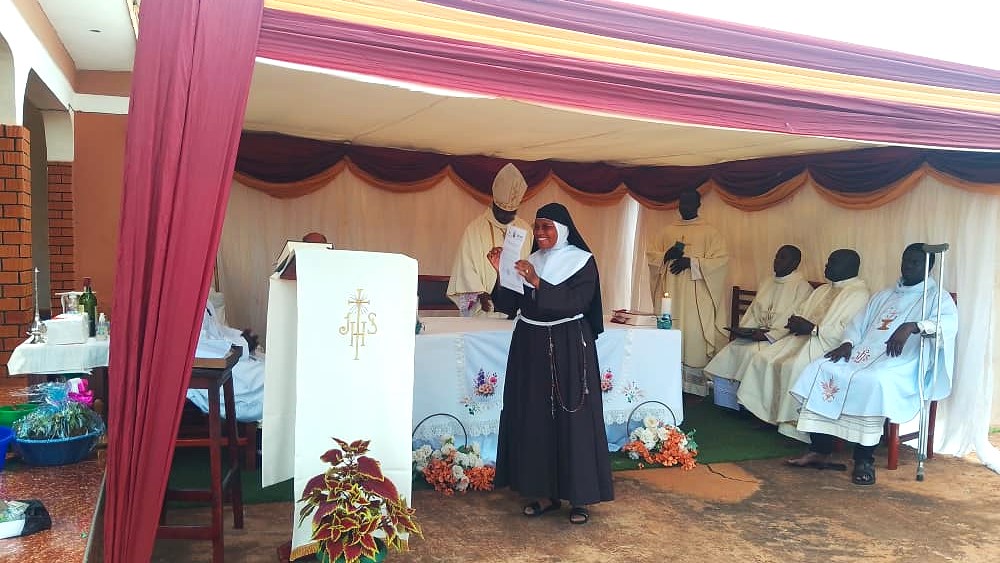
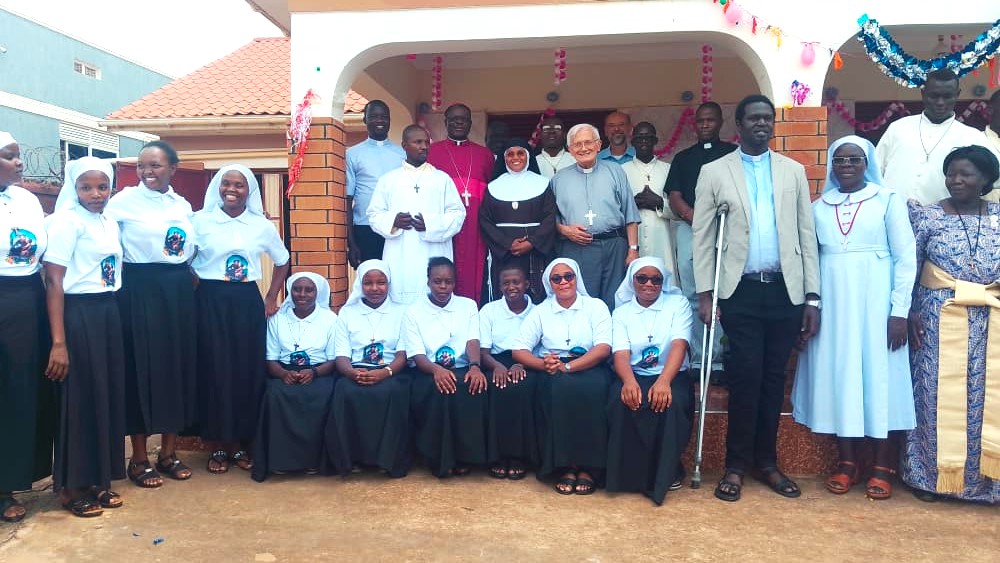
The Bishop of Lira Diocese, Rt Rev Sanctus Lino Wanok, has blessed a chapel for the Franciscans in Bar Ogole, Lira City West, describing the presence of the contemplative sisters in the Diocese as “a sign that the Lord is still calling, and still building up His Church.”
The chapel was blessed on Thursday, 21 May 2026, during a Eucharistic celebration attended by priests, religious sisters from different congregations, seminarians, and members of the lay faithful. Also, present was Bishop Emeritus Rt Rev Joseph Franzelli.
In his homily, Bishop Wanok emphasized the hidden yet powerful mission of the Poor Clares, noting that their vocation is rooted in prayer, silence, sacrifice, adoration, and joyful poverty.
“The Poor Clares do not seek visibility, applause, or power,” the Bishop said. “They choose a hidden life so that Christ may be more clearly visible.”
Reflecting on the readings of the day, Bishop Wanok compared the mission of the sisters to that of St. Paul, who remained firm in faith amid opposition and suffering. He explained that although contemplative communities may appear hidden from the world, their spiritual contribution to the Church is immense.
“Their life says to the Church: do not lose hope. We are behind you. The Lord is enough. March on,” he said.
The Bishop described the contemplative vocation as a witness of hope in a world marked by noise, greed, division, and restlessness. He noted that while the world may see silence and renunciation, God sees praise, worship, freedom, and fruitfulness.
Addressing two young women beginning their postulancy journey with the congregation, Bishop Wanok encouraged them to embrace the charism of Saint Clare of Assisi through poverty, contemplation, Eucharistic devotion, simplicity, fraternity, and trust in divine providence.
“In a noisy world, Clare chooses silence for the sake of prayer. In a greedy world, you choose poverty for the sake of freedom. In a divided world, you choose communion for the sake of peace,” he said.
The Bishop also highlighted the importance of contemplative communities in sustaining the mission of the Church through constant prayer for bishops, priests, families, the sick, vocations, and society.
“They stand before the tabernacle so that missionaries may have strength, families may persevere in peace, priests may be holy, and the Diocese may grow in faith and charity,” he said.
Bishop Wanok further praised the commitment and sacrifice of the sisters, revealing that despite arriving in the Diocese only about three months ago, they had already begun establishing themselves with remarkable determination.
“We looked and there was no place to put them,” he recalled. “Then all of a sudden they arrived and said, ‘Any place, we shall enter and begin our duty. We do not need comfort.’”
He commended the sisters for sustaining themselves through their own work and sacrifices as they continue introducing the charism of the Poor Clares to the people of Lira Diocese.
The Bishop described the newly blessed chapel as “a house of prayer and a school of silence,” urging the faithful to rediscover reverence for the presence of Christ in the Eucharist amid the distractions of modern life.
“For us bishops, this celebration reminds us that Episcopal ministry needs a lot of prayer,” he said. “The burden is heavy, but no bishop works alone.”
Speaking during the vote of thanks, Mother Superior Hellen Ngami Muthembwa expressed gratitude to Bishop Wanok for supporting the sisters and accompanying them in their journey of discernment in the Diocese.
“Your generosity, thoughtfulness, and almsgiving have truly made a difference in our life as contemplative nuns,” she said. “Your willingness to walk alongside us on this journey of discernment means a lot to us more than words can express.”
Mother Hellen praised the Bishop’s commitment to peace and pastoral service, describing him as a shepherd who preaches “with actions more than words.”
“You have showed us true peace cannot be kept by force; it can only be achieved by understanding,” she said.
Addressing the new postulants, she urged them to remain humble, patient, prayerful, and faithful to the Franciscan charism they had embraced.
“As Franciscans, we are instruments of peace,” she said, invoking the prayer of Saint Francis of Assisi: “Lord, make me an instrument of your peace.”
The arrival of the Poor Clares in Lira City marks a significant step in the growth of contemplative religious life within the Diocese, where many faithful are still learning about the mission and spirituality of the order.
Bishop Wanok concluded by praying that the sisters’ hidden life of prayer would strengthen unity within the Church and become a source of grace for the Diocese and beyond.
“May your joy be your witness, your poverty be your freedom, and your silence be your song of praise before the Lord,” he said.
The Church teaches that sacramentals are sacred signs which prepare the faithful to receive grace and dispose them to cooperate with it. They are therefore not to be treated as magical objects or instruments of superstition, but rather as visible signs through which believers express their faith and seek God’s blessings and protection.
Fr. Constanz Opiyo
Commission of Doctrine, Lira Diocese
As we continue with our series on sacramentals in the life of the Church, today we reflect on two common elements frequently presented by the faithful for blessing: water and salt. Many Christians make use of blessed water and salt in their homes and daily prayers, yet there is often need for deeper understanding regarding their meaning and proper use within the Catholic faith.
The Church teaches that sacramentals are sacred signs which prepare the faithful to receive grace and dispose them to cooperate with it. They are therefore not to be treated as magical objects or instruments of superstition, but rather as visible signs through which believers express their faith and seek God’s blessings and protection.
Priests and deacons often encounter lay faithful requesting the blessing of water or salt for personal use. While this demonstrates a reawakening of faith among the people, there is also need to ensure that the faithful properly understand the meaning and use of these sacramentals.
1. Water
When blessed by a priest or deacon, water becomes a sacramental that acts as a visible and tangible sign of inward grace. It signifies purification, protection, and the believer’s baptismal commitment. Blessed water is used to bless people, objects, and places through sprinkling.
Theological Foundation for the Use of Holy Water
The Catechism of the Catholic Church acknowledges that “Since the beginning of the world, water, so humble and wonderful a creature, has been the source of life and fruitfulness” (CCC 1218). Sacred Scripture contains many texts that underscore the significance of water in the economy of salvation.
At the beginning of creation, the Spirit of God hovered over the waters, making them the wellspring of holiness.
During the time of Noah, the flood destroyed the evil and wickedness that had corrupted humanity, while preserving Noah and his family as the beginning of a renewed creation.
The crossing of the Red Sea, which liberated Israel from slavery in Egypt, prefigured the liberation brought about through the waters of Baptism.
In crossing the Jordan River, the People of God entered the land promised to Abraham’s descendants, an image of the eternal inheritance granted through the waters of Baptism. In John 3:5, Jesus affirms that no one can enter the Kingdom of God without being born of water and the Spirit.
In the vision of Ezekiel, water gushes forth from the sanctuary, bringing abundance of life wherever it flows.
Christ himself descended into the waters of the Jordan to be baptised, and the Spirit of God came upon him.
From the side of Christ on the Cross flowed blood and water, which the Fathers of the Church interpreted as signs of the Sacraments of the Church: water symbolising Baptism and blood symbolising the Eucharist.
These and many other examples demonstrate the significance of water in the economy of salvation. Water therefore remains a sign and symbol of purification, regeneration, and protection.
The Mind of the Church
The different prayers for the blessing of water offer important insight into the meaning and use of holy water. Below are some formulas that may be used by an ordained minister in blessing water.
First Formula
Almighty ever-living God, who willed that through water, the fountain of life and the source of purification, even souls should be cleansed and receive the gift of eternal life; be pleased, we pray, to + bless this water, by which we seek protection on this your day, O Lord. Renew the living spring of your grace within us and grant that by this water we may be defended from all ills of spirit and body, and so approach you with hearts made clean and worthily receive your salvation. Through Christ our Lord. R. Amen.
In this prayer, water is presented as the fountain of life and source of purification capable of cleansing souls for eternal life. God is invoked to grant protection, renew the living spring of grace within the faithful, and defend them from spiritual and bodily harm.
Second Formula
Almighty Lord and God, who are the source and origin of all life, whether of body or soul, we ask you to + bless this water, which we use in confidence to implore forgiveness for our sins and to obtain the protection of your grace against all illness and every snare of the enemy. Grant, O Lord, in your mercy, that living waters may always spring up for our salvation, and so may we approach you with a pure heart and avoid all danger to body and soul. Through Christ our Lord. R. Amen.
This second formula highlights another grace received through holy water, namely the forgiveness of sins, besides protection against illness and the snares of the enemy. Through the waters of Baptism, the faithful receive forgiveness of Original Sin and all personal sins. Water thus becomes a sign of spiritual cleansing.
Third Formula (Used During Easter Time)
Lord our God, in your mercy be present to your people’s prayers, and, for us who recall the wondrous work of our creation and the still greater work of our redemption, graciously + bless this water. For you created water to make the fields fruitful and to refresh and cleanse our bodies. You also made water the instrument of your mercy: for through water you freed your people from slavery and quenched their thirst in the desert; through water the Prophets proclaimed the new covenant you were to enter upon with the human race; and last of all, through water, which Christ made holy in the Jordan, you have renewed our corrupted nature in the bath of regeneration.
Therefore, may this water be for us a memorial of the Baptism we have received, and grant that we may share in the gladness of our brothers and sisters who at Easter have received their Baptism. Through Christ our Lord. R. Amen.
This formula retraces the significance of water in the history of salvation and especially emphasises the grace of Baptism received through it.
Who Can Bless Water for Use?
Only ordained ministers can bless water for use as a sacramental. Nevertheless, in Lira Diocese, for pastoral reasons, catechists have been permitted to pray over water for use in homes where an ordained minister may not be readily available.
How Do We Use Holy Water?
Water is first used in Baptism as a sign of washing and rebirth. Outside Baptism, it is used to bless people, places, and objects through sprinkling. In many churches, holy water fonts are placed at the entrances so that the faithful may bless themselves as they enter or leave the church. Though less common in newer church constructions, these fonts remain important reminders of Baptism.
The faithful may also use holy water in their homes while reciting approved prayers. Water may also be mixed with salt, especially in prayers associated with exorcism.
2. Salt
From ancient times, salt was considered a precious commodity and was sometimes monopolised by royalty in Egypt and Persia. Roman soldiers were partly paid with packets of salt, from which the term “salary” is derived. Because of its value, the people of Israel regarded salt as a fitting offering to God in what Scripture calls a “covenant of salt” (cf. Leviticus 2:13; Numbers 18:19; 2 Chronicles 13:5). The covenant of salt symbolised preservation, purity, and permanence.
Salt was also used in sacrifice (Ezekiel 43:24) and in covenant meals (Genesis 31:54).
Salt possesses two principal properties: preservation and flavouring. Jesus refers to these qualities when he says to his disciples, “Have salt in yourselves and be at peace with one another” (Mark 9:50), meaning that they should preserve within themselves the qualities that make them a blessing to others.
In Matthew 5:13, Jesus calls his disciples “the salt of the earth,” inviting them to resist corruption and to give flavour to the world through the Gospel they have received. The Gospel, as Pope Francis notes in Evangelii Gaudium, is Good News that brings joy to a world burdened by suffering and evil. Christians are therefore called to radiate this joy in their daily lives.
Besides preserving and flavouring, salt also purifies. This is seen in the miracle of Elisha (2 Kings 2:20–21), where the prophet used salt to purify contaminated water. From the sacramental point of view, salt is therefore seen as a sign of purification and protection from evil, hence its use in prayers of exorcism. In the older rite of Baptism, a small quantity of salt was placed on the tongue of the person being baptised.
Salt is therefore used as a sacramental. Any amount of salt may be presented to a priest for blessing using the approved prayer from the Sacramentary. The faithful must avoid using blessed salt in a superstitious manner, but rather see in it a sign of God’s grace at work through the prayer of the Church.
Prayer for the Blessing of Salt
Almighty God, we ask you to bless this salt, as once you blessed the salt scattered over the water by the prophet Elisha. Wherever this salt (and water) is sprinkled, drive away the power of evil, and protect us always by the presence of your Holy Spirit. Grant this through Christ our Lord. Amen.
This prayer invokes God to drive away evil and grant protection through the use of blessed salt. The faithful may use blessed salt in their homes by sprinkling it in rooms or other places while praying for peace and protection from evil.
It is important to emphasise once again that blessed salt is not a “good luck charm” and should never be treated as magic. Its effectiveness comes from the prayer of the Church and the faith of believers, not from any power in the salt itself.
As we continue journeying together through this series, feel free to send in any questions you may have regarding the teachings of the Church on the Sacraments and sacramentals for clarification in future reflections.
 English
 Arabic
 Chinese (Simplified)
 Dutch
 French
 German
 Italian
 Portuguese
 Russian
 Spanish




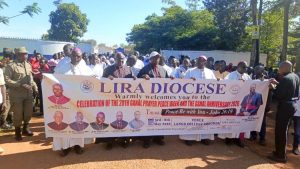 At the 20th anniversary of the GANAL Provincial Prayer Peace Week in Lira, Archbishop Raphael p’Mony Wokorach challenged Christians to move beyond silence and passive coexistence, urging them instead to become active builders of reconciliation, justice, mercy, and lasting peace.