Rt Rev Joseph Franzelli, Bishop Emeritus Lira Diocese
“God wants His children to be healthy and live a good life,” Bishop Franzelli said. “Spreading the Word of God and the Kingdom of God implies also taking care of sick people, for them to experience that God is not far away but is there with them.”
By Flavia Oyuu, Communications Office, Lira Diocese
At the soft glow of candlelight inside Uganda Martyrs Cathedral, Christians of Lira Catholic Diocese joined the rest of the world on Sunday, 17 May 2026, to remember lives lost to HIV/AIDS and renew the call for compassion, awareness, and hope.
The diocesan commemoration of the International HIV/AIDS Candlelight Memorial was organized by the Diocese’s HIV/AIDS Focal Office in conjunction with the Uganda AIDS Commission during the 9:00 a.m. Mass attended by approximately 1,200–1,400 faithful.
Presiding over the Eucharistic celebration and candle-lighting ceremony was Rt Rev Joseph Franzelli, who reminded Christians that caring for the sick is part of the Gospel mission entrusted to the Church.
“God wants His children to be healthy and live a good life,” Bishop Franzelli said. “Spreading the Word of God and the Kingdom of God implies also taking care of sick people, for them to experience that God is not far away but is there with them.”
The memorial formed part of the global observance held annually in May to honor those who have died of HIV/AIDS and to stand in solidarity with people living with the virus. National celebrations in Uganda were held in Kampala on 19 May under the theme: “Ending HIV by 2030: Embracing the Role of Women.”
Inside the cathedral, women wearing red ribbons pinned to their chests walked prayerfully toward the pulpit as names of deceased persons were remembered in solemn reflection. In a deeply symbolic moment, Bishop Franzelli lit a candle from which women leaders present lit their own candles while prayers were offered for the souls lost to the pandemic.
Among those present was Josephine Omara Olili, the Resident District Commissioner of Ngora District, representing women leaders and government officials at the memorial.
Speaking during the commemoration, Lira City HIV/AIDS Focal Person Hillary Okello described the memorial as a global moment of remembrance and renewed commitment in the fight against HIV/AIDS.
“This month is a very memorable month,” he said. “The World Health Organization has chosen to remember those who lost their lives to the HIV/AIDS pandemic, and we are all expected at least to light a candle in memory of those who have lost their lives.”
Okello noted that although Uganda has made significant progress over the years, new infections remain a serious concern, especially among women and young girls.
“Lira City alone is having 350 new infections, and the majority of these are still women and young girls,” he explained.
According to Okello, Uganda currently has an HIV prevalence rate of 5.2%, while more than 20,000 people continue to die annually from HIV-related illnesses despite advancements in treatment and prevention.
He emphasized Uganda’s commitment to the global 95-95-95 targets, which aim to ensure that 95% of people know their HIV status, 95% of those diagnosed begin treatment, and 95% of those on treatment achieve viral suppression.
“When they are suppressed, the chances of transmitting the disease become much more limited,” he said.
Rt Rev Franzelli flanked by women holding lit candles in commemoration of lives lost to HIV/AIDS
The Diocesan HIV/AIDS Focal Person, Dina Apio, said the Church continues to play a vital role in combating stigma and mobilizing communities toward prevention and care.
“As Christians, we stand in solidarity with the people living with HIV in our midst,” she said.
Apio highlighted the disproportionate burden HIV/AIDS continues to place on women, pointing to domestic violence, harmful cultural practices, poverty, and limited access to treatment as major contributing factors.
“When you look at the prevalence rates, we have more women suffering from the disease or infected than the men,” she explained. “Nationally, we are talking about 750,000 women out of the 1.5 million people living with HIV/AIDS.”
She further revealed that the Lango sub-region currently has approximately 96,200 people living with HIV/AIDS, despite recent improvements in prevalence rates within Lira City.
“Much as our recent statistics indicate that we have reduced prevalence from 12% in Lira City to 9%, there is still a call for more action,” she said.
The diocesan memorial also included free HIV testing and counselling services, as well as sickle-cell testing and counselling, offered to participants after Mass as part of the Church’s pastoral and health outreach.
For many who attended, the candlelight memorial was more than an event. It was a moment of prayer, remembrance, healing, and renewed determination to end stigma while restoring hope to affected families and communities.
As candles flickered across the cathedral, the message remained clear: the fight against HIV/AIDS is not only medical, but also spiritual, social, and deeply human, a mission that calls the Church, government, health workers, and communities to walk together in compassion and hope.
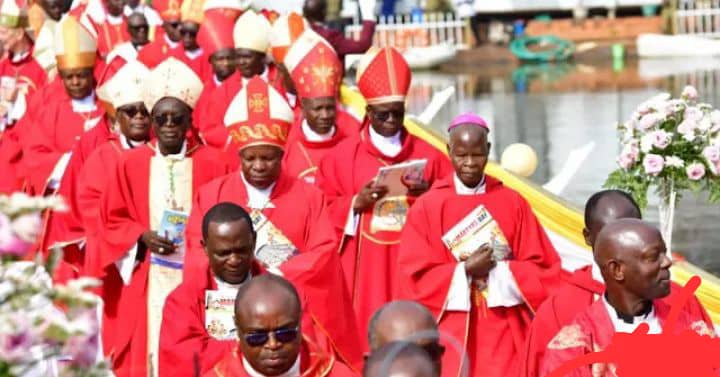
Rt Rev Sanctus Lino Wanok Bishop of Lira Diocese and Rt Rev Joseph Franzelli, Bishop Emeritus of Lira Diocese in a procession at the Uganda Martyrs Shrine, Namugongo on 3rd June, 2025
Fr Isaac Ojok, Communications Office, Lira Diocese
The Uganda Episcopal Conference has issued pastoral guidance to Catholics after the government postponed the national Uganda Martyrs Day celebrations at Namugongo, originally set for June 3, 2026. The postponement was made due to the threat of an Ebola virus outbreak in neighboring Democratic Republic of Congo.
In a press release dated Monday, May 18, 2026, and signed by Rt. Rev. Joseph Antony Zziwa, Chairman of the Uganda Episcopal Conference and Bishop of Kiyinda-Mityana Diocese, the Conference said the commemoration of the Uganda Martyrs remains “a profound witness of faith, courage, fidelity to Christ, and steadfast commitment to Christian values,” even without the national gathering at Namugongo.
Bishops are encouraging dioceses and parishes to mark the day locally under the guidance of the Diocesan Bishop and in line with directives from government authorities. The faithful have also been asked to join in prayers for the nation, health workers, and all affected by the circumstances that led to the postponement.
Pilgrims Begin Returning Home
Following the announcement, reports from several dioceses indicate that pilgrims who were already traveling to Namugongo have begun returning to their home areas. Pilgrims from Lira Diocese are among those reported to be making their way back and are expected to join local commemorations instead.
The Conference urged all Catholics to follow guidelines from the Government and the Ministry of Health, and called on media institutions to provide adequate coverage of the Ebola situation.
“We invite all the faithful to remain calm, prayerful, united, and hopeful,” the statement read. “The witness of the Uganda Martyrs continues to inspire the Church and the nation, reminding us that true faith is lived daily through love, sacrifice, truth, and fidelity to God.”
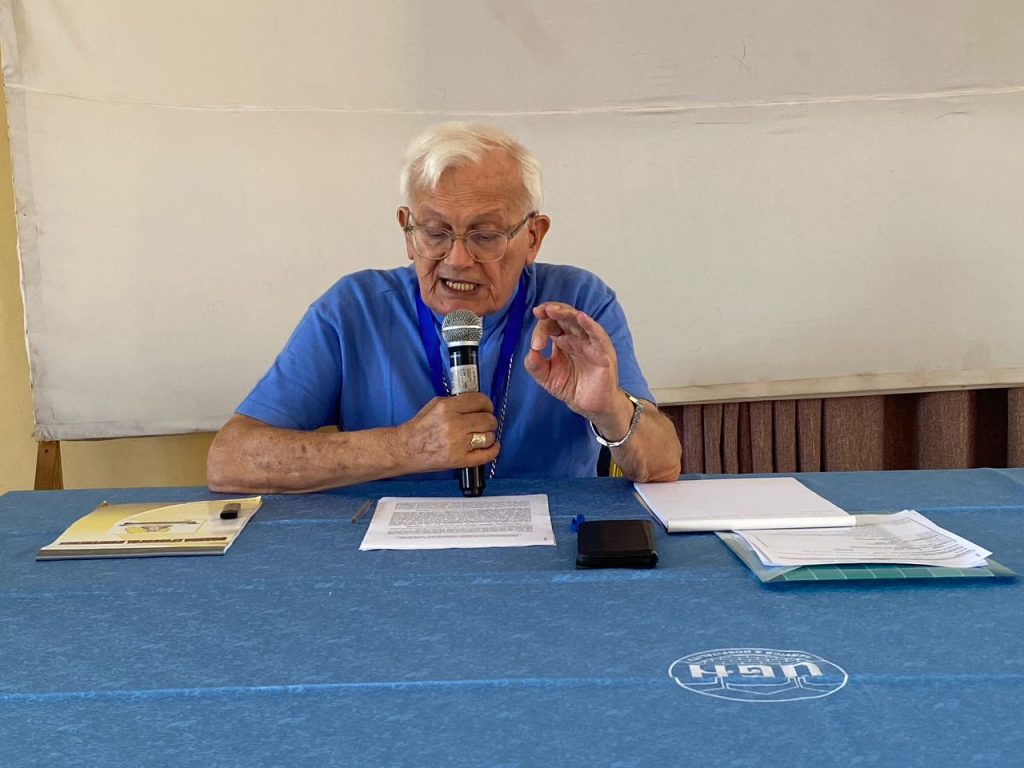
Rt. Rev. Joseph Franzelli, Bishop Emeritus of Lira Diocese and Chairperson for Social Communications
The annual Communications Week, held ahead of the World Communications Day celebrations, brings together Church communicators to reflect on the Pope’s message and its relevance to pastoral communication in Uganda. This year’s gathering focused on the growing influence of Artificial Intelligence (AI) and its implications for human communication.
By Flavia Oyuu, Communications Office, Lira Diocese
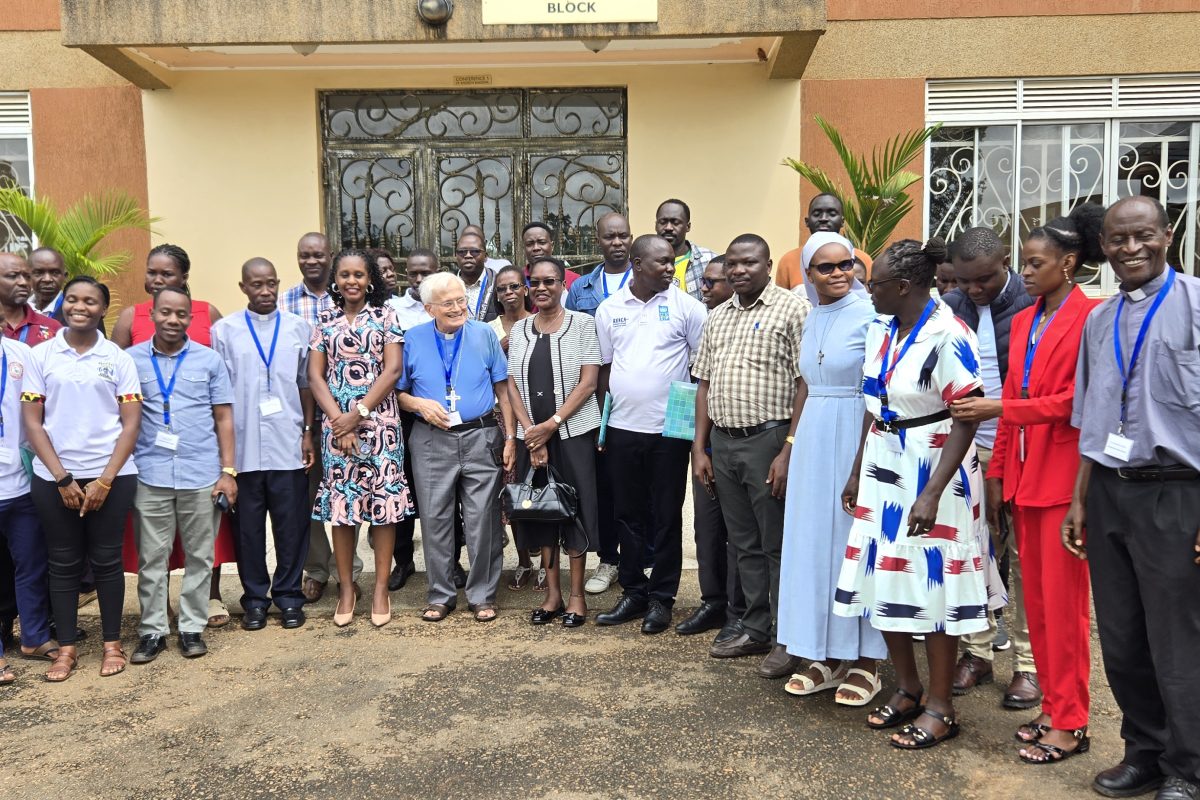
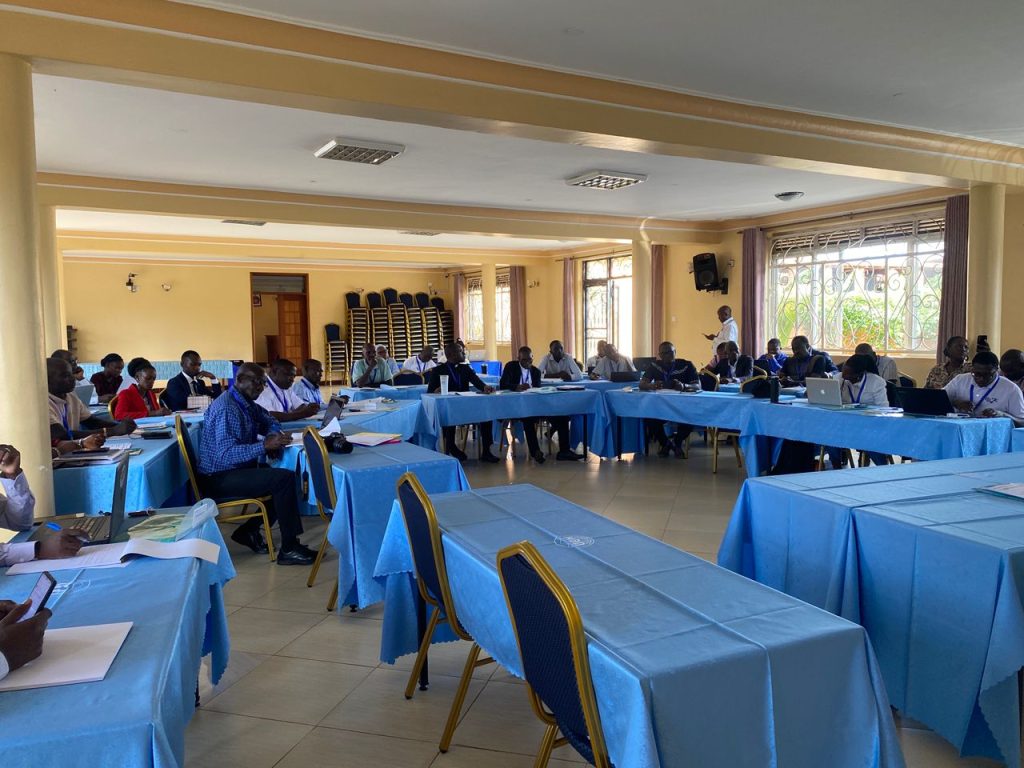
ULRIKA, Uganda – April 21–26, 2026 – Catholic communicators from all 19 dioceses of Uganda gathered at Ulrika Guest House for the National Communications Week workshop, where Rt. Rev. Joseph Franzelli, Bishop Emeritus of Lira Diocese and Chairperson for Social Communications at the Uganda Episcopal Conference, reflected deeply on the Holy Father’s message for World Communications Day titled “Preserving Human Voices and Faces.”
The annual Communications Week, held ahead of the World Communications Day celebrations, brings together Church communicators to reflect on the Pope’s message and its relevance to pastoral communication in Uganda. This year’s gathering focused on the growing influence of Artificial Intelligence (AI) and its implications for human communication.
Speaking to the participants, Bishop Franzelli emphasized that the purpose of the workshop is not only to study the Pope’s message but also to understand it deeply and translate it into local pastoral contexts.
“This Communication Week is meant to make us aware of different aspects of communication, as the Pope enlightens us each year on a particular dimension,” he said. “We are called to reflect, understand, and eventually go back to our dioceses to convey the same message in a way that speaks to our people.”
He stressed the importance of unity in communication within the Church, noting that communicators are called to work in synodality, together, under the guidance of the Holy Father.
“We must work in the same direction under the guidance of Peter, who for us today is Pope Leo XIV,” he added.
Preserving Human Identity in a Digital Age
Reflecting on the theme “Preserving Human Voices and Faces,” Bishop Franzelli highlighted the uniqueness and sacredness of human identity.
“Our faces and voices are unique because they reveal who we are,” he said. “They are not just physical features, but expressions of our identity, and for believers, they are sacred because we are created in the image and likeness of God.”
He reminded participants that God is a communicating God who revealed Himself through creation, prophets, and ultimately through Jesus Christ, the Word made flesh with a human face and voice.
“This is the gift we are called to receive, live, and communicate,” he said.
Artificial Intelligence: Opportunity and Risk
Bishop Franzelli acknowledged the benefits of Artificial Intelligence in modern communication but warned of its risks if not properly understood and guided.
The Pope’s message, he explained, appreciates technological progress while cautioning against its negative impact on human relationships and authentic communication.
“The challenge is not only technological but anthropological,” he said. “It touches our understanding of what it means to be human, created in God’s image.”
He warned that over-reliance on AI could weaken critical thinking, creativity, and personal responsibility.
“When we allow machines to think for us, we risk becoming passive consumers of ideas we never created,” he noted. “Even simple reasoning is being replaced by quick answers from devices, and this weakens our ability to think and create.”
Risk of a ‘World of Mirrors’
The Bishop further cautioned against what he described as a “world of mirrors,” where people interact more with digital images than with real human beings.
“Communication is an encounter between persons,” he said. “But today, we risk living in a world where we only see images and never truly meet people.”
He also raised concern about bias in digital systems, noting that algorithms are shaped by the values and interests of their creators, which may influence how information is presented.
“This can subtly shape our worldview and even normalize injustice,” he warned.
Call for Discernment and Responsibility
While acknowledging the inevitability of digital innovation, Bishop Franzelli urged communicators to approach Artificial Intelligence with discernment and responsibility.
“The task before us is not to stop technological development, but to guide it wisely,” he said. “AI must remain an ally, not a master.”
He outlined three guiding principles for responsible engagement with technology: responsibility, cooperation, and education.
“Each of us has a responsibility to contribute to truth and integrity in communication,” he emphasized. “No one is exempt from this duty.”
Conclusion
The Communications Week workshop concluded with a renewed call for Catholic communicators to safeguard human dignity in the rapidly evolving digital landscape.
As the Church continues to engage with emerging technologies, Bishop Franzelli’s message underscored the enduring importance of authentic human connection, truth, and discernment in communication ministry.
Rt. Rev. Sanctus Lino Wanok at St Paul Catholic Parish Aboke on Good Shepherd Sunday
In a homily delivered to the congregation and the wider Christian community, the Rt. Rev. Sanctus Lino Wanok emphasized the importance of listening to the voice of Christ, the Good Shepherd, amid the many competing influences in today’s world.
By Fr. Isaac Ojok, Communications Office, Lira Diocese
The celebration of Good Shepherd Sunday was held at St Paul Catholic Parish Aboke on 26 April 2026 where Christians participated in the Eucharistic celebration of Fourth Sunday of Easter, also known as Good Shepherd Sunday or Vocation Sunday, with a strong message directed especially to young people on discerning God’s call in their lives.
In a homily delivered to the congregation and the wider Christian community, the Rt. Rev. Sanctus Lino Wanok emphasized the importance of listening to the voice of Christ, the Good Shepherd, amid the many competing influences in today’s world.
Quoting the Gospel message, Bishop Wanok reminded the congregation that, “The sheep hear his voice, he calls his own by name… and they follow him.” He challenged the faithful to reflect deeply on whether they truly hear and follow Christ’s voice.
The Bishop highlighted that every vocation begins with an inner question, echoing the words of the early Christians: “What are we to do?”
He noted that such moments of restlessness, particularly among young people, are often signs of God’s invitation. “A vocation begins with conversion, a change of direction,” he said, urging the youth not to ignore the deeper questions about purpose and calling.
Addressing modern challenges, Bishop Wanok warned against misleading influences such as peer pressure, social media, and the pursuit of quick wealth. He cautioned that not every voice leads to life, adding that some paths can ultimately “destroy dignity, confuse identity, and take away the future.”
He encouraged young people to cultivate discernment through prayer, silence, Scripture, and guidance from the Church in order to recognize the authentic voice of Christ.
In a message of hope, the Bishop reassured those who feel lost or discouraged, saying that God’s call is not reserved for the perfect. “You had gone astray like sheep, but now you have returned to the shepherd,” he quoted, emphasizing that it is always possible to return and begin anew.
Bishop Wanok also called on families and the wider Church community to actively support vocations. He urged parents not to discourage their children from pursuing priesthood or religious life out of fear or material concerns, stressing that vocation is discovered within a supportive and listening community. “A true vocation does not reduce your life—it fulfills it,” he affirmed, encouraging the youth to have the courage to make firm decisions rooted in faith.
Concluding his message, Bishop Wanok reminded the faithful that Christ continues to call each person personally. He invited all present to open their hearts and respond with faith and courage. The celebration of Good Shepherd Sunday at Aboke Parish served as a renewed call for the youth and the entire Christian community to listen attentively to God’s voice and to walk confidently in their respective vocations.
Closely related to exorcism, yet distinct in purpose and practice, the ministry of healing and deliverance reveals God’s desire to restore, renew, and set His people free. How does the Church understand and guide this important pastoral ministry?
By Fr. Constanz Opiyo, Secretary Commission of Doctrine
Healing and Deliverance Ministry
Closely related but different from exorcism is healing and deliverance ministry. While exorcism is a formal liturgical rite to expel demons from a possessed person, deliverance is a broader, less formal ministry aimed at freeing individuals from oppression, curses, or bondage. Healing focuses on emotional/mental restoration by addressing past wounds or family-tree related issues that have affected a person physically, psychologically and spiritually. Healing and deliverance ministry uses counselling and prayer to set a person free from demonic oppression, emotional or spiritual baggage.
The Catholic Charismatic Renewal has been at the forefront in this ministry offering to the faithful hope for wellness. Indeed, as the Congregation for the Doctrine of Faith states:
“The longing for happiness, deeply rooted in the human heart, has always been accompanied by a desire to be freed from illness and to be able to understand the meaning of sickness when it is experienced. This is a human phenomenon, which in some way concerns every person and finds particular resonance in the Church, where sickness is understood as a means of union with Christ and of spiritual purification. Moreover, for those who find themselves in the presence of a sick person, it is an occasion for the exercise of charity. But this is not all, because sickness, like other forms of human suffering, is a privileged moment for prayer, whether asking for grace, or for the ability to accept sickness in a spirit of faith and conformity to God’s will, or also for asking for healing” (Instruction on Prayers for Healing, 2000).
Church teaching on healing ministry
The Dicastery for the Doctrine of Faith published an instruction on prayers for healing in 2000. It draws from scripture and Church tradition the value and meaning of sickness and healing in the economy of salvation. It also gives disciplinary norms to follow in exercising the ministry.
Sickness and prayers for healing in the Bible
In the Old Testament, the experience of suffering especially sickness is linked to the mystery of sin and evil. Indeed even God sometimes threatened to punish the people of Israel with sickness due to their unfaithfulness (cf. Deuteronomy 28:21-22, 27-29, 35). The sick person who seeks God’s healing recognises and confesses to have been justly punished by God for his sins (Psalm 37, 40, 106:17-21).
However, the experience of the people of Israel also showed that sickness and suffering also strikes the just and they wondered why. This was a subject of reflection in the book of Job, who righteous though he was, suffered greatly. His suffering was interpreted as a test and confirmation of his righteousness.
Therefore sickness and suffering was viewed in the Old Testament as reparation for sin calling a sinner to repentance but also as a test for righteousness before God. Nevertheless, it still remained an evil. The prophets therefore announced a messianic time when there would be no more sickness and death (cf. Isaiah 35:5-6; 65:19-20)
In the New Testament, Jesus’ public activity was full of encounter with people who were sick seeking healing and deliverance from him. Jesus healed as many sick people as he encountered them. Matthew 9:35 says: “Jesus made a tour through all the towns and villages, teaching in their synagogues, proclaiming the good news of the kingdom and curing all kinds of disease and all kinds of illness.” These healings were signs of his messianic mission and manifested the victory of the Kingdom of God over every kind of evil. He gave authority to his disciples to heal the sick as he sent them out on mission (cf. Mt 10:1). He also told them that signs and wonders will accompany those who believe in him: “These are the signs that will be associated with believers: in my name they will cast out devils; they will have the gift of tongues; they will pick up snakes in their hands and be unharmed should they drink deadly poison; they will lay their hands on the sick, who will recover” (Mark 16:17).
Indeed, the Acts of Apostles recounts many signs and wonders among them the healing of the sick which accompanied the preaching of the apostles (Acts 2:43). The Christian community also prayed to God to accompany their preaching of the Word with signs and wonders. Many miracles were recorded to have been performed by the disciples (Philip, Paul, etc.)
At the same time, New Testament offers us insight on the Christian perspective of sickness and suffering. Christ conquered sickness not only by eliminating them through the miraculous healings but also by his innocent suffering and death. Christ suffered in order to alleviate our suffering. “By his wounds, you were healed” (1 Peter 2:24). Pope St. John Paul II says: “In the cross of Christ, not only is the redemption accomplished through suffering, but also human suffering itself has been redeemed… In bringing about the redemption through suffering, Christ has also raised human suffering to the level of redemption. Thus, each man in his suffering can also become a sharer in the redemptive suffering of Christ” (John Paul II, Apostolic Letter Salvifici Doloris, n. 19). Thus, we find in St. Paul a serene attitude of acceptance of suffering. Paul writes that he had asked the Lord three times to remove what tormented him but God’s response was, “My grace is enough for you: for power is at full stretch in weakness”. He took his suffering as a privilege to share in Christ’s own suffering for sake of the Church. “It makes me happy to be suffering for you now, and in my own body to make up all the hardships that still have to be undergone by Christ for the sake of his body, the Church (Colossian 1:24).
In the letter of St. James, we find prayers for healing raised to the level of a sacrament. “Any one of you who is ill should send for the elders of the church, and they must anoint the sick person with oil in the name of the Lord and pray over him. The prayer of faith will save the sick person and the Lord will raise him up again; and if he has committed any sins, he will be forgiven” (James 5:14-15).
From this biblical excursion, we get the following idea on sickness and suffering:
Sickness is an evil that can be suffered as a consequence of sin and infidelity to God.
It is also a test of fidelity of a righteous person
People prayed for healing and deliverance from their sickness both in Old and New Testament and were healed.
Jesus came to conquer the evil of sickness and healed many sick people who came to him.
Jesus gave power to his disciples to heal the sick and promised that the charism of healing will continue in the Church as a sign to accompany the believers.
We can bear sickness and with serenity if we join it to that of Christ in order to bear in our own flesh his continued suffering for the Church.
The early Church developed a systematic practice in response to the desire for healing through the sacrament of anointing of the sick.
The charism of healing
From the early Church till today, the Church has continued with the ministry of healing. Many holy sites where Christians go for pilgrimages have been associated with healing such as Lourdes, the Sanctuary of St. Martin of Tours, the cathedral of St. James in Compostela, etc. Besides these, certain individuals have also had the charism of healing, that is, they are able to pray for the healing of a sick person and obtain the grace. St. Paul notes that the Holy Spirit distributes his gifts to whomever he chooses (1 Cor 12:11). Thus, even today, the gift of healing continues to be exercised.
The question then is not so much about the charism, but how it is exercised. As was mentioned above, healing and deliverance ministry should not only be focused on obtaining physical healing, but also the psychological and emotional wellness of a person. Many people suffer psychosomatic effects of unresolved psychological and emotional wounds such as trauma, addictions, etc. Sometimes also what a person needs is not physical healing, but the grace to accept in faith his/her suffering and join it with the suffering of Christ for his/her own salvation. Those who direct healing prayers should restrain from giving false hopes but always offer proper guidance that helps a sick person.
Some norms taken from the Instruction on Prayers for Healing, 2000 – Dicastery for the Doctrine of Fatih
Desire for healing
It is licit for every member of the faithful to pray to God for healing. When this is organized in a church or other sacred place, it is appropriate that such prayers be led by an ordained minister (Art. 1).
Liturgical prayers for healing
Prayers for healing are considered to be liturgical if they are part of the liturgical books approved by the Church’s competent authority; otherwise, they are non-liturgical (Art. 2).
Liturgical prayers for healing are celebrated according to the rite prescribed in the Ordo benedictionis infirmorum of the Rituale Romanum (28) and with the proper sacred vestments indicated therein (Art. 3 “ § 1.).
The Diocesan Bishop has the right to issue norms for his particular Church regarding liturgical services of healing, following canon 838 § 4 (Art. 4 § 1.).
Those who prepare liturgical services of healing must follow these norms in the celebration of such services (Art. 4 § 2).
Permission to hold such services must be explicitly given, even if they are organized by Bishops or Cardinals, or include such as participants. Given a just and proportionate reason, the Diocesan Bishop has the right to forbid even the participation of an individual Bishop (Art. 4 § 3).
Non-liturgical prayers for healing
Non-liturgical prayers for healing are distinct from liturgical celebrations. They are prayer meetings where the Word of God is read and shared and prayers for healing are offered without a liturgical rite. This too falls under the vigilance of the local Ordinary in accordance with canon 839 § 2 (Art. 5 § 1).
Confusion between such free non-liturgical prayer meetings and liturgical celebrations properly so-called must be avoided (Art. 5 § 2).
Anything resembling hysteria, artificiality, theatricality or sensationalism, above all on the part of those who are in charge of such gatherings, must not take place (Art. 5 § 3).
The use of means of communication (social media) in connection with prayers for healing, falls under the vigilance of the Diocesan Bishop ( Art. 6).
Prayers for healing and Mass
Prayers for healing whether liturgical or non-liturgical must not be introduced into the celebration of the Holy Mass, the sacraments, or the Liturgy of the Hours (Art. 7 § 1).
Prudence in directing prayers meetings for healing
Those who direct healing services, whether liturgical or non-liturgical, are to strive to maintain a climate of peaceful devotion in the assembly and to exercise the necessary prudence if healings should take place among those present; when the celebration is over, any testimony can be collected with honesty and accuracy, and submitted to the proper ecclesiastical authority (Art. 9).
Authoritative intervention by the Diocesan Bishop is proper and necessary when abuses are verified in liturgical or non-liturgical healing services, or when there is obvious scandal among the community of the faithful, or when there is a serious lack of observance of liturgical or disciplinary norms (Art. 10).
 English
 Arabic
 Chinese (Simplified)
 Dutch
 French
 German
 Italian
 Portuguese
 Russian
 Spanish