 English
 Arabic
 Chinese (Simplified)
 Dutch
 French
 German
 Italian
 Portuguese
 Russian
 Spanish


Lira Diocese has called on Christians to recognise Caritas as a shared responsibility rooted in baptism, urging parish coordinators to promote charity, generosity and solidarity in their communities.
By Flavia Oyuu, Communications Office, Lira Diocese
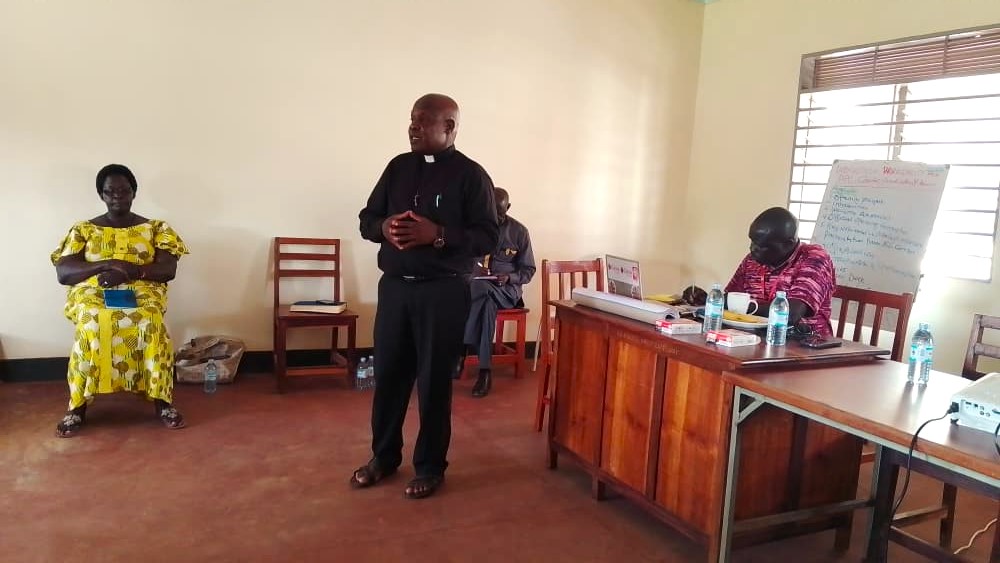
The call was made during an induction workshop for Caritas parish and sub-parish coordinators held on October 27, 2026, to strengthen their understanding of the organisation’s mission, clarify their responsibilities and improve coordination of community development initiatives across the Diocese.
The workshop brought together deans and coordinators from parishes and sub-parishes, alongside the coordinators of the Lay Apostolate, Women’s Desk and Justice and Peace Commission (JPC).
The orientation also focused on planning in the spirit of synodality, encouraging participants to work together and strengthen collaboration between the diocesan structures and Christian communities at the grassroots.
Speaking during the workshop, the Diocesan Pastoral Coordinator, Fr. Vincent Orum, emphasised that Caritas should not be understood merely as an association or a separate ministry within the Church, but as the Church’s expression of charity and service.
“Caritas is not an association, neither is it a ministry in the Church. So Caritas is the hand of the Church in ministry,” Fr. Orum said.
He explained that, by virtue of their baptism, all Christians are called to practise charity and share their time, talents and material resources with people in need.
“God has gifted us so that we can be gifts to others,” he said, urging participants to help Christians understand that generosity is part of their faith and responsibility towards their neighbours.
Generosity at the Heart of Christian Service
In his opening remarks, Fr. Orum called for greater emphasis on the biblical teaching behind generosity, saying Christians need to understand that giving is not simply a personal choice but a response to God’s gifts.
Drawing from Scripture, he referred participants to Malachi 3:6–10 and Amos 4:6, highlighting the importance of generosity and the consequences of selfishness.
He said parish coordinators had an important role in helping Christians understand the spiritual meaning of giving, rather than participating in charitable activities only when they felt inclined to do so.
Fr. Orum cited his parish’s theme for the year, “Generosity is Divine,” as an example of how the Church can help Christians appreciate generosity as a gift from God that also brings blessings to others.
On behalf of the Bishop of Lira Diocese, he officially opened the workshop, expressing satisfaction that most parishes were represented.
Parish Coordinators to Strengthen Grassroots Engagement
The presentation by Caritas Lira Programme Manager Francis Ojok outlined the organisation’s identity, mission, thematic areas, governance structures and strategic direction, including its 2026–2031 Strategic Plan.
According to the presentation, Caritas Lira is a faith-based organisation operating within Lira Diocese. Its office opened in 2000 to provide social services and defend human dignity irrespective of creed or race.
Its mission includes promoting integral human development, caring for creation, restoring peace, advocating for social justice, and advancing reconciliation, love and solidarity.
The organisation’s areas of focus include agriculture and food security, economic empowerment, capacity building, social protection, water and sanitation, renewable energy and social investment initiatives.
The presentation also highlighted partnerships, advocacy, networking, capacity development, community participation and gender mainstreaming as key strategies for implementing its work.
Caritas parish coordinators were identified as an important link between parish leadership, the Caritas office and Christian communities.
Their responsibilities include mobilising community participation, sharing Caritas information with parishes and Small Christian Communities, providing feedback from communities to the diocesan office, and supporting Caritas activities through local volunteer structures.
The coordinators are also expected to help communicate development information and announcements to Christians, ensuring that information and opportunities reach communities at the grassroots.
Through these responsibilities, the coordinators are expected to support Caritas in strengthening local participation and ensuring that community needs and feedback inform its work.
Caritas Lira Executive Director Calls for Continued Formation
The Executive Director of Caritas Lira, Fr. Desiderius Pule, said the induction was organised to bring coordinators together, help them know one another, clarify their roles and support joint planning in the spirit of synodality.
He noted that the participation of deans and coordinators from different parishes and sub-parishes was important in strengthening the structures through which Caritas works across the Diocese.
According to Fr. Pule, feedback from participants indicated that the workshop had been fruitful and that planning had been undertaken to guide subsequent activities.

He said the next step should involve deans organising further meetings and training others who would support formation at parish, chapel and Small Christian Community levels.
Fr. Pule encouraged participants to recognise that Caritas is not only the responsibility of designated coordinators, but a Christian calling shared by all the baptised.
“Each one of us, by the virtue of baptism, we are all Caritas,” he said.
He added that collaboration between the diocesan structures and grassroots communities would be essential to carrying the mission forward.
Church Seeks Stronger Small Christian Communities
In his closing remarks, Fr. Orum also called for renewed efforts to strengthen Small Christian Communities, known locally as OTEM, describing them as important structures for the Church’s pastoral life.
He cited diocesan statistics indicating that only 14 of the Diocese’s 36 parishes had functional Small Christian Communities, expressing concern about the limited activity in many others.
He urged deans and parish leaders to strengthen these communities and ensure that pastoral activities are rooted in families and local Christian life.
Fr. Orum linked this call to the Church’s emphasis on synodality, which promotes listening, dialogue and the participation of the faithful in discerning and responding to community needs.
He also briefed participants on preparations for the Diocesan Pastoral Assembly scheduled for January 25–30, 2027.
He explained that questionnaires were to be discussed at Small Christian Community level before being presented at parish level, compiled at deanery level and submitted for consideration at the diocesan level.
The process is intended to ensure that the voices and experiences of Christians at the grassroots inform diocesan planning and discussions at the assembly.
Fr. Orum urged the deans and parish leaders to take the exercise seriously, noting that the assembly would depend on reports submitted through these structures.
Lay Apostolate Head Says Christians Must Share Responsibility
The Head of the Lay Apostolate in Lira Diocese, Hon. Jovino Akaki, said the training had helped participants better understand the identity and purpose of Caritas.
He observed that some Christians had previously associated Caritas mainly with distributing donated items without understanding the wider mission or how communities could participate in its work.
“Today we have learnt a lot about Caritas. We have learnt that Caritas is love, Caritas is charity, giving to those in need. And all of us are members of Caritas; it is a way of life, Christian life,” Akaki said.
He called on Christians to embrace a culture of mutual assistance, noting that support from international donors was no longer coming in the same measure as before.
He urged communities to strengthen local solidarity and help one another rather than depend entirely on outside assistance.
Participants Welcome the Induction
Milly Joffrey Anyach, a participant from Apac, described the workshop as informative and educational, saying it had given coordinators a clearer understanding of where to begin their work.
She said participants were expected to take the message to their communities by mobilising Christians from chapels and zones through to parish level, while providing feedback on their activities.
“Much as it has been my first time to attend the Caritas meeting, I have picked,” she said, expressing hope that the coordinators would succeed in implementing what they had learnt.
The induction marks a step in Caritas Lira’s efforts to strengthen its parish-level structures and improve coordination between the diocesan office and local communities.
Through the coordinators, the Diocese hopes to deepen Christians’ understanding of charity, encourage greater community participation and strengthen the spirit of service, solidarity and shared responsibility across Lira Diocese.
End