en English
ar Arabiczh-CN Chinese (Simplified)nl Dutchen Englishfr Frenchde Germanit Italianpt Portugueseru Russianes Spanish
What are you looking for?

Category Archives: Disaster and Relief

Lira Diocese Joins Gulu, Nebbi in Delivering Food Aid to Hunger-Stricken Karamoja

Lira Diocese has joined Gulu Archdiocese and Nebbi Diocese in delivering food assistance to communities in Karamoja facing a severe hunger crisis, as the Catholic Church in the Ecclesiastical Province of Gulu strengthens its collective response to the growing humanitarian situation.

By Flavia Oyuu, Communications Office, Lira Diocese

The assistance follows an appeal from the Bishop of Kotido Diocese, Rt. Rev. Dominic Eibu, MCCJ, to fellow Catholic bishops in Uganda to support communities struggling with severe food shortages following prolonged drought and poor harvests.

In response, dioceses across the country launched food collection campaigns, with Lira Diocese mobilising Christians and other people of goodwill through Caritas Lira Diocese, the charitable arm of the Diocese.

Lira Diocese flags off 4.1 tonnes of maize

In Lira, the Vicar General, Monsignor Innocent Valente Opio, flagged off the Diocese’s consignment on behalf of the Bishop of Lira Diocese, Rt. Rev. Sanctus Lino Wanok.

At the time of the flag-off, 4.1 tonnes of maize had been loaded onto the truck for transportation to Karamoja.

Monsignor Opio said the contribution was an expression of Christian love and charity towards people who are struggling to find food.

“We believe that if we can offer a meal to someone who is at the point of death, it can sustain life,” he said.

He expressed appreciation to Christians, priests, religious and other people of goodwill in Lira Diocese for responding to the appeal.

Sharing despite Lango’s own challenges

Monsignor Opio acknowledged that the generosity of the people of Lango came at a difficult time, as prolonged drought has also affected food production in the sub-region.

He said many families in Lango have little food left for their own livelihoods, yet they were still willing to share what they had with people facing an even more severe crisis in Karamoja.

“They are still able to sacrifice a cup or two, a kilo or so of what they saved in the house for their livelihood to share with those who have nothing to eat,” he said.

He described the gesture as an incredible demonstration of love and charity.

The Lira Diocese campaign, which had been running for about a month, mobilised maize and beans from parishes, households, farmers, businesses and other well-wishers.

During a press conference in Lira on August 28, Caritas Lira Programme Manager Francis Ojok said the Diocese had already collected about four tonnes of maize and more than 900 kilograms of beans, while appealing for additional contributions because the supplies remained insufficient compared to the need.

Gulu Archdiocese contributes food and other supplies

The relief effort has now expanded into a joint response by the dioceses of the Ecclesiastical Province of Gulu.

According to Rev. Sr. Martha Nambi, Communications Coordinator of Gulu Archdiocese, the Archdiocese has contributed 3.5 tonnes of maize grain, 843 kilograms of beans, 225 kilograms of posho, two sacks of second-hand clothes and UGX 310,000 in cash.

The Gulu Archdiocese contribution forms part of the joint consignment being taken to Karamoja.

Gulu Archdiocese, Lira Diocese and Nebbi Diocese are expected to converge along the route and proceed together to Karamoja to deliver the assistance as an Ecclesiastical Province.

The joint team was flagged off by the Archbishop of Gulu, Most Rev. Raphael p’Mony Wokorach, who blessed and sent off the team carrying the collected assistance.

The three dioceses’ joint response demonstrates the Church’s commitment to standing with communities facing hunger, regardless of the geographical or diocesan boundaries separating them.

A call rooted in Christian charity

The flag-off in Lira was preceded by a reading from 1 John 3:17, which asks:

“But if anyone has the world’s goods and sees his brother in need yet closes his heart against him, how does God’s love abide in him?”

Monsignor Opio said the people of Karamoja are brothers and sisters who deserve the solidarity of the wider Christian community.

He thanked the people of Lango for giving despite their own difficulties and prayed for an improvement in weather conditions so that families in Lango and elsewhere can once again produce enough food for their households.

“We pray for this divine providence so that in the near future we can have plenty of food in our homes that we can also share with those who are suffering,” he said.

The journey to Karamoja

The food collected by the participating dioceses is being transported by road to Karamoja, where it will be handed over to the Church in the affected area.

Government officials and other stakeholders in Karamoja are also expected to participate in receiving the relief supplies.

The initiative comes at a time when communities in Karamoja continue to experience serious food shortages, with vulnerable families struggling to meet their daily food needs.

For Lira Diocese, the dispatch of the 4.1 tonnes of maize marks an important step in translating the appeal for solidarity into practical assistance.

And while the people of Lango are themselves facing the effects of drought and poor harvests, their willingness to give from the little they have has become part of a wider Catholic response stretching across the Ecclesiastical Province of Gulu.

Monsignor Opio wished the team a safe journey to Karamoja and appealed for continued prayers for both the people receiving the assistance and those who contributed to the relief effort.

“Keep us in prayer,” he told the faithful.

Lira Diocese Intensifies Appeal for Food Aid as Hunger Crisis Deepens in Karamoja

Lira Diocese has intensified its appeal to the people of Lango and other people of goodwill to contribute food and financial assistance towards families affected by a severe hunger crisis in Karamoja.

By Flavia Oyuu, Communications Office, Lira Diocese

The appeal was renewed on Friday, August 28, 2026, during a press conference held at the Apostolic Social Centre in Lira City, as the Diocese moves towards the climax of a month-long food collection campaign initiated in response to an appeal from the Bishop of Kotido Diocese, Rt. Rev. Dominic Eibu, MCCJ.

The campaign is being coordinated by Caritas Lira Diocese, with food being collected from parishes and communities across the Diocese for delivery to the affected communities in Karamoja.

Speaking to the press, Francis Ojok, Programme Manager at Caritas Lira Diocese, said the situation in Karamoja remains critical despite relief efforts already being undertaken by the government and other organisations.

He said health facilities in Karamoja have reported receiving patients who are severely malnourished and lacking adequate food and water.

“The Karamoja people are in deep food crisis and we are mobilising any other person here, person of goodwill, to give a generous contribution, so that at least we provide something for them to eat,” Ojok said.

Four tonnes of maize, 900kg of beans collected

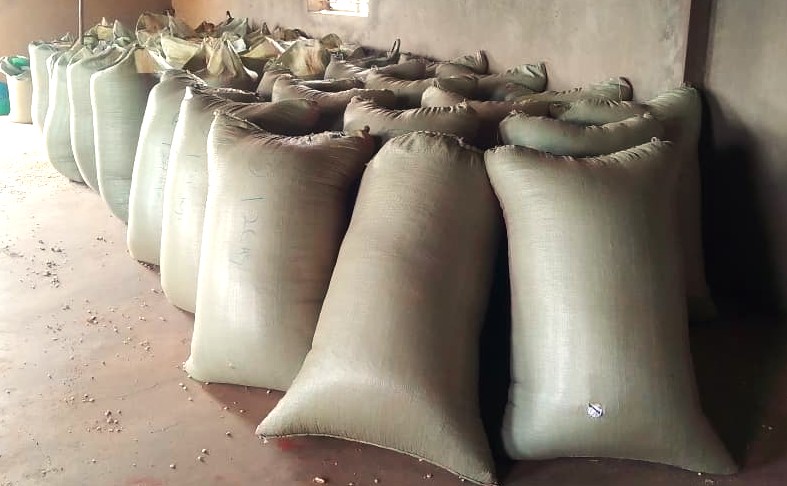
Ojok said the response from Christians and other well-wishers across Lira Diocese has already yielded four tonnes of maize and more than 900 kilograms of beans, which are currently stored at the Apostolic Social Centre.

The food is being repacked and prepared for transportation to Karamoja.

However, he said the supplies collected so far are still insufficient given the magnitude of the need.

He appealed to farmers, produce dealers, business people, maize millers, petty traders and ordinary households across Lango to contribute whatever they can.

“If you have a cup of maize, bring it for us. If you have a basin full, bring it for us,” he appealed.

Ojok stressed that the campaign is not restricted to Catholics, saying hunger affects people regardless of their religion, tribe or social background.

He also appealed to people to remember that the circumstances facing Karamoja today could affect another community tomorrow.

“Today is Karamoja, tomorrow will be Lango,” he said, pointing to the vulnerability of communities facing climatic and food-related challenges.

Lango communities also facing food challenges

While the campaign is primarily responding to the urgent situation in Karamoja, the Diocese also acknowledges that some communities in the Lango sub-region are themselves struggling with food insecurity following poor harvests.

The Women’s Desk Coordinator for Lira Diocese, Imat Anna Lumumba, said this makes the call for solidarity particularly significant.

She explained that the Diocese is appealing for contributions from those who are able to share, while recognising that not everyone has the capacity to give large quantities of food.

Lumumba said the Diocese is therefore planning a road drive around Lira City in the coming days to collect food directly from people who may be willing to contribute but cannot travel to the Apostolic Social Centre.

The collection drive is expected to move through different parts of the city, including along Aduku Road, targeting households, produce dealers, business people, factories and other well-wishers.

“We are doing this irrespective of religious affiliation, cultural [background], anybody who is willing to give us something,” Lumumba said.

She added that the Diocese is collecting non-perishable food items that can safely be transported to Karamoja.

“What we have collected in the store, it is already repacked, ready to be taken, but we are seeing it is not enough. We need to add more,” she said.

Parishes to coordinate food collection

The Diocese has directed all parishes across Lira Diocese to mobilise food from their respective communities.

Once food has been collected, the parishes are expected to contact Caritas Lira, which will arrange to pick up the donations and consolidate them for transportation.

The Diocese plans to transport the collected supplies by road to Karamoja, where they will be handed over to the Diocese of Kotido. Government officials and other stakeholders in Karamoja are also expected to participate in receiving the assistance.

The initiative follows an appeal by Bishop Dominic Eibu of Kotido Diocese to fellow Catholic bishops in Uganda for assistance as communities in Karamoja struggle with severe food shortages following poor harvests and prolonged climatic challenges.

The Uganda Episcopal Conference subsequently called on dioceses across the country to mobilise support for affected communities in Karamoja.

Every contribution matters

Caritas Lira says the appeal is not limited to large donations, emphasising that even small contributions can help provide food to vulnerable families.

Ojok urged the people of Lango and other well-wishers to respond according to their ability.

“There is nothing which is too little not to be shared. What you have, though it is a cup full, you can give; you can divide it to your brother to eat.”

He said the food collected in Lira will be consolidated and transported to Karamoja as part of the Diocese’s commitment to stand with communities facing hunger.

The campaign also seeks to mobilise support beyond the Catholic community, with the Diocese calling upon all people of goodwill, regardless of religious or cultural affiliation, to participate.

How to donate

People in Lira City who wish to donate food can take their contributions to the Apostolic Social Centre, opposite Uganda Martyrs Cathedral, where they can hand them over to Ongom Paul.

For food donations:
Ongom Paul — 0782 300 690

For financial contributions:
Imat Lucy Pia, Diocesan Treasurer — 0772 604 501

For coordination and further information:
Imat Anna Lumumba, Women’s Desk Coordinator and Vice Chairperson of the food relief programme — 0772 697 295

The Diocese is appealing to individuals, families, farmers, produce dealers, businesses, institutions, parishes and other organisations to contribute towards the effort.

As Caritas Lira prepares for the final phase of the collection, the message from the Diocese is simple: whatever one can share can help put food on the table of a hungry family in Karamoja.

“Today is Karamoja, tomorrow will be Lango.”

Lira Diocese joins national Catholic Church drive to combat hunger crisis in Karamoja

The Catholic Church in Uganda has intensified its response to the worsening food crisis in Karamoja, a sub-region located in the northeastern corner of Uganda, bordering Kenya and South Sudan. Lira Diocese is mobilising food assistance for the most vulnerable families.

By Fr. Isaac Ojok, Communications Office, Lira Diocese

The crisis began to escalate between April and July this year after a prolonged drought destroyed crops, leaving many households without food and severely affecting their livelihoods.

In response to the humanitarian situation, the Bishop of Kotido Diocese, Bishop Dominic Eibu, MCCJ, appealed to his brother bishops across the country to support the people of Karamoja through donations of food and other essential supplies.

National appeal

Following this diocesan appeal, the Chairman of the Uganda Episcopal Conference (UEC), Bishop Joseph Anthony Zziwa of Kiyinda-Mityana Diocese, called on all bishops in their respective dioceses to organise relief efforts for the people of Kotido and Moroto dioceses, where thousands of families continue to face acute food shortages.

Responding to this call, Lira Diocese, together with other dioceses across Uganda, has launched a diocesan-wide campaign encouraging Christians to donate food items as an expression of Christian charity and solidarity with their brothers and sisters in Karamoja. The initiative aims to provide immediate relief to families affected by the prolonged drought while demonstrating the Church’s commitment to caring for those most in need.

Lira Diocese’s response

In Lira Diocese, the campaign is being coordinated by Caritas Lira Diocese, the Church’s official charitable and humanitarian arm. Christians in parishes across the diocese are donating food items such as maize flour (Posho), beans, and other non-perishable foods, which will be transported to the affected communities in Karamoja.

Every family in Lira Diocese is being encouraged to contribute whatever they can afford, however small, to help alleviate the suffering. Reports indicate that children, pregnant and breastfeeding mothers, and the elderly are among the most affected by the food crisis, with many showing signs of severe malnutrition.

Speaking during the launch on the diocesan Catholic radio station – Radio Wa, the Vicar General of Lira Diocese, Monsignor Valente Innocent Opio, appealed to the lay faithful to respond generously to the humanitarian call.

“Let every family share whatever it can afford. Feeding the hungry is not only an act of charity but also a command from our Lord Jesus Christ,” Monsignor Opio said, referring to the Gospel of Matthew 25:35, where Christ identifies Himself with those who hunger.

The campaign has already recorded encouraging progress, with thousands of Kilograms of maize and other food items collected from generous Christians across the diocese.

Bishop of Kotido’s urgent appeal

Meanwhile, the Government of Uganda, through the Ministry of Disaster Preparedness and Refugees, has also begun distributing relief supplies, including beans and maize flour including other essential supplies, to the affected communities.

Speaking in an interview with Vatican News on 20 August 2026, Bishop Dominic Eibu said the hunger crisis in Kotido Diocese remains severe even as humanitarian assistance was being mobilised. He expressed deep gratitude for the campaigns but also concern that many vulnerable families have yet to receive support. He has since called for a stronger and urgent more coordinated response to the crisis.

According to Bishop Eibu, reports from parish priests serving in various Catholic parishes across Kotido Diocese indicate that, despite the relief efforts already undertaken, many households continue to endure acute food shortages and are struggling to meet their basic needs.

“During my meeting with the parish priests, they told me that many families have still not been reached with assistance,” Bishop Eibu said. “The situation remains critical, and we urgently appeal for greater solidarity and support to ensure that no family is left behind.”

Karamoja, located in north-eastern Uganda, is a semi-arid region that frequently experiences prolonged droughts, making communities highly vulnerable to food insecurity.

The Karamojongs traditionally depend on pastoralism, with livestock serving as their primary source of livelihood. However, recurring drought and harsh climatic conditions have significantly undermined their ability to sustain themselves.

End