 English
 Arabic
 Chinese (Simplified)
 Dutch
 French
 German
 Italian
 Portuguese
 Russian
 Spanish

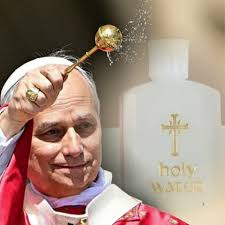
The Church teaches that sacramentals are sacred signs which prepare the faithful to receive grace and dispose them to cooperate with it. They are therefore not to be treated as magical objects or instruments of superstition, but rather as visible signs through which believers express their faith and seek God’s blessings and protection.
Fr. Constanz Opiyo
Commission of Doctrine, Lira Diocese
As we continue with our series on sacramentals in the life of the Church, today we reflect on two common elements frequently presented by the faithful for blessing: water and salt. Many Christians make use of blessed water and salt in their homes and daily prayers, yet there is often need for deeper understanding regarding their meaning and proper use within the Catholic faith.
The Church teaches that sacramentals are sacred signs which prepare the faithful to receive grace and dispose them to cooperate with it. They are therefore not to be treated as magical objects or instruments of superstition, but rather as visible signs through which believers express their faith and seek God’s blessings and protection.
Priests and deacons often encounter lay faithful requesting the blessing of water or salt for personal use. While this demonstrates a reawakening of faith among the people, there is also need to ensure that the faithful properly understand the meaning and use of these sacramentals.
1. Water
When blessed by a priest or deacon, water becomes a sacramental that acts as a visible and tangible sign of inward grace. It signifies purification, protection, and the believer’s baptismal commitment. Blessed water is used to bless people, objects, and places through sprinkling.
Theological Foundation for the Use of Holy Water
The Catechism of the Catholic Church acknowledges that “Since the beginning of the world, water, so humble and wonderful a creature, has been the source of life and fruitfulness” (CCC 1218). Sacred Scripture contains many texts that underscore the significance of water in the economy of salvation.
- At the beginning of creation, the Spirit of God hovered over the waters, making them the wellspring of holiness.
- During the time of Noah, the flood destroyed the evil and wickedness that had corrupted humanity, while preserving Noah and his family as the beginning of a renewed creation.
- The crossing of the Red Sea, which liberated Israel from slavery in Egypt, prefigured the liberation brought about through the waters of Baptism.
- In crossing the Jordan River, the People of God entered the land promised to Abraham’s descendants, an image of the eternal inheritance granted through the waters of Baptism. In John 3:5, Jesus affirms that no one can enter the Kingdom of God without being born of water and the Spirit.
- In the vision of Ezekiel, water gushes forth from the sanctuary, bringing abundance of life wherever it flows.
- Christ himself descended into the waters of the Jordan to be baptised, and the Spirit of God came upon him.
- From the side of Christ on the Cross flowed blood and water, which the Fathers of the Church interpreted as signs of the Sacraments of the Church: water symbolising Baptism and blood symbolising the Eucharist.
These and many other examples demonstrate the significance of water in the economy of salvation. Water therefore remains a sign and symbol of purification, regeneration, and protection.
The Mind of the Church
The different prayers for the blessing of water offer important insight into the meaning and use of holy water. Below are some formulas that may be used by an ordained minister in blessing water.
First Formula
Almighty ever-living God, who willed that through water, the fountain of life and the source of purification, even souls should be cleansed and receive the gift of eternal life; be pleased, we pray, to + bless this water, by which we seek protection on this your day, O Lord. Renew the living spring of your grace within us and grant that by this water we may be defended from all ills of spirit and body, and so approach you with hearts made clean and worthily receive your salvation. Through Christ our Lord. R. Amen.
In this prayer, water is presented as the fountain of life and source of purification capable of cleansing souls for eternal life. God is invoked to grant protection, renew the living spring of grace within the faithful, and defend them from spiritual and bodily harm.
Second Formula
Almighty Lord and God, who are the source and origin of all life, whether of body or soul, we ask you to + bless this water, which we use in confidence to implore forgiveness for our sins and to obtain the protection of your grace against all illness and every snare of the enemy. Grant, O Lord, in your mercy, that living waters may always spring up for our salvation, and so may we approach you with a pure heart and avoid all danger to body and soul. Through Christ our Lord. R. Amen.
This second formula highlights another grace received through holy water, namely the forgiveness of sins, besides protection against illness and the snares of the enemy. Through the waters of Baptism, the faithful receive forgiveness of Original Sin and all personal sins. Water thus becomes a sign of spiritual cleansing.
Third Formula (Used During Easter Time)
Lord our God, in your mercy be present to your people’s prayers, and, for us who recall the wondrous work of our creation and the still greater work of our redemption, graciously + bless this water. For you created water to make the fields fruitful and to refresh and cleanse our bodies. You also made water the instrument of your mercy: for through water you freed your people from slavery and quenched their thirst in the desert; through water the Prophets proclaimed the new covenant you were to enter upon with the human race; and last of all, through water, which Christ made holy in the Jordan, you have renewed our corrupted nature in the bath of regeneration.
Therefore, may this water be for us a memorial of the Baptism we have received, and grant that we may share in the gladness of our brothers and sisters who at Easter have received their Baptism. Through Christ our Lord. R. Amen.
This formula retraces the significance of water in the history of salvation and especially emphasises the grace of Baptism received through it.
Who Can Bless Water for Use?
Only ordained ministers can bless water for use as a sacramental. Nevertheless, in Lira Diocese, for pastoral reasons, catechists have been permitted to pray over water for use in homes where an ordained minister may not be readily available.
How Do We Use Holy Water?
Water is first used in Baptism as a sign of washing and rebirth. Outside Baptism, it is used to bless people, places, and objects through sprinkling. In many churches, holy water fonts are placed at the entrances so that the faithful may bless themselves as they enter or leave the church. Though less common in newer church constructions, these fonts remain important reminders of Baptism.
The faithful may also use holy water in their homes while reciting approved prayers. Water may also be mixed with salt, especially in prayers associated with exorcism.
2. Salt

From ancient times, salt was considered a precious commodity and was sometimes monopolised by royalty in Egypt and Persia. Roman soldiers were partly paid with packets of salt, from which the term “salary” is derived. Because of its value, the people of Israel regarded salt as a fitting offering to God in what Scripture calls a “covenant of salt” (cf. Leviticus 2:13; Numbers 18:19; 2 Chronicles 13:5). The covenant of salt symbolised preservation, purity, and permanence.
Salt was also used in sacrifice (Ezekiel 43:24) and in covenant meals (Genesis 31:54).
Salt possesses two principal properties: preservation and flavouring. Jesus refers to these qualities when he says to his disciples, “Have salt in yourselves and be at peace with one another” (Mark 9:50), meaning that they should preserve within themselves the qualities that make them a blessing to others.
In Matthew 5:13, Jesus calls his disciples “the salt of the earth,” inviting them to resist corruption and to give flavour to the world through the Gospel they have received. The Gospel, as Pope Francis notes in Evangelii Gaudium, is Good News that brings joy to a world burdened by suffering and evil. Christians are therefore called to radiate this joy in their daily lives.
Besides preserving and flavouring, salt also purifies. This is seen in the miracle of Elisha (2 Kings 2:20–21), where the prophet used salt to purify contaminated water. From the sacramental point of view, salt is therefore seen as a sign of purification and protection from evil, hence its use in prayers of exorcism. In the older rite of Baptism, a small quantity of salt was placed on the tongue of the person being baptised.
Salt is therefore used as a sacramental. Any amount of salt may be presented to a priest for blessing using the approved prayer from the Sacramentary. The faithful must avoid using blessed salt in a superstitious manner, but rather see in it a sign of God’s grace at work through the prayer of the Church.
Prayer for the Blessing of Salt
Almighty God, we ask you to bless this salt, as once you blessed the salt scattered over the water by the prophet Elisha. Wherever this salt (and water) is sprinkled, drive away the power of evil, and protect us always by the presence of your Holy Spirit. Grant this through Christ our Lord. Amen.
This prayer invokes God to drive away evil and grant protection through the use of blessed salt. The faithful may use blessed salt in their homes by sprinkling it in rooms or other places while praying for peace and protection from evil.
It is important to emphasise once again that blessed salt is not a “good luck charm” and should never be treated as magic. Its effectiveness comes from the prayer of the Church and the faith of believers, not from any power in the salt itself.
As we continue journeying together through this series, feel free to send in any questions you may have regarding the teachings of the Church on the Sacraments and sacramentals for clarification in future reflections.
End
Thank you for the clear explanation about the two objects.
It’s true that majority we use them when we don’t know why and how it came about.
Thank you for following Lira Diocese
Thank You so much Fr. Constanz for the above teaching.
Many of our Christians are ignorant about the use of blessed Salt and water.
May God continue to bless you and the work of your hands 🙏
Deacon Samson thank you for following
Thank you Fr
A very good reminder about the significance of the sacramentals and their proper usage
Thank you Fr. Maxwell for following