en English
ar Arabiczh-CN Chinese (Simplified)nl Dutchen Englishfr Frenchde Germanit Italianpt Portugueseru Russianes Spanish
What are you looking for?

Tag Archives: UEC

Bishop Franzelli Calls for Responsible Use of Artificial Intelligence in Communication Ministry

The annual Communications Week, held ahead of the World Communications Day celebrations, brings together Church communicators to reflect on the Pope’s message and its relevance to pastoral communication in Uganda. This year’s gathering focused on the growing influence of Artificial Intelligence (AI) and its implications for human communication.

By Flavia Oyuu, Communications Office, Lira Diocese

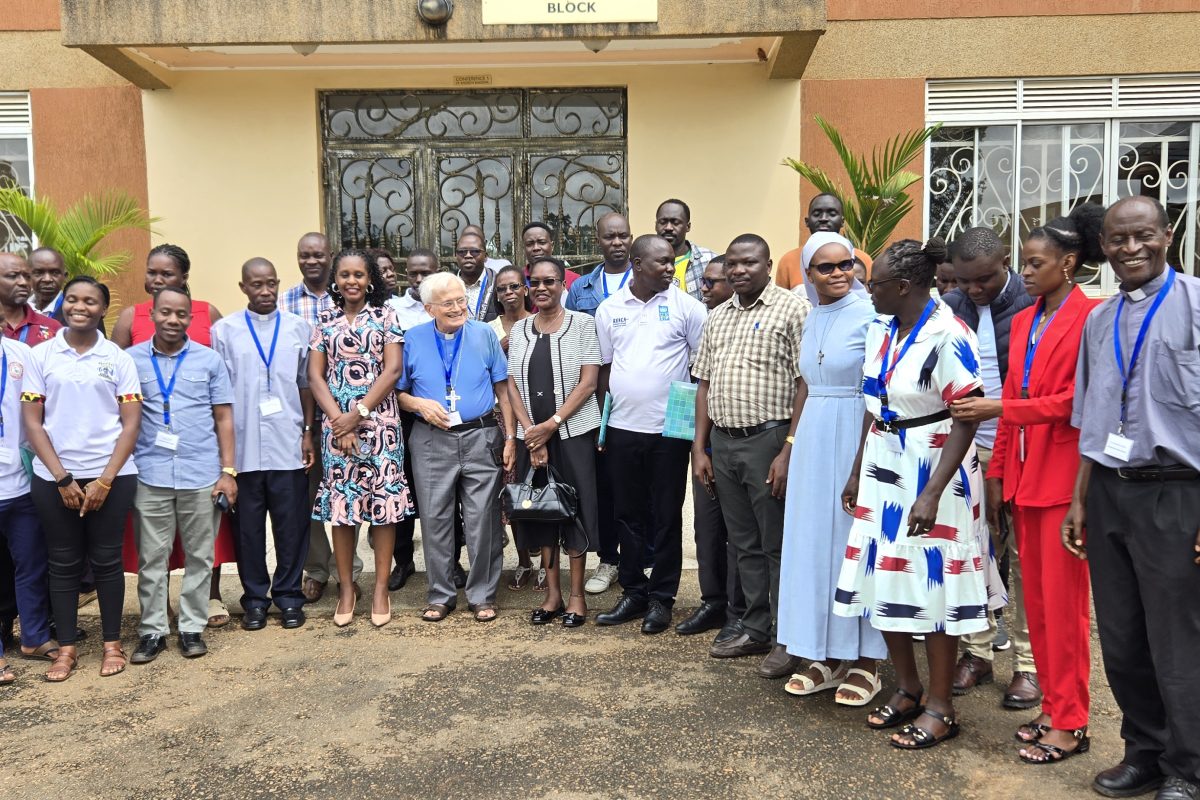
ULRIKA, Uganda – April 21–26, 2026 – Catholic communicators from all 19 dioceses of Uganda gathered at Ulrika Guest House for the National Communications Week workshop, where Rt. Rev. Joseph Franzelli, Bishop Emeritus of Lira Diocese and Chairperson for Social Communications at the Uganda Episcopal Conference, reflected deeply on the Holy Father’s message for World Communications Day titled “Preserving Human Voices and Faces.”

The annual Communications Week, held ahead of the World Communications Day celebrations, brings together Church communicators to reflect on the Pope’s message and its relevance to pastoral communication in Uganda. This year’s gathering focused on the growing influence of Artificial Intelligence (AI) and its implications for human communication.

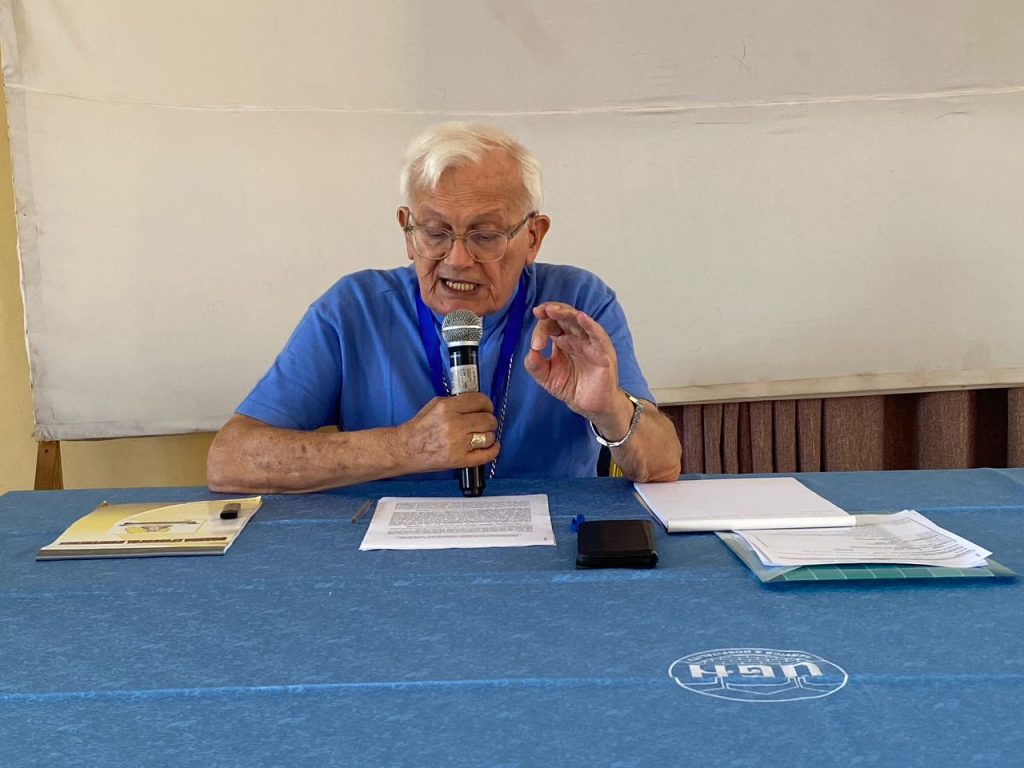
Speaking to the participants, Bishop Franzelli emphasized that the purpose of the workshop is not only to study the Pope’s message but also to understand it deeply and translate it into local pastoral contexts.

“This Communication Week is meant to make us aware of different aspects of communication, as the Pope enlightens us each year on a particular dimension,” he said. “We are called to reflect, understand, and eventually go back to our dioceses to convey the same message in a way that speaks to our people.”

He stressed the importance of unity in communication within the Church, noting that communicators are called to work in synodality, together, under the guidance of the Holy Father.

“We must work in the same direction under the guidance of Peter, who for us today is Pope Leo XIV,” he added.
Preserving Human Identity in a Digital Age

Reflecting on the theme “Preserving Human Voices and Faces,” Bishop Franzelli highlighted the uniqueness and sacredness of human identity.

“Our faces and voices are unique because they reveal who we are,” he said. “They are not just physical features, but expressions of our identity, and for believers, they are sacred because we are created in the image and likeness of God.”

He reminded participants that God is a communicating God who revealed Himself through creation, prophets, and ultimately through Jesus Christ, the Word made flesh with a human face and voice.

“This is the gift we are called to receive, live, and communicate,” he said.

Artificial Intelligence: Opportunity and Risk

Bishop Franzelli acknowledged the benefits of Artificial Intelligence in modern communication but warned of its risks if not properly understood and guided.

The Pope’s message, he explained, appreciates technological progress while cautioning against its negative impact on human relationships and authentic communication.

“The challenge is not only technological but anthropological,” he said. “It touches our understanding of what it means to be human, created in God’s image.”

He warned that over-reliance on AI could weaken critical thinking, creativity, and personal responsibility.

“When we allow machines to think for us, we risk becoming passive consumers of ideas we never created,” he noted. “Even simple reasoning is being replaced by quick answers from devices, and this weakens our ability to think and create.”

Risk of a ‘World of Mirrors’

The Bishop further cautioned against what he described as a “world of mirrors,” where people interact more with digital images than with real human beings.

“Communication is an encounter between persons,” he said. “But today, we risk living in a world where we only see images and never truly meet people.”

He also raised concern about bias in digital systems, noting that algorithms are shaped by the values and interests of their creators, which may influence how information is presented.

“This can subtly shape our worldview and even normalize injustice,” he warned.

Call for Discernment and Responsibility

While acknowledging the inevitability of digital innovation, Bishop Franzelli urged communicators to approach Artificial Intelligence with discernment and responsibility.

“The task before us is not to stop technological development, but to guide it wisely,” he said. “AI must remain an ally, not a master.”

He outlined three guiding principles for responsible engagement with technology: responsibility, cooperation, and education.

“Each of us has a responsibility to contribute to truth and integrity in communication,” he emphasized. “No one is exempt from this duty.”

Conclusion

The Communications Week workshop concluded with a renewed call for Catholic communicators to safeguard human dignity in the rapidly evolving digital landscape.

As the Church continues to engage with emerging technologies, Bishop Franzelli’s message underscored the enduring importance of authentic human connection, truth, and discernment in communication ministry.

End
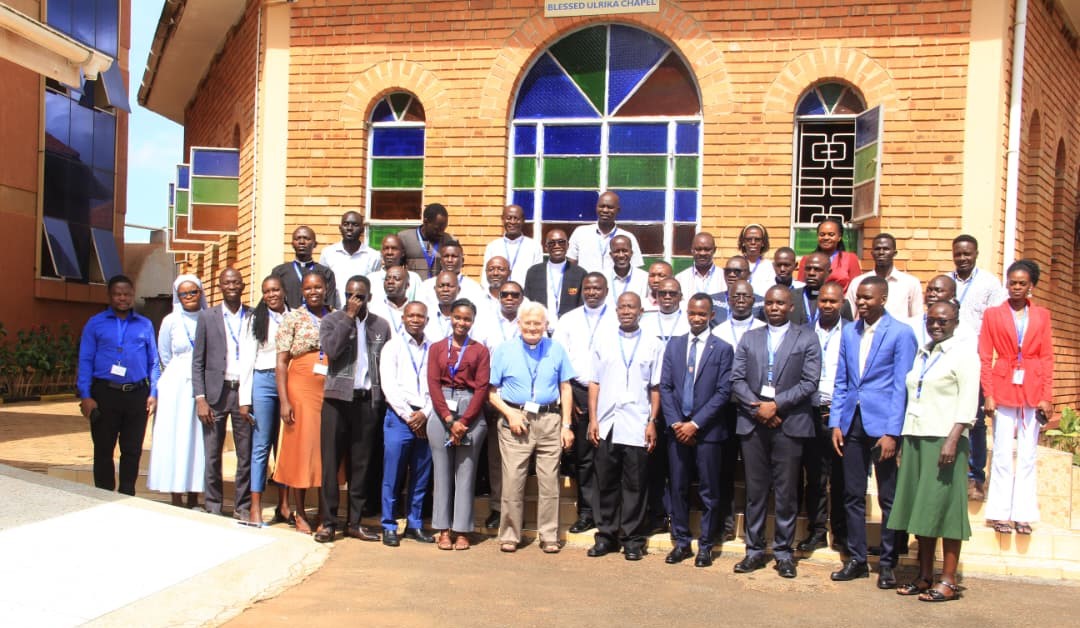
Catholic Communicators Gather in Kisubi for National Training on AI and Evangelization

The week-long training, which brings together participants from the 19 dioceses of the country, is being held under the theme “Preserving Human Voices and Faces,” the message of His Holiness Pope Leo XIV for the 60th World Day of Social Communications to be celebrated on May 17, 2026.

By Flavia Oyuu, Communications Office, Lira Diocese

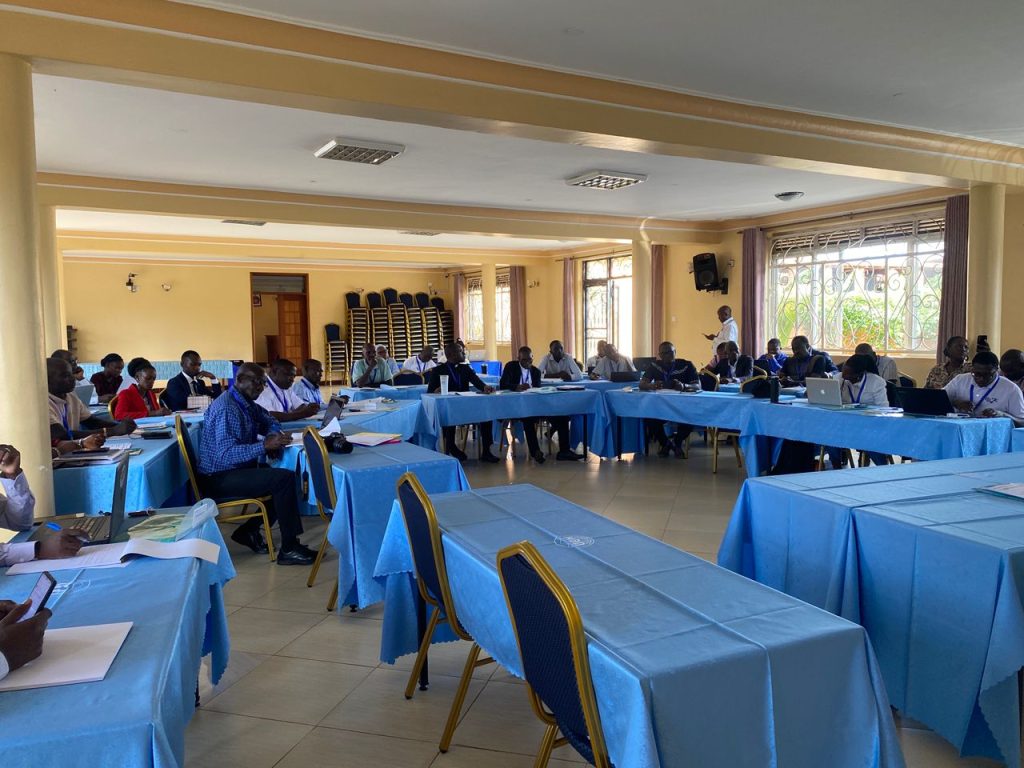
Catholic communicators from across Uganda are gathered at Ulrika Guest House in Kisubi for the 2026 National Social Communications Training taking place from April 21st to 26th, with a renewed call to strengthen their mission of evangelization in today’s digital age.

The week-long training, which brings together participants from the 19 dioceses of the country, is being held under the theme “Preserving Human Voices and Faces,” the message of His Holiness Pope Leo XIV for the 60th World Day of Social Communications to be celebrated on May 17, 2026.

In his opening remarks, the Bishop Emeritus of Lira Diocese and Chairperson of the Social Communications Commission at the Uganda Episcopal Conference, Bishop Joseph Franzelli, encouraged communicators to embrace Artificial Intelligence and other digital tools with a clear pastoral purpose.

He noted that the training, facilitated by Kearlmark Consults, is intended not merely to build personal skills, but to strengthen communication apostolates within dioceses.

“What we learn here is not just for personal education, but to be applied back home in our dioceses for a better service to our people,” he said.

The Bishop urged participants to translate the knowledge gained into concrete action within their dioceses, building on previous trainings to ensure meaningful growth in communication efforts.

“We learn a lot of good things, but often people go home to continue work as usual… and that is how it should never be.”

He further emphasized the responsibility of Catholic communicators to provide timely, accurate, and balanced information in a rapidly evolving world.

“Our people need timely and balanced information, it is our mission to enlighten them.”

Highlighting the identity of Catholic media, Bishop Franzelli called for communication that reflects Gospel values and promotes peace and fraternity.

“This is what our communication is meant to be, a different communication, portraying the vision of peace and fraternity of the Church.”

He also underscored the importance of unity and collaboration among communicators, noting that a shared vision strengthens the Church’s impact.

“If we are united, then we shall have a greater impact.”

Meanwhile, the National Executive Secretary for Social Communications, Rev. Fr. Philip Odii, welcomed participants and reaffirmed the vital role of communicators in the life of the Church.

He described communication as a ministry through which the voice of Christ reaches the faithful.

“We gather as one family of communicators, united in our shared mission of proclaiming the Good News, your work ensures that the voice of the Church is vibrant, credible, and present.”

Fr. Odii commended communicators for their dedication and sacrifice, noting the influence of their work on the wider community.

“Very many people depend on what we talk, what we write, what we post, it is the voice of Christ through us.”

The training focuses on equipping participants with skills in leveraging Artificial Intelligence to enhance productivity and effectiveness in Catholic media institutions, while safeguarding the human dignity at the heart of communication.

The annual gathering continues to serve as a key moment of reflection, formation, and renewal for Catholic communicators in Uganda, as the Church strengthens its media apostolate in an increasingly digital world.

End

Bishop Wanok Urges Renewal and Unity During Ad Limina Visit in Rome

By Fr Isaac Ojok, Communications Office, Lira Diocese

The Bishop of Lira Diocese, Rt. Rev. Sanctus Lino Wanok, has called on the faithful to embrace spiritual renewal, unity, and practical Christian living during this Lenten season.

Delivering his homily from Vatican City, Rome, where he is participating in the Ad Limina visit of Catholic Bishops from Uganda, Bishop Wanok reflected on the message of the Fifth Sunday of Lent, emphasizing that the Word of God speaks directly to the realities faced by Christians in Lango subregion.

He highlighted key challenges affecting communities, including family conflicts, poverty, youth unemployment, weakening faith, and divisions within society and Church groups. Despite these difficulties, the Bishop reassured the faithful of God’s promise of new life and restoration.

Drawing from the Gospel account of the raising of Lazarus, Bishop Wanok underscored the importance of listening, collaboration, and shared responsibility within the Church. He encouraged Christians to become a listening community, to work together in overcoming challenges, and to actively support one another in faith.

The Bishop also called on individuals to reflect on personal and communal obstacles such as unforgiveness, division, corruption, and lack of active participation in Church life, urging them to take concrete steps toward change.

He emphasized that true renewal in Lira Diocese will come through a deeper relationship with God and openness to the Holy Spirit, rather than plans alone.

As part of his Lenten message, Bishop Wanok proposed three key actions for the faithful: deepening prayer life, strengthening Small Christian Communities, and taking practical steps to reconcile, support the needy, and guide the youth.

He concluded by encouraging hope and faith among the faithful, reminding them that God continues to call His people to new life.

The Bishop delivered his homily during the ongoing Ad Limina visit, a significant moment of prayer and reflection for bishops in communion with the universal Church, in the Vatican City, Rome. 

End

Catholic Bishops of Uganda on ‘ad limina’ Visit to Rome.

The expression “ad limina apostolorum” comes from Latin and means “to the thresholds of the apostles.” During this time, the bishops visit the tombs of the Apostles Peter and Paul, as well as the various dicasteries of the Roman Curia, ending with a meeting with the Pope.

By Flavia Oyuu, Communications Office, Lira Diocese

The Catholic Bishops of Uganda, under their umbrella body, the Uganda Episcopal Conference (UEC), are currently in Rome to participate in the traditional “ad limina apostolorum” visit, a significant moment in the life and mission of the Catholic Church.

The expression “ad limina apostolorum” comes from Latin and means “to the thresholds of the apostles.” During this time, the bishops visit the tombs of the Apostles Peter and Paul, as well as the various dicasteries of the Roman Curia, ending with a meeting with the Pope.

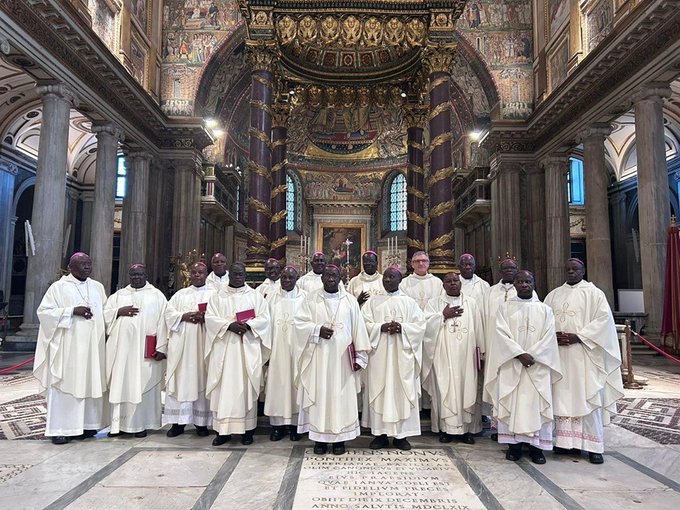
The Catholic Bishops who left Uganda on Saturday, March 14, had the celebration of the Holy Mass today in the Basilica of St. John Lateran which is the Cathedral of the Pope as the Bishop of Rome. This is the oldest Basilica. Their Ad Limina Visit is expected to conclude on March 21, 2026. Every serving bishop (not emeritus bishops) has made the ad limina visit meaning there are 18 Catholic Bishops from the 19 Dioceses (Jinja Diocese is under the Apostolic Administration of His Grace Emmanuel Obbo who is the Archbishop of Tororo Archdiocese).

The spiritual heart of the ad limina visit are Masses at the 4 major Papal Basilicas of Rome: St. Peter’s Basilica, St. Paul Outside the Walls, St. John Lateran and St. Mary Major. In addition, the bishops will meet with officials from the different dicasteries and offices of the Roman Curia. The visit also provides an opportunity for the bishops to receive guidance, encouragement, direction and an update from Vatican authorities on matters concerning faith, Church governance, and evangelization.

The Ad Limina Visit is a mandatory and periodic undertaken by Catholic bishops from around the world to Rome, typically every five years whereby each Episcopal Conference is scheduled according to a plan set by the Holy See. The visit provides bishops with the opportunity to meet with the Pope and officials of the Vatican to present reports on the pastoral and administrative state of their Dioceses.

According to Rev. Fr. Miguel Silvestre of the Work of the Church, an institution of pontifical right entrusted with the mission of welcoming the prelates and facilitating their stay in the Holy City (Rome) notes that although there is no specific date for the institution of the ad limina visit, many accounts trace its origin back to the fourth century.

Fr. Silvestre explained that in the sixth century, the obligation of the ad limina visit properly began and was later extended universally, with various regulations, until it was formally established by canon law as it exists today. It was St. John Paul II who gave a new and renewed impetus to this type of visit by bishops with the Holy Father.

Fr. Silvestre emphasized the importance of the ad limina meetings, where “the ecclesial and hierarchical communion of the entire episcopate of a country is manifested in a concrete way, as particular [local] Churches, among themselves and with the universal Church, through their union with the Holy Father.”

During the visit, the Catholic Bishops of Ugandan will have an opportunity to meet the Holy Father, Pope Leo XIV as a group for the first time since his election as Pope in May 2025 and hold discussions with leaders of various Vatican departments.

In meeting with the Holy Father, each Bishop will present a “quinquennial report” which is a detailed report on the state of a diocese. It is an update on the activities of the bishop and diocese in several areas, including the liturgical and sacramental life of the local Church, Catholic education, evangelization, communications, social teaching of the Church, the financial state of the diocese among others.

The Ad Limina visit strengthens the unity between local Churches (Dioceses) and the Holy Father. A key spiritual highlight of the pilgrimage is prayer at the tombs of the Apostles, particularly Saint Peter the Apostle and Paul the Apostle, where the bishops renew their commitment to the apostolic mission of the Church.

The visit further provides bishops with an opportunity for reflection and renewal. It allows each bishop to deepen his responsibility as a shepherd of God’s people and to return, strengthened and affirmed by the successor of the Apostle Peter who is the Pope.

End