en English
ar Arabiczh-CN Chinese (Simplified)nl Dutchen Englishfr Frenchde Germanit Italianpt Portugueseru Russianes Spanish
What are you looking for?

Category Archives: Lent

Bishop Wanok Urges Faithful to ‘Walk, Listen and Be Transfigured Together’ on Second Sunday of Lent

In his homily, Bishop Wanok reflected on the readings of the day taken from the Book of Genesis (12:1–4), the Second Letter of St Paul the Apostle to Timothy (2 Timothy 1:8–10), and the account of the Transfiguration in the Gospel of Matthew (17:1–9). He centered his message on the theme: “Walking Together, Listening Together, Being Transfigured Together.”

By Fr. Isaac Ojok, Communications Office, Lira Diocese

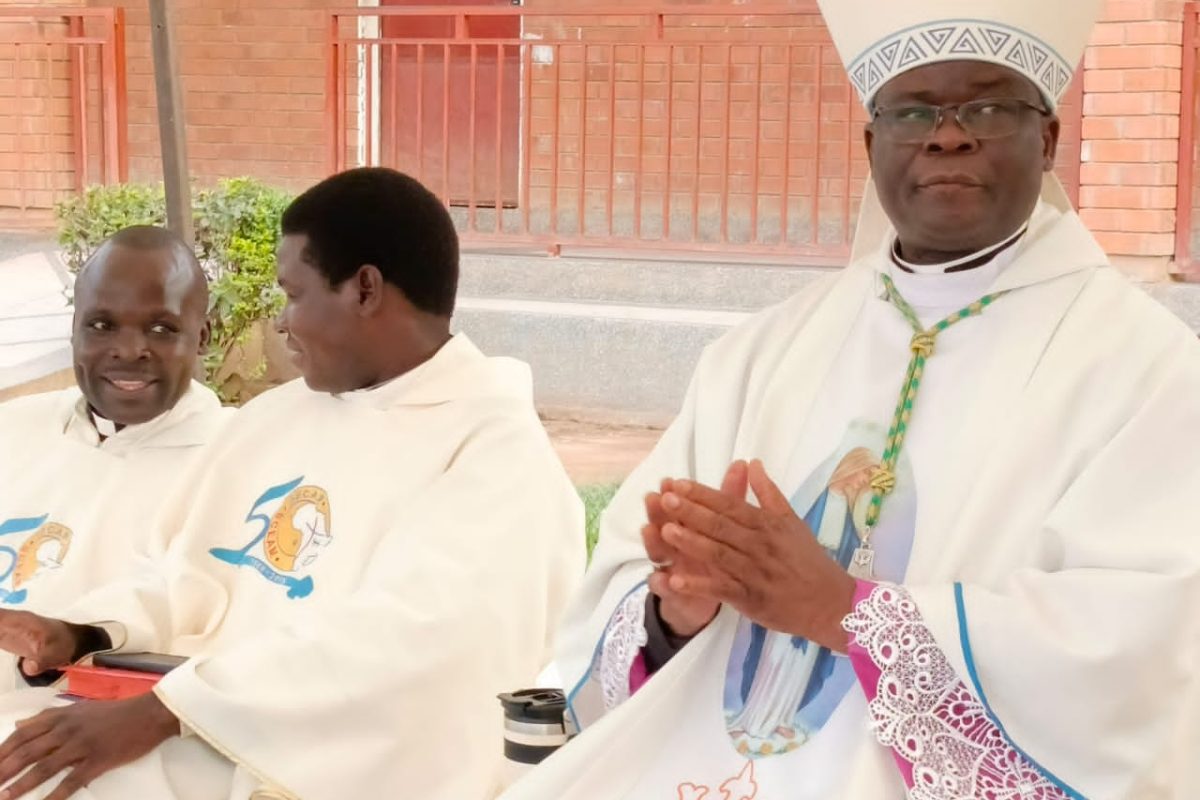
Lira, Uganda – The Bishop of Lira diocese Rt Rev. Sanctus Lino Wanok has called on Christians to embrace a journey of shared faith, deeper listening, and communal transformation on the occasion of Second Sunday of Lent (Year A).

In his homily, Bishop Wanok reflected on the readings of the day taken from the Book of Genesis (12:1–4), the Second Letter of St Paul the Apostle to Timothy (2 Timothy 1:8–10), and the account of the Transfiguration in the Gospel of Matthew (17:1–9). He centered his message on the theme: “Walking Together, Listening Together, Being Transfigured Together.”

A Call to Go Forth in Faith

Drawing from the call of Abram in Genesis, Bishop Wanok emphasized that God invites His people to move forward in trust, even without a clear roadmap.

“‘Go forth… to a land that I will show you,’” the bishop recalled, noting that Abram received a promise rather than detailed directions. He said this reflects the Church’s present journey, where believers are called to leave behind fear, rigidity, and comfort, and trust in the guidance of the Holy Spirit.

“Our God is not static,” he said. “He is a God who calls, who sends, who walks with His people.”

Trust Rooted in Mercy

Referencing the Responsorial Psalm, “Lord, let your mercy be on us, as we place our trust in you”, the bishop underscored that unity within the Church begins with confidence in God’s mercy.

He noted that Christians walk together not because of perfection, but because they are loved by God. In a world marked by cultural and political divisions, he said, the Church is invited to rediscover shared hope grounded in divine kindness.

Bearing Hardship for the Gospel

Turning to St. Paul’s exhortation to Timothy, Bishop Wanok acknowledged that the journey of faith is not without challenges. He encouraged believers to “bear hardship for the Gospel” with courage rooted in grace.

“Walking together means carrying one another’s burdens,” he said, stressing that the Christian vocation is founded not on human achievement but on God’s saving grace revealed in Christ.

Listening at the Heart of the Church

Reflecting on the Transfiguration, the bishop described the moment when Jesus revealed His glory before Peter, James, and John, alongside Moses and Elijah. He highlighted the voice of the Father: “This is my beloved Son, listen to him.”

He emphasized that listening is essential to the Church’s life.

“Before we speak, we must listen, first to Christ, then to one another,” Bishop Wanok said, adding that Christ must remain at the center of every Christian journey.

He also pointed out that after the disciples’ fear subsided, “they saw no one else but Jesus alone,” reminding the faithful that personal agendas and ideologies must give way to Christ.

From the Mountain to Mission

While Peter desired to remain in the glory of the mountaintop, Bishop Wanok observed that Jesus led the disciples back down to continue their journey toward the Cross and Resurrection.

Moments of prayer and reflection, he said, are meant to strengthen believers for service, especially to the poor, the wounded, and those who feel unheard.

A Lenten Path of Transformation

Concluding his homily, Bishop Wanok described Lent as a communal path of transformation. He urged Christians to move forward in faith like Abram, trust in the Lord’s mercy, endure hardship for the Gospel, and listen attentively to Christ.

“May this Lenten journey transfigure us not individually only, but as a people walking together so that the world may see, through us, the light of Christ,” he prayed.

The bishop’s message resonated with the faithful as they continue their Lenten observance, reflecting on how to grow together in faith, unity, and hope.

End
Bishop Wanok Calls Faithful to “Choose Life” at Start of Lent

By Fr. Isaac Ojok, Communications Office, Lira Diocese

Barogole, Lira Diocese- February 22, 2026

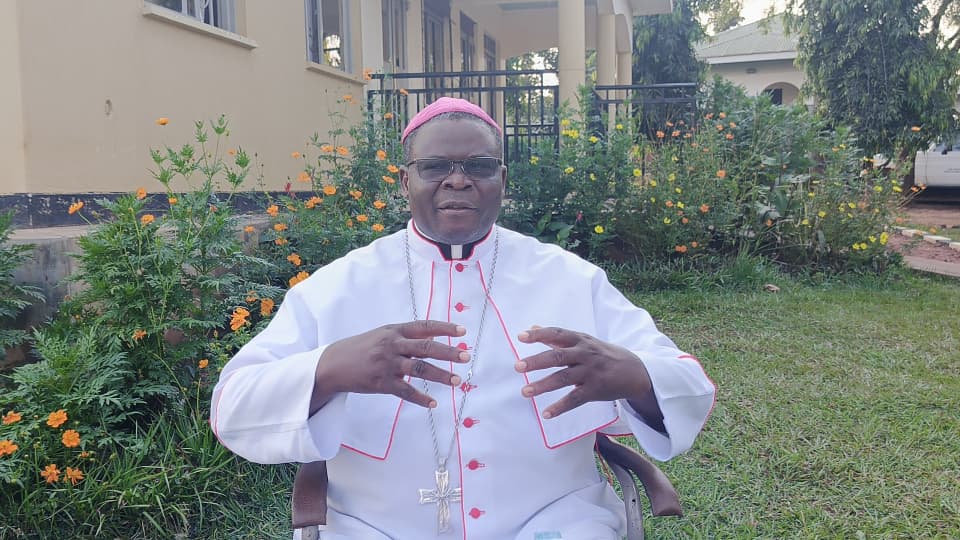
The Rt. Rev. Sanctus Lino Wanok, Bishop of Lira Diocese, on Sunday 22th February 2026 urged Christians to rediscover their true identity in God and to resist temptation by choosing life in Christ, as he presided over the Eucharistic celebration for the First Sunday of Lent at his residence, Nazareth Family Centre, Barogole.

In his homily themed “From the Garden to the Desert and Choosing Life,” Bishop Wanok reflected on the spiritual journey from the Garden of Eden to the desert where Jesus faced temptation, describing the biblical scenes as “mirrors in which we see our own lives.”

From Dust to Dignity

Drawing from the Book of Genesis, the Bishop reminded the faithful that human beings are both fragile and sacred.

“We are dust, fragile, weak, limited. But we are also God’s breath — sacred, dignified, loved,” he said, noting that Lent begins with the humbling but hopeful reminder of Ash Wednesday: “Remember that you are dust, and to dust you shall return.”

He cautioned that sin begins when people forget their identity as creatures dependent on God. “We are creatures, not gods. We are receivers, not masters of life,” he emphasized.

The Root of Temptation: Distrusting God

Reflecting on the fall of Adam and Eve, Bishop Wanok said temptation often begins with doubt.

According to the Bishop, sin promises fulfillment but ultimately leads to shame, fear, and hiding from God. “Sin always promises more, but delivers less,” he told the congregation.

Christ the New Adam

Referencing the Letter of St. Paul to the Romans, Bishop Wanok highlighted the contrast between Adam’s disobedience and Christ’s obedience. While sin entered the world through one man, he noted, grace has overflowed through Jesus Christ.

“Sin is real, but grace is greater,” he proclaimed, describing this as the central hope of the Lenten season.

He drew a striking comparison between Adam and Jesus: “Adam said yes to temptation in a garden full of food. Jesus says no to temptation in a desert of hunger. This is the turning point of history.”

The Three Areas of Temptation

The Bishop explained that Jesus’ temptations in the desert, bread, spectacle, and power, reflect the same struggles faced by believers today: attachment to comfort, pride and self-promotion, and the desire for control without obedience to God.

He noted that Jesus overcame temptation not through displays of power, but through trust in the Father and fidelity to the Word of God.

Lent as Spiritual Medicine

Encouraging practical commitment during the 40-day season, Bishop Wanok described prayer, fasting, and almsgiving as “medicine for the soul.”

“These are not punishments,” he said. “They restore trust in God, free us from slavery to appetite, and break the grip of selfishness.”

Quoting Psalm 51, he called on the faithful to seek a clean heart, a steadfast spirit, and restored joy in salvation, stressing that God desires “not perfect people, but repentant hearts.”

A Message to All

Addressing different groups in society, the Bishop challenged young people to seek meaning beyond pleasure and popularity, encouraged families to rebuild prayer and forgiveness in their homes, and reminded leaders to pursue service over power.

To those struggling or wounded, he offered reassurance: “Christ has already entered your desert.”

A Call to Choose Life

Concluding his homily, Bishop Wanok urged Christians not to see Lent as a season of guilt, but as a time of renewed hope.

“From Adam to Christ, from failure to grace, from temptation to victory, God is offering us again what was lost in the Garden: friendship with Him,” he said.

The First Sunday of Lent marks the beginning of the Church’s 40-day spiritual preparation for Easter, inviting the faithful to deeper conversion and renewed commitment to God.

End

Bishop Sanctus Lino Wanok and Sheikh Ibrahim Okello Call for Spiritual Renewal During Lent and Ramadan

“The danger is not in doing well,” he noted, “but in turning good deeds into performances.” He described Lent not as a form of spiritual theater, but as an expression of hidden love rooted in sincerity and humility.

By Flavia Oyuu, Communications Office, Lira Diocese

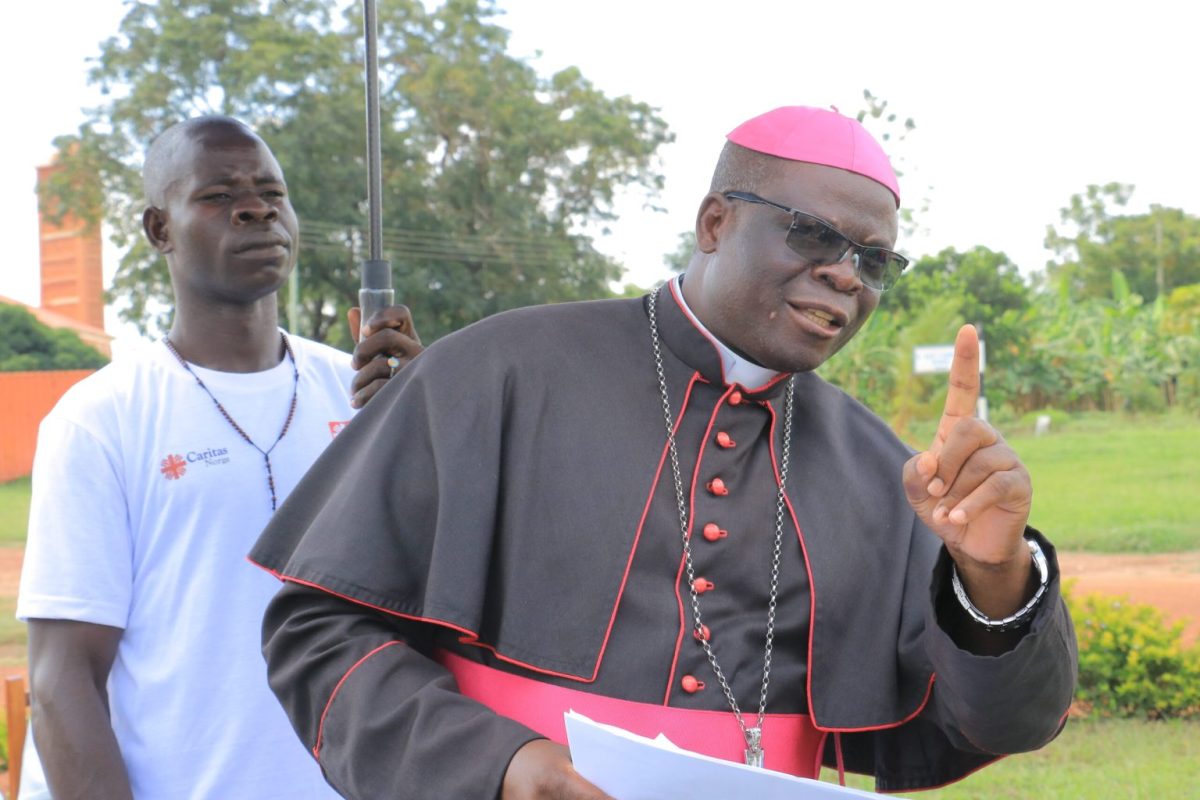
At the beginning of the Lenten season, the Bishop of Roman Catholic Diocese of Lira, Sanctus Lino Wanok, has called on Catholics to deeply reflect on the three pillars of Lent: prayer, fasting, and almsgiving.

While leading the first Mass of Lent at Uganda Martyrs Cathedral this morning, Bishop Wanok urged Christians to focus not merely on performing these acts, but on the intention behind them. He emphasized that Jesus teaches believers not to perform righteous deeds to be seen by others, not to pray to impress, and not to fast in order to appear holy.

“The danger is not in doing well,” he noted, “but in turning good deeds into performances.” He described Lent not as a form of spiritual theater, but as an expression of hidden love rooted in sincerity and humility.

The Bishop encouraged the faithful to use this season as a time of honest self-examination, posing reflective questions: Where is my heart divided? What needs to be torn away? What attachments are weakening my love for God? Where do I need reconciliation?

He further explained that each of the three pillars of Lent serves a deeper spiritual purpose. Fasting weakens attachment to comfort, almsgiving reduces attachment to possessions, and prayer diminishes reliance on self-sufficiency. Together, he said, they create space for God in one’s life.

Bishop Wanok reminded the congregation that while the ashes received on Ash Wednesday will eventually fade, the grace of the Lenten season can leave a lasting spiritual mark. He stressed that Lent is not about gloominess, but about freedom, freedom from sin, pride, and anything that hinders wholehearted love for God.

“We begin in humility, as dust, but we journey toward Easter and the promise of resurrection,” he said. “Today we acknowledge who we are, and we remember whose we are.”

As the Lenten season begins, Bishop Wanok’s message calls on the faithful to move beyond outward observance and embrace genuine interior transformation. Through sincere prayer, sacrificial fasting, and generous almsgiving, Christians are invited to prepare their hearts for Easter with humility, freedom, and renewed devotion.

In Lira Urban West Archdeaconry in the Diocese of Lango, the Archdeacon Rev. Canon Dr. Jacky Otto Olima, has urged Christians to use the Lenten season as a time for reconciliation and restoring broken relationships through forgiveness.

Speaking to the media, Rev. Canon Dr. Olima encouraged believers to forgive those who may have wronged or offended them in the past, emphasizing that Lent is a period of reflection, healing, and spiritual renewal.

He noted that the recent political elections left many people hurt, heartbroken, oppressed, and disappointed. According to him, such emotional and social tensions have contributed to increased sin in the Lango sub-region, including murder and other forms of injustice.

Rev. Canon Dr. Olima further revealed that the church will dedicate this Lenten season to three key petitions before God, including prayers for unity in the aftermath of the political period and a renewed call for forgiveness among the faithful.

The Archdeacon emphasized that true observance of Lent goes beyond fasting and prayer, calling on Christians to actively pursue peace and reconciliation. He urged the community to embrace forgiveness and unity as essential steps toward healing divisions and fostering harmony within society.

Meanwhile, the District Khadi of the Lango Muslim Supreme Council, Sheikh Ibrahim Okello, has called on Muslim communities to faithfully observe the holy month of Ramadan by fasting from pre-dawn to sunset and dedicating more time to prayer and reading the Holy Qur’an.

Speaking to the media, Sheikh Okello emphasized that Ramadan is not only about abstaining from food and drink, but also about spiritual and physical discipline. He encouraged Muslims to use the sacred period to strengthen their faith and avoid negative behaviors such as gossiping, backbiting, lying, and engaging in unnecessary arguments.

He described Ramadan as a time of deep spiritual renewal and heightened devotion, where believers are given an opportunity to draw closer to Allah through prayer, reflection, and good deeds.

However, Sheikh Okello clarified those certain vulnerable groups including pregnant and breastfeeding women, the sick, the elderly and young children are exempt from fasting, in accordance with Islamic teachings.

Sheikh Okello urged the faithful to make meaningful use of the holy month by nurturing discipline, compassion, and self-control. He noted that when observed with sincerity and commitment, Ramadan becomes a powerful period of transformation for both individuals and the wider community.

End