English
 Arabic
 Chinese (Simplified)
 Dutch
 French
 German
 Italian
 Portuguese
 Russian
 Spanish

By Flavia Oyuu, Communications Office, Lira Diocese
Land stakeholders in Dokolo District have called for stronger collaboration between community-based paralegals, local government authorities, land governance institutions, police and other justice actors to prevent land disputes from escalating into costly court battles.
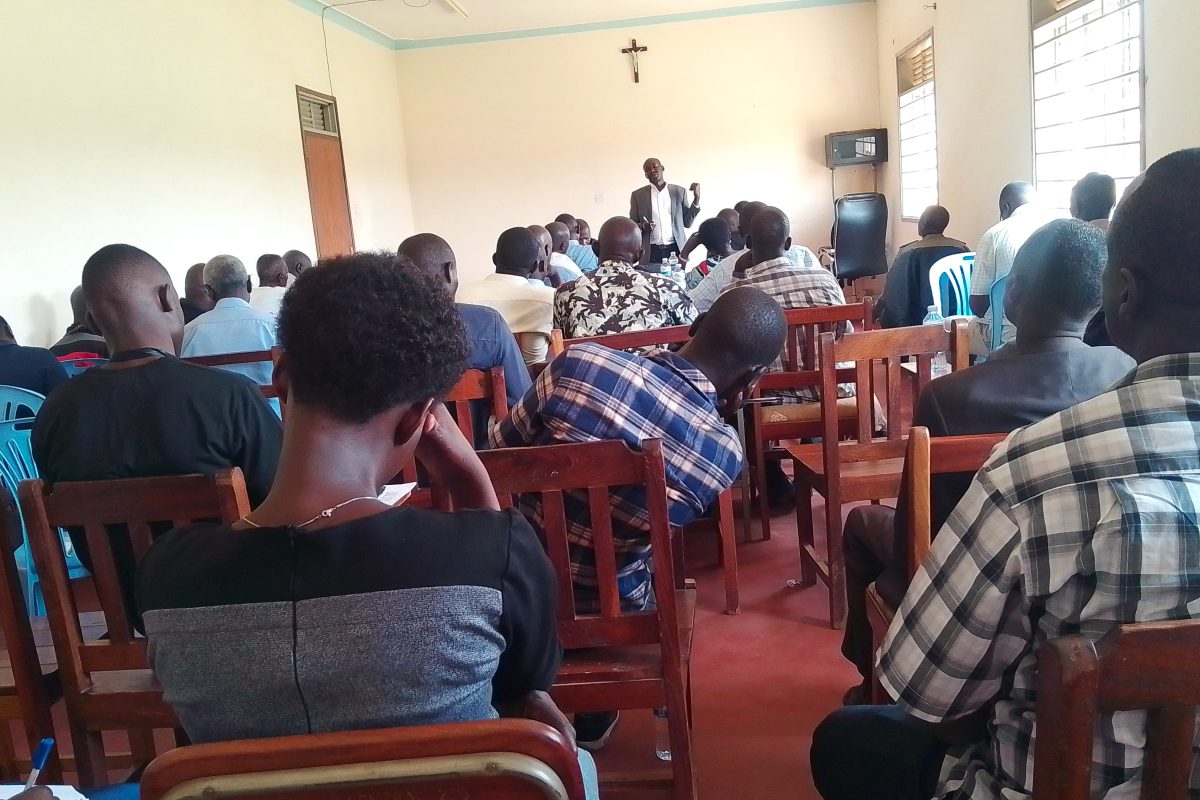
The call was made on Tuesday, August 11, 2026, during a stakeholder engagement meeting held at the Daniel Comboni Offices in Bar Ogole, Lira City, under the theme “Strengthening the Functionality of Community-Based Paralegals Through Collaboration with Decentralised Justice and Land Governance Institutions.”
The meeting, organised by PELUM Uganda in partnership with Caritas Lira, brought together about 60 participants, including community-based paralegals, police officers, Dokolo District Land Board members, Area Land Committee members, sub-county chairpersons, LC1 leaders, civil society organisations and other stakeholders involved in land governance and justice.
The meeting served as a quarterly reflection for community-based paralegals working in Dokolo District and its sub-counties, particularly Amwoma Sub-county, where the paralegals have been trained to provide basic legal awareness, support communities to understand their land rights and help mediate disputes within their communities.

Speaking during the meeting, PELUM Uganda Program Manager for Advocacy, James Cleto Mumbere, said the organisation works with member organisations, including Caritas Lira, to strengthen the capacity of communities to sustainably manage their resources and protect their land rights.
He said the meeting was intended to strengthen collaboration among the different institutions involved in land matters and assess how the paralegals were carrying out their work.
“We are here today to have a quarterly reflection meeting with the community-based paralegals,” Mumbere said, adding that the engagement also brought together district land boards, Area Land Committees, police, civil society organisations and representatives of religious and cultural institutions.
He said the discussions focused on how paralegals were sensitising communities about land rights, creating awareness and mediating cases that fall within their capacity.
According to Mumbere, the work of the paralegals is beginning to extend beyond land matters, with some being entrusted by their communities to monitor children who are absent from school.
He said secure land tenure was also important for agricultural production and food security because farmers were unlikely to invest confidently in their land where ownership remained uncertain.
Prevent disputes before they reach court
A major concern raised during the meeting was the financial and social burden associated with prolonged land cases in courts of law.
Counsel Egum Moses urged community-based paralegals to focus on prevention and alternative dispute resolution, while recognising the limits of their mandate and referring complex cases to the appropriate institutions.
He said early intervention could prevent disputes from developing into prolonged court cases, which often require significant financial resources and may take years to resolve.
Moses encouraged the paralegals to work with religious leaders, cultural leaders, clan leaders and other recognised community structures where appropriate to resolve disputes peacefully before they escalate.
He also emphasised the importance of proper documentation when acquiring land.
He advised people buying land to ensure that agreements clearly indicate the land being purchased, its size, location, purchase price, payment arrangements, date and witnesses.
He noted that informal or incomplete agreements can become a source of conflict when circumstances change or one of the parties later disputes the transaction.
The need for proper documentation was also linked to land registration and security of ownership, with participants encouraged to take steps to have their land properly documented and registered.
Land disputes affecting women, children and other vulnerable people
The meeting also highlighted the vulnerability of women, children and other disadvantaged groups in land-related disputes, particularly in matters involving inheritance and succession.
Moses urged stakeholders to promote women’s land rights and ensure that widows and children are not unfairly deprived of land following the death of a family member.
He also raised concerns about the consequences of people dying without wills, particularly in families where there are multiple spouses and children.
The discussions revealed that lack of knowledge about land laws, family inheritance disputes, inadequate documentation, corruption and political interference continue to complicate land governance.
Participants also identified disputes involving children’s inheritance as one of the issues requiring greater community sensitisation.
At one point, the facilitator asked participants how many had already prepared their wills. The room fell silent, with only one participant indicating that he had a rough sketch of a will.
The moment underscored the need for greater awareness about succession planning and the importance of putting one’s wishes in writing before death.
Dokolo Land Board reports progress in land registration

The Chairperson of the Dokolo District Land Board, Moses Ejor Ongom, explained the role of the District Land Board and Area Land Committees in the land registration process.
He said the District Land Board works alongside Area Land Committees, which play an important role in verifying applications and ensuring that necessary procedures are followed before applications are approved.
The board also handles applications for different forms of land ownership and plays a role in determining compensation rates for land affected by government projects.
The meeting heard that efforts to sensitise communities about land registration have resulted in increased applications for registration in the district.
According to information shared during the meeting, the District Land Board has received about 6,000 files for land registration, approved approximately 4,000 and uploaded about 400 onto the Land Information System.
The progress was presented as an indication of growing awareness among communities about the importance of securing formal documentation for their land.
Police call for early intervention
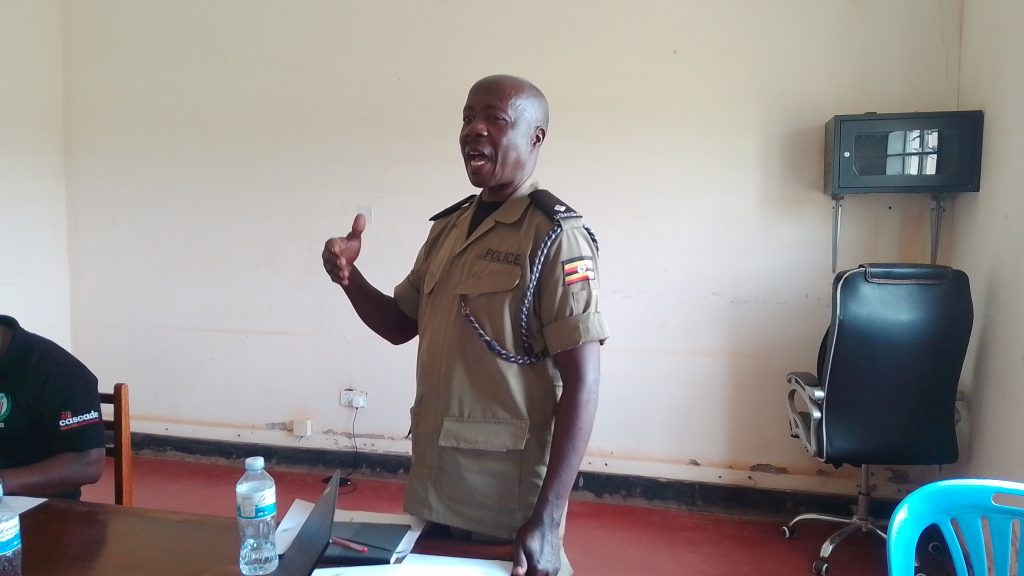
The Officer in Charge of Amwoma Police Station and Community Liaison Officer, Olwit Joseph, said police have an important role in preventing crimes that may arise from land disputes, although land ownership disputes themselves are generally handled through the appropriate land governance and justice institutions.
He said land conflicts can sometimes result in criminal offences including fighting, assault, malicious damage and, in serious cases, murder.
He explained that police work with Area Land Committees and other relevant institutions when dealing with land-related complaints, while intervening where criminal offences have been committed.
The police therefore encouraged community structures to identify and address conflicts before they develop into criminal incidents.
Paralegals taking justice closer to communities
Community-based paralegals trained by Caritas Lira are drawn from the communities they serve, with about ten trained paralegals operating in each participating sub-county.
Their role is particularly important for vulnerable people who may not have the financial means or knowledge required to pursue cases through formal courts.
Through sensitisation and mediation, the paralegals help community members understand land ownership, inheritance, succession, women’s rights and other aspects of land governance, while referring matters beyond their capacity to the appropriate authorities.
One of the experiences shared during the meeting demonstrated how the model is beginning to take root at community level.
A trained paralegal from Amwoma explained that after completing his training, his LC1 leadership handed over land-related matters in the community to him. He subsequently organised a community meeting attended by residents, the LC1 chairperson and members of the local leadership, through which land issues were discussed and addressed.
His responsibilities have since expanded beyond land matters. He was also asked to help monitor school attendance in the community, moving from household to household to establish whether parents were sending their children to school.
For PELUM Uganda and Caritas Lira, the experience demonstrates how trained community members can become important links between vulnerable communities and formal justice, land governance and local government institutions.
Stakeholders call for continued sensitisation
The participants agreed that communities still require more information about land laws, land registration procedures, inheritance, succession and the rights of women and children.
Caritas Lira Program Coordinator Francis Ojok said the engagement was intended to strengthen coordination among the different actors involved in land matters and help communities understand the correct procedures for acquiring and securing land.
He said land remains a primary factor of production and that people need to understand the steps involved in lawfully acquiring and securing ownership.
The LC3 Chairperson of Amwoma Sub-county, Opono Denis, urged participants to take the lessons from the meeting back to their communities, saying many conflicts are rooted in limited knowledge and poor planning.
He called for continued community sensitisation and encouraged stakeholders to work towards transforming land-related conflicts into peaceful solutions.
The meeting ended with a renewed call for stronger collaboration between community-based paralegals and decentralised justice and land governance institutions so that disputes can be identified and addressed early.
The stakeholders emphasised that prevention, awareness and peaceful mediation should remain the first line of response, while cases that fall outside community mechanisms should be referred to the appropriate land, police or judicial institutions.
For communities where land is the foundation of homes, agriculture and livelihoods, the message from the meeting was clear: knowing one’s rights, documenting ownership and resolving disputes early can prevent a land disagreement from becoming a much bigger problem.