en English
ar Arabiczh-CN Chinese (Simplified)nl Dutchen Englishfr Frenchde Germanit Italianpt Portugueseru Russianes Spanish
What are you looking for?

Category Archives: Church Develpment

Prime Minister Nabbanja Contributes Shs20 Million Towards Renovation of St. Francis Xavier Catholic Church, Dokolo

Prime Minister Robinah Nabbanja has contributed Shs20 million towards the renovation of St. Francis Xavier Catholic Church in Dokolo District, as the parish appealed for greater support towards restoring the historic church and improving other parish facilities.

By Flavia Oyuu, Communications Office, Lira Diocese

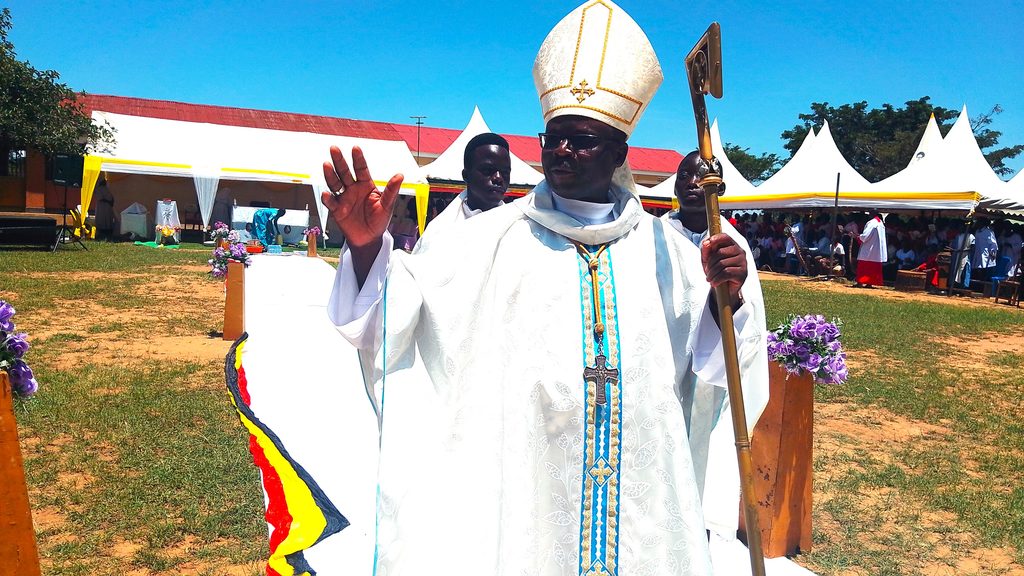
The contribution was announced on Saturday, 26 September 2026, during a fundraising function held at St. Francis Xavier Catholic Church, where the Prime Minister was Guest of Honour.

Her message was delivered by the Minister for Relief, Disaster Preparedness and Refugees, Hon. Sam Engola, who said the Prime Minister had reaffirmed her commitment to supporting Church-led development initiatives and projects aimed at improving communities.

Hon. Engola, who is also the Member of Parliament for Erute South, further pledged to support efforts to mobilise the resources needed to complete the renovation of the church sanctuary. He also said he would work towards inviting President Yoweri Kaguta Museveni to the church.

The Bishop of Lira Diocese, Rt. Rev. Sanctus Lino Wanok, who was the main celebrant, used his homily to remind Christians that the physical development of the Church should not be left entirely to external supporters.

Bishop Wanok emphasised that the responsibility of renovating and developing church buildings also belongs to the local Christian community. He encouraged the faithful to take an active role in supporting the renovation of their sanctuary, describing personal financial contributions as an expression of faith, unity and communion.
A Church With a Long History

St. Francis Xavier Catholic Church has a history dating back to 1958. The church was established on 1 October 1958 by the Parish Priest of Lwala Catholic Parish, following the establishment of Lwala Parish by Soroti Diocese.

The church had earlier been under the Archdiocese of Tororo, which later established Soroti Catholic Diocese. The first parish priest of Dokolo was Fr. Joe Delthy, later named Fr. Ocen Delley, a Mill Hill Missionary priest. The parish was opened by Bishop Monk Grift of Tororo Diocese.

In 1962, the Verona Fathers deployed Fr. Joseph as the first Verona Father to serve in Dokolo. He served there from 1962 to 1969 and supervised the construction of the present church building, with assistance from Brother Pendin, an Italian brother, who took part in the construction works.

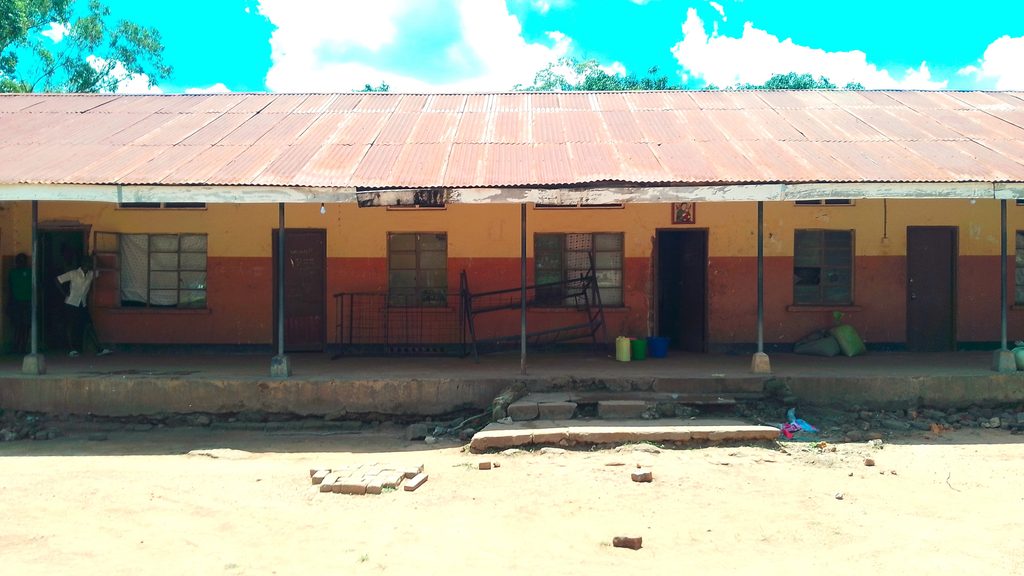
The historic church building now requires renovation, prompting the parish to appeal for support towards its refurbishment.

Appeal for Support to the Vocational School

The parish also used the occasion to highlight the needs of St. Francis Vocational Training School, which was established by Dokolo Catholic Parish and currently has about 500 students.

The institution offers practical skills in areas including carpentry and joinery, block and concrete practice, tailoring, electrical and motor vehicle maintenance, welding and hairdressing.

The vocational school is part of the parish’s effort to equip young people with practical skills and contribute to employment creation. However, the institution relies largely on limited contributions from parents, which the parish says are insufficient to meet its needs.

Among the key challenges are accommodation for students and instructors, as well as the need for additional dormitories, sanitary facilities and classrooms.

The parish therefore appealed to the Government of Uganda not only to support the renovation of the church, but also to consider grant-aiding the vocational school.
Leaders Pledge Support

Dokolo District LCV Chairperson Peter Ogwang pledged administrative support to ensure that the development of churches in the district proceeds smoothly.

Ogwang said the district administration would work to address bureaucratic and administrative challenges that could create disagreements between the district authorities and Church leadership and potentially delay development projects.

The Dokolo North County Member of Parliament, Hon. Joseph Jones Ogwal, and the Dokolo South County Member of Parliament, Hon. Vincent, each contributed Shs1 million towards the renovation of the church.

The two legislators also pledged to continue supporting Church development initiatives in the district.

Hon. Engola also highlighted his recent support to Catholic clergy in the region, saying he had donated several new vehicles to parish priests and other clergy members to facilitate their pastoral work and improve mobility.

The fundraising function also marked the beginning of preparations for the parish’s planned platinum celebration, commemorating 75 years of the Church’s existence.

The parish continues to appeal to Christians, government, well-wishers and other partners to support the renovation of the historic church and the development of its vocational training institution.

End

Bishop Wanok Urges Christians to Remain Firm in Faith Amid Rise of Religious Sects

He noted that some new religious groups claim that Christ is present only within their particular church or movement, urging Christians to be cautious of teachings that can create confusion and division among the faithful.

By Flavia Oyuu, Communications Office, Lira Diocese

Lira, September 4, 2026 — The Bishop of Lira Diocese, Rt. Rev. Sanctus Lino Wanok, has urged Christians to remain firm in their faith and exercise discernment amid the emergence of religious groups claiming to have exclusive access to Jesus Christ.

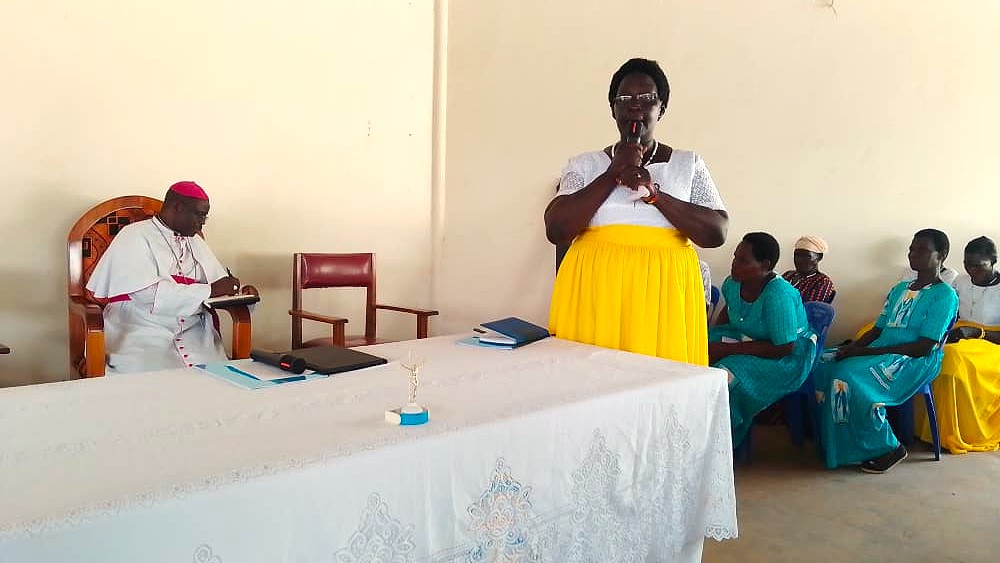
Bishop Wanok made the call on Friday while addressing more than 200 members of the Women’s Guild from parishes and sub-parishes across Lira Diocese who gathered at the Ordination Ground at Uganda Martyrs, Lira Cathedral, for a visit and fellowship with their Bishop.

The Bishop cautioned Christians against being easily drawn into emerging religious movements without carefully examining their teachings and beliefs.

He noted that some new religious groups claim that Christ is present only within their particular church or movement, urging Christians to be cautious of teachings that can create confusion and division among the faithful.

Bishop Wanok encouraged Christians who were born and baptized in the Christian faith to remain grounded in their faith, discern religious teachings carefully and promote unity rather than division.

He also called on the Women’s Guild to strengthen unity and love within their families and communities.

The Bishop thanked the women for taking time to visit him, saying such fellowship strengthens the bond between the clergy and the faithful.

Women’s Guild Presents Activity Report

The visit also provided an opportunity for the Women’s Guild to present its report on activities carried out across the Diocese from 2023 to date.

Presenting the report, the Diocesan Women’s Guild Coordinator, Imat Anna Lumumba Odongo, described women as an important pillar in the life and mission of the Church.

“Women are the backbone of the Church. When we fold our arms, the Church dies; when we open our hands, the Church flourishes,” she said.

Odongo said the Guild’s activities are anchored on five key pillars: faith; sharing love and supporting people in need; promoting unity in the Church; serving God, communities and families; and promoting respect, accountability and the visibility of Christian women.

She said the women are engaged in both spiritual and physical activities, including evangelisation, prayer, supporting priests and catechists, caring for vulnerable people and establishing small income-generating projects.

Among the economic initiatives are Village Savings and Loan Associations (VSLAs), livestock rearing and other parish-based projects.

Odongo cited Lira Cathedral as an example, where women saved 78 million shillings through their VSLA but distributed the entire amount among members at the end of the saving cycle.

She appealed to Bishop Wanok to help the Guild identify someone who could train the women in better savings and investment practices so that part of their savings can remain in a common pool and be invested for future growth.

Several parishes have already developed initiatives aimed at making the Guild more self-sustaining.

At Ngetta Parish, women operate a VSLA and other savings initiatives, including a project locally referred to as “chai,” through which members contribute savings that are used to purchase household items for selected members.

The women have acquired items including saucepans, mattresses, cups, plates and mats, while plans are underway to purchase iron sheets.

At Anai Parish, women have similar initiatives, including tents that are hired out to generate income. In Omoro, the Guild has invested in cattle, increasing its herd from three cows to ten, while women in Agwatta are involved in rearing sheep and goats.

Odongo said the Guild has also encouraged women to undertake household-level projects, including keeping chickens, pigs and other livestock, as part of efforts to strengthen household livelihoods.

She singled out Ngetta Parish as a leading example in implementing the initiative, saying it could become a model parish for other Women’s Guild groups.

The Coordinator said the strength of the Women’s Guild was also demonstrated during major diocesan events, including Diocesan Day celebrations and priestly ordinations, where the women provided the support requested by organising committees.

Guild Highlights Challenges

Despite the achievements, Odongo said the Guild continues to face challenges related to resources, registration fees, cultural practices and changes in leadership.

She said the annual registration fee of 3,000 shillings, which is shared among the chapel, parish and diocesan offices, is sometimes not paid by some members, making it difficult for women’s representatives to carry out activities.

She also raised concerns over cultural practices that restrict women from participating in certain activities, urging Christian women to remain guided by their faith while navigating such cultural expectations.

Another concern was the frequent change of Women’s Guild leaders before they complete their terms.

Odongo appealed for greater consultation between priests and women when selecting Guild leaders, saying frequent changes can disrupt development and undermine leaders who have already been trained and established in their roles.

She suggested that leaders be allowed to complete their three terms where possible and continue serving as advisers after retirement.

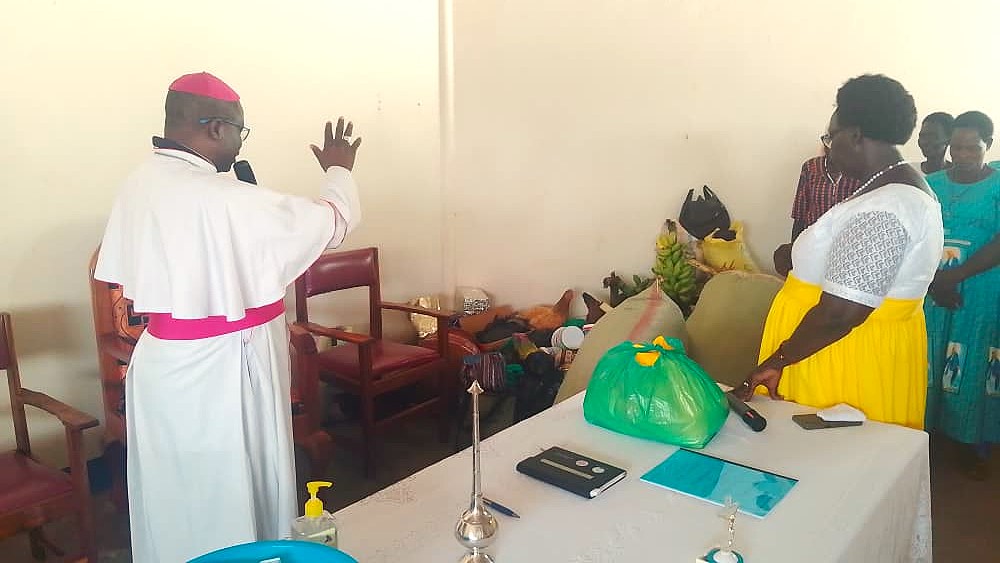
The Women’s Guild also presented an offertory to Bishop Wanok, consisting of food and other items as a gesture of appreciation and solidarity with their Bishop.

Some of the women who spoke after the meeting said the Bishop’s message had strengthened their faith and encouraged them to promote unity, responsibly manage their families and remain committed to Christian values.

For many of the participants, the opportunity to meet and personally greet their Bishop was also described as a meaningful spiritual experience.

The visit brought together Women’s Guild members from across Lira Catholic Diocese, reflecting the Guild’s continued role in the spiritual, pastoral and socio-economic life of the Diocese.

End

Lira Diocese Strengthens Men’s Guild Through International Formation Visit

“The Church is now going very synodal, where participation of all is highly encouraged and nobody is left behind,” he said. “The mothers and the fathers are the pillars of the Church. If there is any lay movement that should never be left behind, it is that of the mothers and the fathers because they are fundamental to the life of the Church.”

By Flavia Oyuu, Communications Office, Lira Diocese

LIRA, Uganda – Lira Diocese has reaffirmed its commitment to strengthening the Paternity of St. Joseph, commonly known as the Men’s Guild, following a three-day formation and mentorship visit by leaders of the Men of St. Joseph International (MOSJI) movement.

The visit brought together the movement’s International representative Richard “Dick” Kiernan from the Diocese of Manchester in New Hampshire, USA, National Coordinator Paul Katuramu, and Gulu Provincial Coordinator Libolio Otim Kithaghenda. They held meetings with Men’s Guild leaders, visited parish initiatives and shared practical strategies aimed at strengthening Catholic men as leaders in their families, communities and the Church.

The visit concluded at the diocesan offices in Bar Ogole with a meeting attended by the Vicar General of Lira Diocese, Msgr. Innocent Valente Opio, Ngetta Deanery Dean Rev. Fr. Simon Peter Olugu, the chaplain of the Paternity of St. Joseph and members of the Men’s Guild.

Speaking at the closing meeting, Msgr. Opio said the Church’s synodal journey requires greater participation from men, noting that many have increasingly become spectators rather than active participants in parish life.

“The Church is now going very synodal, where participation of all is highly encouraged and nobody is left behind,” he said. “The mothers and the fathers are the pillars of the Church. If there is any lay movement that should never be left behind, it is that of the mothers and the fathers because they are fundamental to the life of the Church.”

He urged members of the Men’s Guild not to be discouraged by their current numbers, comparing the movement to the mustard seed that grows into a great tree.

“You are the hope of the Church and the hope of the Diocese. If you remain committed, the impact of your efforts will be evident in the years to come,” he added.

The Vicar General also emphasized that strengthening families begins with fathers, urging men to take a leading role in family catechesis and faith formation.

He observed that many young people drift away from the Church because Christian values are no longer being nurtured within families as they once were.

“We learnt to pray at home before we even went to school. Family catechesis is very important, and it begins with fathers and mothers taking responsibility.”

Msgr. Opio also highlighted the diocesan vision of promoting economic empowerment among lay associations through savings and cooperatives, saying financially stable groups would be better positioned to support parish activities and reduce dependence on collections.

The National Coordinator of Men of St. Joseph Uganda, Paul Katuramu, described the movement as a lay apostolate dedicated to helping men grow in faith, become better husbands and fathers, and serve both their families and the Church.

He shared how the movement began in Kasese Diocese and has since expanded to 14 Catholic dioceses in Uganda and several other African countries including the Democratic Republic of Congo, Rwanda and Nigeria.

Katuramu encouraged members to embrace both spiritual growth and economic empowerment.

“We have realised that men are suffering both spiritually and economically. We encourage our members to pray, work hard and support their families so that they can also support the Church.”

He further called on members to welcome every man into the movement regardless of his circumstances, stressing that formation should precede judgment.

“Leave no man behind,” he said.

Gulu Provincial Coordinator Libolio Otim Kithaghenda reminded participants that St. Joseph remains the model of Christian fatherhood and responsible leadership.

He said the movement seeks to raise “heroic men” who become disciples in their homes, parishes and communities by following the example of St. Joseph.

Drawing from Acts 1:8, he challenged members to become missionary disciples who share the Gospel beyond their immediate communities.

Richard Kiernan, who also serves on the global leadership of Men of St. Joseph International (MOSJI), encouraged the Diocese to invest in leadership formation by multiplying trainers who can establish strong parish groups.

Sharing the experience of the movement’s growth in the United States and internationally, he stressed that effective Catholic men’s ministry depends on prayer, small faith-sharing groups, leadership development and strong parish support.

“Our mission is to multiply disciples and multiply leaders,” he said, noting that Uganda has become one of the fastest-growing countries within the international movement.

He praised the rapid expansion of the movement in Uganda and expressed hope that East African representatives would participate in the next global Men of St. Joseph conference scheduled for Rome in 2027.

Rev. Fr. Simon Peter Olugu thanked the visiting delegation for strengthening the Diocese and expressed confidence that Lira Diocese would continue growing as a self-sustaining local Church.

“You have not simply given us fish to eat; you have taught us how to fish,” Fr. Olugu said. “When you return, you will find us at a different level because we have the leadership, the commitment and the resources to move forward.”

Men’s Guild Coordinator Jimmy Agnes Bongo said the visit enabled the delegation to appreciate several initiatives already being undertaken by guild members, including agricultural training, poultry keeping, fish farming, rabbit rearing and environmental conservation projects in various parishes.

He said discussions also focused on the challenges facing men and strategies for attracting more Catholic men into the fraternity while promoting spiritual growth alongside economic empowerment.

As part of its future activities, the Paternity of St. Joseph plans to organize a diocesan marathon and health camp aimed at increasing awareness of the movement, promoting men’s health and encouraging greater participation in Church life.

“We want to build strong men and strong communities,” Bongo said. “We invite all men to become part of this fraternity so that together we can strengthen our families, our Church and society by following the example of St. Joseph.”

End