en English
ar Arabiczh-CN Chinese (Simplified)nl Dutchen Englishfr Frenchde Germanit Italianpt Portugueseru Russianes Spanish
What are you looking for?

Yearly Archives: 2026

210 Young Christians Confirmed In Dokolo Catholic Parish During Bishop Wanok’s Pastoral Visit

Bishop Wanok expressed deep concern over the growing number of street children in the Lango sub-region, attributing the situation largely to neglect within homes.

By Flavia Oyuu, Communication’s Office, Lira Diocese

Christians in Dokolo District were spiritually uplifted as Rt. Rev. Sanctus Lino Wanok, Bishop of Lira Diocese, conducted a two-day Pastoral Visit during which he confirmed a total of 210 young Christians.

The Pastoral Visit, marked by prayer, teaching, and sacramental celebration, was not merely ceremonial. It served as a strong pastoral call especially to parents to reclaim their God-given responsibility in nurturing and guiding their children.

The Bishop presided over the confirmation of 145 young Christians at St. Francis Xavier Dokolo Catholic Parish on the first day . In his homily, he urged parents to take an active role in the moral and spiritual upbringing of their children.

Bishop Wanok expressed deep concern over the growing number of street children in the Lango sub-region, attributing the situation largely to neglect within homes. He reminded parents that the family remains the first school of faith, discipline, and values, and that their involvement is crucial in shaping responsible and upright citizens.

Addressing the wider Christian community, the Bishop also reflected on the gift of the Holy Spirit, calling on the faithful to embrace His guidance and teachings. He encouraged them to allow the Holy Spirit to strengthen their faith and lead them on the path of righteousness.

The second day of the Pastoral Visit saw the Bishop confirm 65 young Christians at St. Mary’s Nursery and Primary School. The occasion coincided with the school’s 10th anniversary celebrations, which the Bishop officiated.

He commended the school administration and teachers for their dedication to education, describing learning as a transformative journey that molds children into capable and confident individuals prepared to face the world. Bishop Wanok also praised the discipline exhibited by the pupils, noting that it reflected the school’s commitment to holistic formation.

Impressed by the progress made, the Bishop pledged his continued support towards the development of the institution.

The Bishop’s Visit was not only a moment of sacramental grace, but also a message of hope and renewal. Through his words of wisdom, guidance, and encouragement, Bishop Wanok left a lasting impact on young Christians, parents, teachers, and the wider community.

End
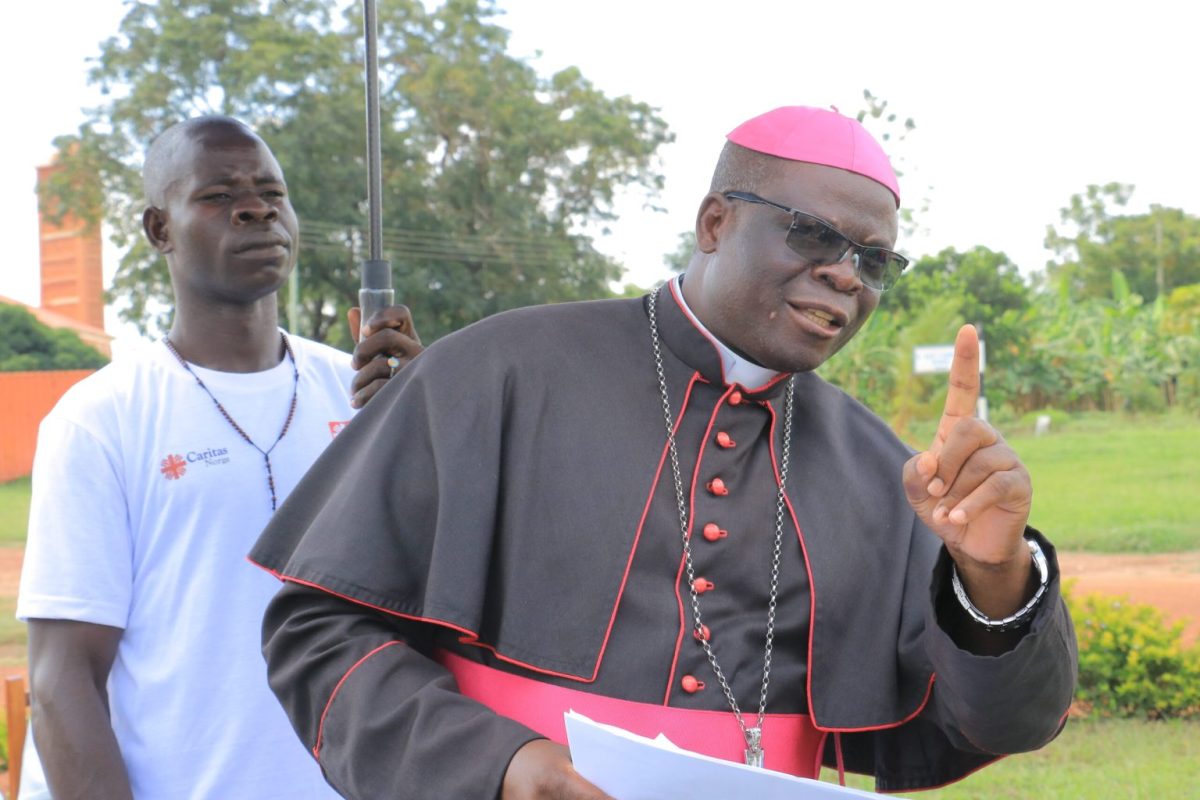
Bishop Sanctus Lino Wanok and Sheikh Ibrahim Okello Call for Spiritual Renewal During Lent and Ramadan

“The danger is not in doing well,” he noted, “but in turning good deeds into performances.” He described Lent not as a form of spiritual theater, but as an expression of hidden love rooted in sincerity and humility.

By Flavia Oyuu, Communications Office, Lira Diocese

At the beginning of the Lenten season, the Bishop of Roman Catholic Diocese of Lira, Sanctus Lino Wanok, has called on Catholics to deeply reflect on the three pillars of Lent: prayer, fasting, and almsgiving.

While leading the first Mass of Lent at Uganda Martyrs Cathedral this morning, Bishop Wanok urged Christians to focus not merely on performing these acts, but on the intention behind them. He emphasized that Jesus teaches believers not to perform righteous deeds to be seen by others, not to pray to impress, and not to fast in order to appear holy.

“The danger is not in doing well,” he noted, “but in turning good deeds into performances.” He described Lent not as a form of spiritual theater, but as an expression of hidden love rooted in sincerity and humility.

The Bishop encouraged the faithful to use this season as a time of honest self-examination, posing reflective questions: Where is my heart divided? What needs to be torn away? What attachments are weakening my love for God? Where do I need reconciliation?

He further explained that each of the three pillars of Lent serves a deeper spiritual purpose. Fasting weakens attachment to comfort, almsgiving reduces attachment to possessions, and prayer diminishes reliance on self-sufficiency. Together, he said, they create space for God in one’s life.

Bishop Wanok reminded the congregation that while the ashes received on Ash Wednesday will eventually fade, the grace of the Lenten season can leave a lasting spiritual mark. He stressed that Lent is not about gloominess, but about freedom, freedom from sin, pride, and anything that hinders wholehearted love for God.

“We begin in humility, as dust, but we journey toward Easter and the promise of resurrection,” he said. “Today we acknowledge who we are, and we remember whose we are.”

As the Lenten season begins, Bishop Wanok’s message calls on the faithful to move beyond outward observance and embrace genuine interior transformation. Through sincere prayer, sacrificial fasting, and generous almsgiving, Christians are invited to prepare their hearts for Easter with humility, freedom, and renewed devotion.

In Lira Urban West Archdeaconry in the Diocese of Lango, the Archdeacon Rev. Canon Dr. Jacky Otto Olima, has urged Christians to use the Lenten season as a time for reconciliation and restoring broken relationships through forgiveness.

Speaking to the media, Rev. Canon Dr. Olima encouraged believers to forgive those who may have wronged or offended them in the past, emphasizing that Lent is a period of reflection, healing, and spiritual renewal.

He noted that the recent political elections left many people hurt, heartbroken, oppressed, and disappointed. According to him, such emotional and social tensions have contributed to increased sin in the Lango sub-region, including murder and other forms of injustice.

Rev. Canon Dr. Olima further revealed that the church will dedicate this Lenten season to three key petitions before God, including prayers for unity in the aftermath of the political period and a renewed call for forgiveness among the faithful.

The Archdeacon emphasized that true observance of Lent goes beyond fasting and prayer, calling on Christians to actively pursue peace and reconciliation. He urged the community to embrace forgiveness and unity as essential steps toward healing divisions and fostering harmony within society.

Meanwhile, the District Khadi of the Lango Muslim Supreme Council, Sheikh Ibrahim Okello, has called on Muslim communities to faithfully observe the holy month of Ramadan by fasting from pre-dawn to sunset and dedicating more time to prayer and reading the Holy Qur’an.

Speaking to the media, Sheikh Okello emphasized that Ramadan is not only about abstaining from food and drink, but also about spiritual and physical discipline. He encouraged Muslims to use the sacred period to strengthen their faith and avoid negative behaviors such as gossiping, backbiting, lying, and engaging in unnecessary arguments.

He described Ramadan as a time of deep spiritual renewal and heightened devotion, where believers are given an opportunity to draw closer to Allah through prayer, reflection, and good deeds.

However, Sheikh Okello clarified those certain vulnerable groups including pregnant and breastfeeding women, the sick, the elderly and young children are exempt from fasting, in accordance with Islamic teachings.

Sheikh Okello urged the faithful to make meaningful use of the holy month by nurturing discipline, compassion, and self-control. He noted that when observed with sincerity and commitment, Ramadan becomes a powerful period of transformation for both individuals and the wider community.

End

Christians in Lira Diocese Urged to Rediscover the Original Purpose of the Catholic Charismatic Renewal

Reflecting on the current challenges facing the Church such as lukewarm faith, a weak sacramental life, and a decline in personal holiness, Mr. Muge expressed hope that his book would help readers rediscover the teachings of the Church and inspire them to live lives rooted in love, unity, holiness, and commitment to the Word of God.

By Flavia Oyuu, Communications Office, Lira Diocese

Christians in Lira Diocese have been called upon to return to the original purpose of the Catholic Charismatic Renewal (CCR) as a way of deepening their faith and revitalizing spiritual life within the Church.

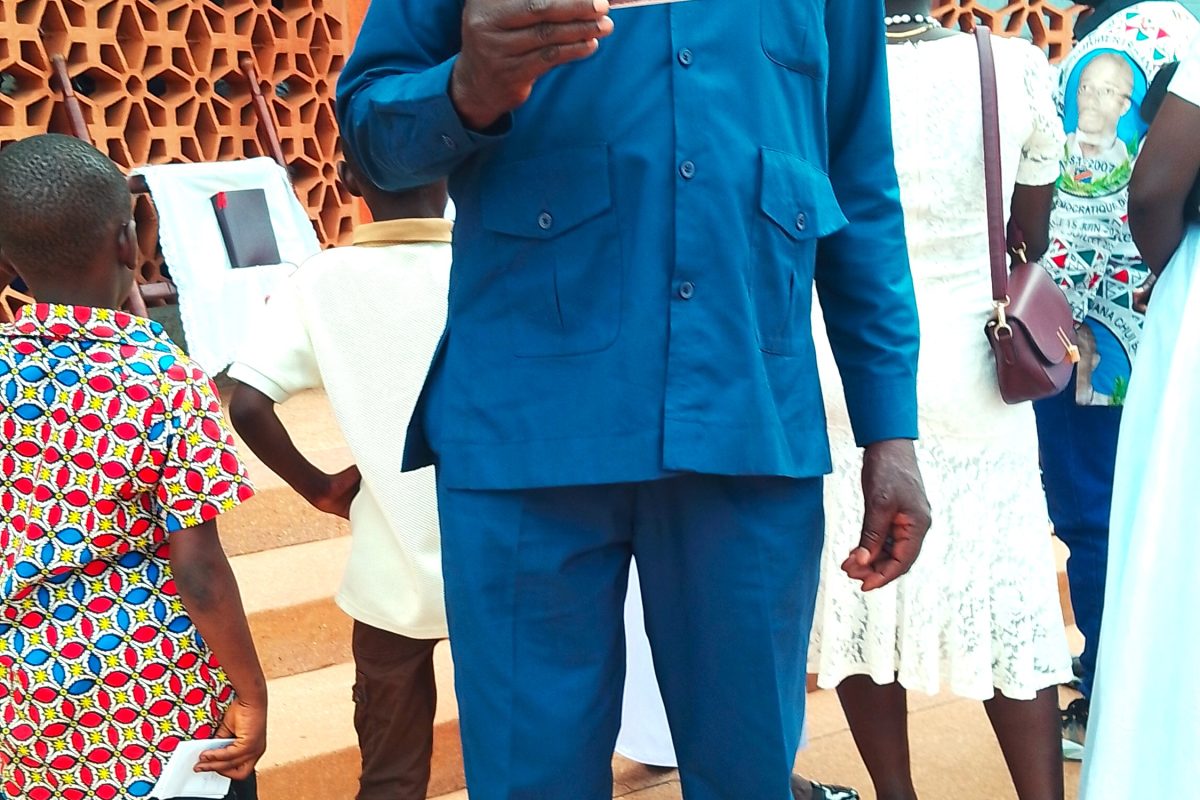
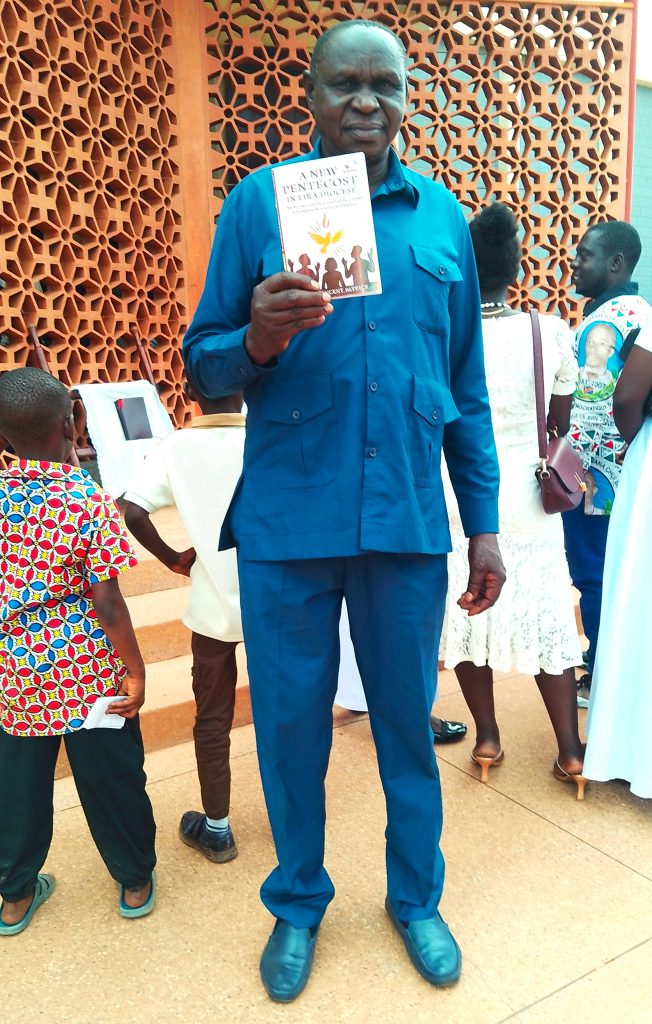
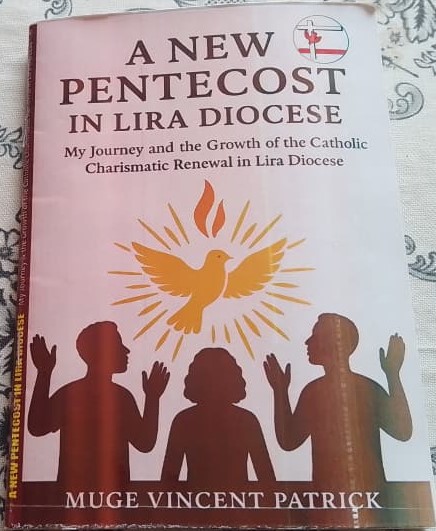
The call was made by Mr. Muge Vincent Patrick, a member of the Catholic Charismatic Renewal in Lira Diocese, during the launch of his book A New Pentecost in Lira Diocese. The book was officially launched on 8th February, 2026  at Uganda Martyrs Cathedral, Lira.

Mr. Muge noted with concern that many Catholics in the Diocese have gradually drifted away from the original vision of the CCR, largely due to a lack of knowledge about its history and foundation. He explained that the Catholic Charismatic Renewal emerged as an answer to a prayer made by Pope John XXIII, who, upon recognizing a deep spiritual need within the Church, prayed fervently for a renewed outpouring of the Holy Spirit, a “new Pentecost.”

He further explained that the CCR was introduced to Lira Diocese in January 1997 through the Teso region. However, many young people today, he observed, are unaware of the sacrifices and struggles faced by the early members. At the time, CCR members endured persecution and rejection, among others, as many people mistakenly believed the movement to be a different religion rather than an expression of Catholic faith.

Reflecting on the current challenges facing the Church such as lukewarm faith, a weak sacramental life, and a decline in personal holiness, Mr. Muge expressed hope that his book would help readers rediscover the teachings of the Church and inspire them to live lives rooted in love, unity, holiness, and commitment to the Word of God.

He emphasized that the Catholic Charismatic Renewal was founded precisely to promote holiness, foster love and unity, and encourage the proclamation of the Word of God within the life of the Church.

Mr. Muge also recalled that Pope John XXIII, during the Second Vatican Council (1962–1965), earnestly prayed for a new Pentecost in response to challenges such as spiritual complacency, declining sacramental life, loss of devotion to holiness, and growing secularism. This prayer, he noted, was answered on February 18, 1967, when a group of students and professors at Duquesne University in Pittsburgh, USA, experienced a powerful outpouring of the Holy Spirit during a retreat an event widely regarded as the beginning of the Catholic Charismatic Renewal.

Consecrated Life Called to Be a Light of Healing and Hope, Bishop Wanok Says

Drawing from the prophecy of Malachi, Bishop Wanok reminded the faithful that the Lord “enters His temple quietly and humbly, yet with power to purify.” He emphasized that consecrated life is not merely a memory or a collection of activities, but a living mystery in which men and women allow God to continually refine their lives.

By Flavia Oyuu, Communications Office, Lira Diocese

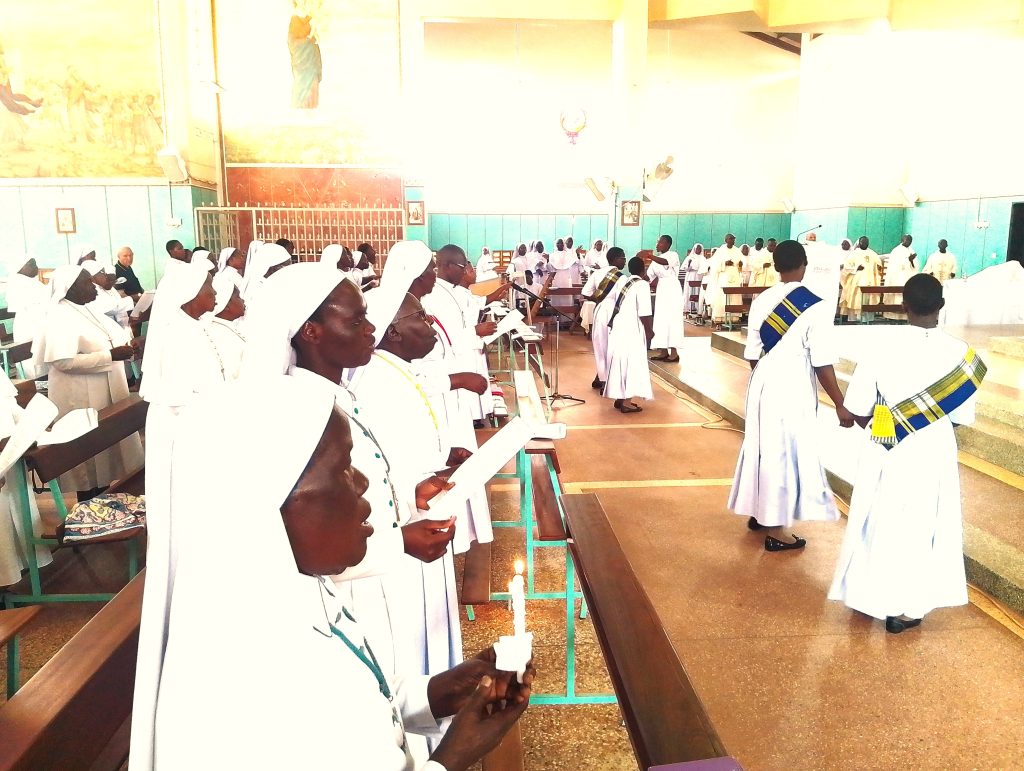
Lira, Uganda – Rt. Rev. Sanctus Lino Wanok, Bishop of Lira Diocese, has called on consecrated men and women to live as a listening, faithful, and healing presence among God’s people, especially in communities marked by suffering, poverty, and the wounds of past conflict.

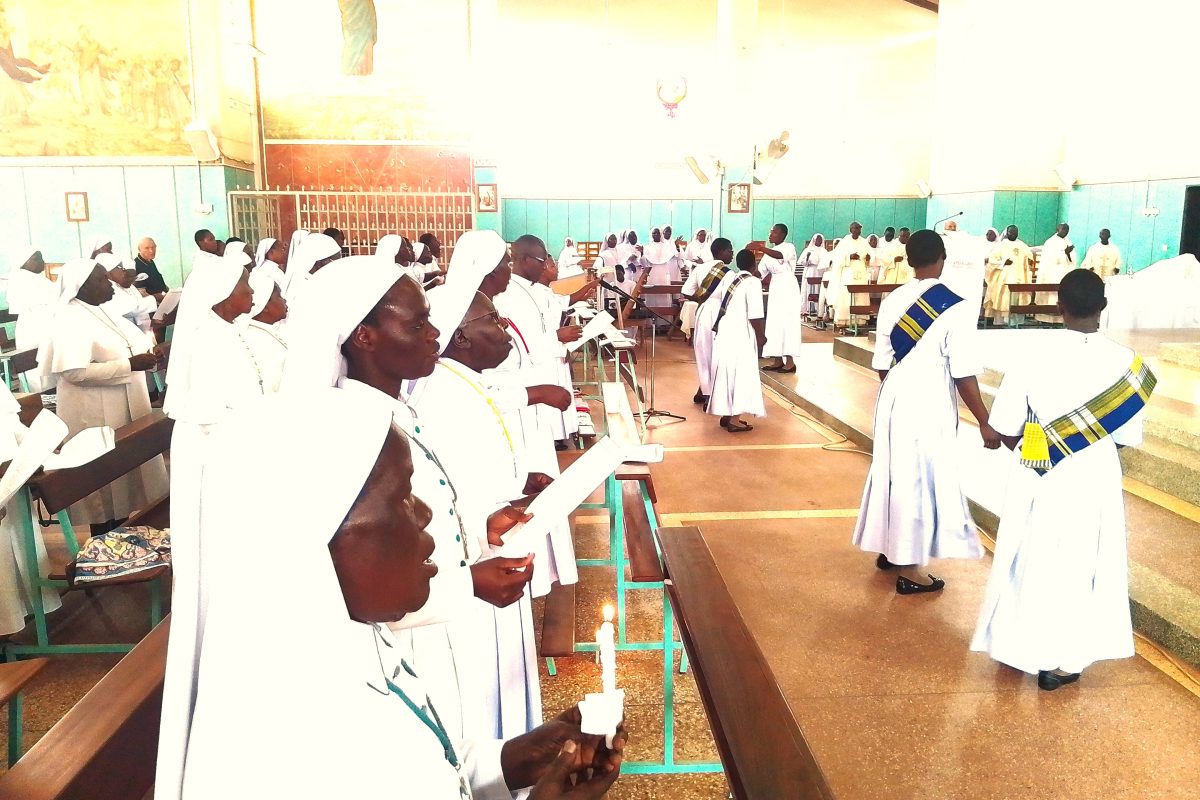
He made the call while presiding over a liturgical celebration for consecrated persons in Lira Diocese, where he reflected on the meaning of consecrated life in light of the Feast of the Presentation of the Lord.

Drawing from the prophecy of Malachi, Bishop Wanok reminded the faithful that the Lord “enters His temple quietly and humbly, yet with power to purify.” He emphasized that consecrated life is not merely a memory or a collection of activities, but a living mystery in which men and women allow God to continually refine their lives.

“The coming of the Lord is not neutral,” he noted. “His presence disturbs, changes, and purifies. Consecrated life begins by standing before God and allowing Him to purify us again and again.”

Referring to the history of Lira and the wider Lango sub-region, the Bishop acknowledged the deep scars left by years of war, poverty, broken families, and overstretched institutions. He said consecrated men and women are placed by God at the heart of these wounded communities as witnesses of hope and healing.

“You are placed in this temple as a sign of what God is doing among His people,” he said.

Reflecting on the Gospel figures of Simeon and Anna, Bishop Wanok described them as symbols of a listening and discerning Church. Though not powerful or prominent, Simeon and Anna recognized the Lord because they remained faithful in prayer and attentive to the Holy Spirit.

“This is the image of a synodal Church,” he said, “a Church that listens, discerns, and walks together across generations.”

He emphasized that synodality is not a program imposed from outside, but a spirituality deeply rooted in the Gospel and reflected in African cultural values of communal wisdom and patient listening. He challenged consecrated persons to model these values so that communities may rediscover their identity and dignity.

Touching on the offering of Mary and Joseph, who presented Jesus with two turtle doves, the Bishop said the simplicity of their offering speaks powerfully to consecrated life today, especially in contexts of limited resources and fragile vocations.

“The Lord does not ask for what we do not have,” he said. “He asks for faithfulness. Synodality means offering what we have together.”

Bishop Wanok also acknowledged the hidden sacrifices of consecrated life, including misunderstanding, loneliness, and unrecognized service. He described these challenges as the “sword” spoken of by Simeon, painful, yet revealing hearts and opening the way for salvation.

“Your life is light,” he told the consecrated men and women. “Light does not argue or oppose; it reveals. Even when no one applauds, your faithful presence speaks.”

He concluded by encouraging consecrated persons to renew their commitment to prayer, community life, and mission, asking God to make the Church a listening, humble, and working Church that brings healing to the people it serves.

End

Bishop Wanok Challenges the Faithful to a Listening Church at the Close of Pastoral Assembly 2026

Presiding at the climax of the Diocesan Pastoral Council, Bishop Wanok drew inspiration from the First Reading (2 Samuel 7) and the Gospel of the day, inviting clergy, religious, catechists, pastoral agents, and lay delegates to embrace synodality as a spiritual posture before it becomes a pastoral programme.

By Fr. Isaac Ojok, Communications Office, Lira Diocese

Lira, 29 January 2026 — The Diocesan Pastoral Assembly 2026 of Lira Diocese came to a solemn and prayerful conclusion on 29 January 2026 with a deeply reflective homily delivered by Rt. Rev. Sanctus Lino Wanok, Bishop of Lira Diocese, during Holy Mass at St. John Bosco Catechetical and Pastoral Centre, Ngetta.

Presiding at the climax of the Diocesan Pastoral Council, Bishop Wanok drew inspiration from the First Reading (2 Samuel 7) and the Gospel of the day, inviting clergy, religious, catechists, pastoral agents, and lay delegates to embrace synodality as a spiritual posture before it becomes a pastoral programme.

 A Council That Ends in Prayer, Not Just Resolutions

Reflecting on King David’s prayer — “Who am I, Lord God?” — the Bishop reminded the assembly that the most important fruit of a synodal Church is humility before God.

“David did not stand to command or rush to act; he sat before the Lord,” Bishop Wanok said. “In the same way, this diocese must always remember that it is not our project, but the Lord’s work.”

He emphasized that genuine synodality begins when Church leaders and communities learn to listen before deciding, pray before planning, and discern before acting. Without this spiritual foundation, he warned, pastoral resolutions risk losing their strength and durability.

 God Builds the House 

Referring to God’s response to David — “I will build a house for you” — the Bishop offered a powerful reminder that while planning and structures are necessary, the growth of the Church ultimately depends on God’s fidelity, not human effort alone.

As the Diocese embarks on its pastoral priorities for the next three to five years, Bishop Wanok urged a balance between human responsibility and divine initiative, cautioning that neglect of prayer leads to exhaustion, lack of listening breeds division, and forgetfulness of God’s promises leads to discouragement.

 The People of God at the Centre

The Bishop highlighted that the Assembly reaffirmed a key teaching of the Second Vatican Council and Pope Francis: the Church is the People of God journeying together.

He underscored the Diocese’s commitment to deeper participation of the laity, a stronger role for women and youth, authentic listening at parish and Small Christian Community levels, and shared responsibility in mission.

“If our plans do not reach the grassroots, they remain theories,” he noted. “If leadership does not listen, it ceases to be pastoral.”

 Placing the Lamp on the Lampstand

Drawing from the Gospel, Bishop Wanok challenged the Diocese to ensure that the outcomes of the Pastoral Council do not remain hidden.

“This council must not end in silence,” he said. “Its resolutions must be visible in action, witness, and accountability.”

He called for clear communication, honest evaluation, humble correction, and grateful celebration of progress, stressing that a synodal Church does not fear the light but walks in it.

 A Way of Walking Together

In his concluding message, the Bishop reminded the faithful that synodality is not a one-time event but a way of life. He encouraged ongoing discernment, unity in diversity, and perseverance against fatigue and division.

Ending with a prayer of blessing inspired by David’s words, Bishop Wanok entrusted every parish, pastoral worker, family, and Small Christian Community to the Lord’s promise.

“May Lira Diocese be a listening Church, a missionary Church, a humble Church, and a truly synodal Church,” he prayed. “May we always have the courage to sit before the Lord and the faith to place the lamp on the lampstand.”

The Diocesan Pastoral Assembly 2026 thus concluded not merely with plans for the future, but with a renewed call to walk together in faith, humility, and mission.

In his closing announcements, Bishop Sanctus Lino Wanok further informed the assembly that the next Diocesan Pastoral Council will take place during the third week of January 2027, calling upon all pastoral agents, institutions, and parish communities to begin preparing through prayer, reflection, and faithful implementation of the resolutions adopted at the 2026 Assembly.

End