en English
ar Arabiczh-CN Chinese (Simplified)nl Dutchen Englishfr Frenchde Germanit Italianpt Portugueseru Russianes Spanish
What are you looking for?

Yearly Archives: 2026

Bishop Wanok Urges Christians to Embrace Income-Generating Activities

The Bishop of Lira Diocese, Rt. Rev. Sanctus Lino Wanok, has urged Christians in Lira Diocese to embrace income-generating activities as a means of achieving economic empowerment and overcoming household poverty.

By Fr Isaac Ojok, Communications Office, lira Diocese

The Bishop of Lira Diocese, Rt. Rev. Sanctus Lino Wanok, has urged Christians in Lira Diocese to embrace income-generating activities as a means of achieving economic empowerment and overcoming household poverty.

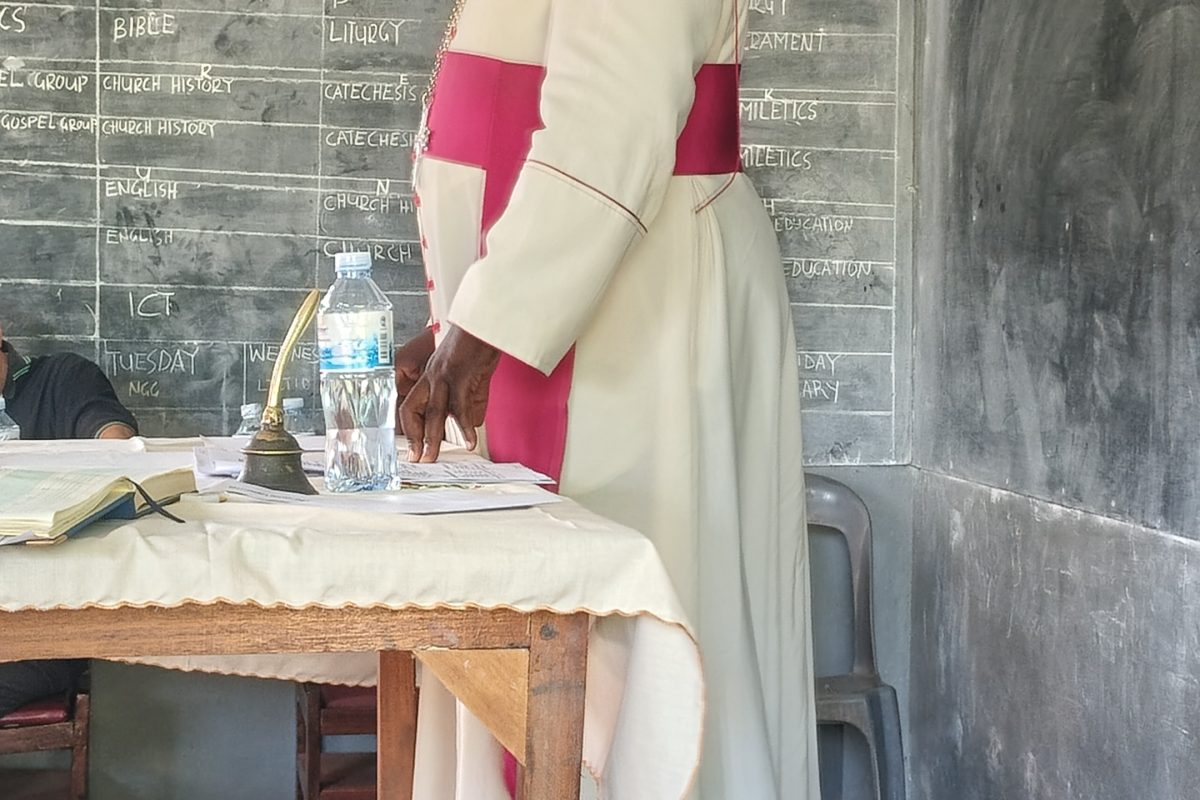
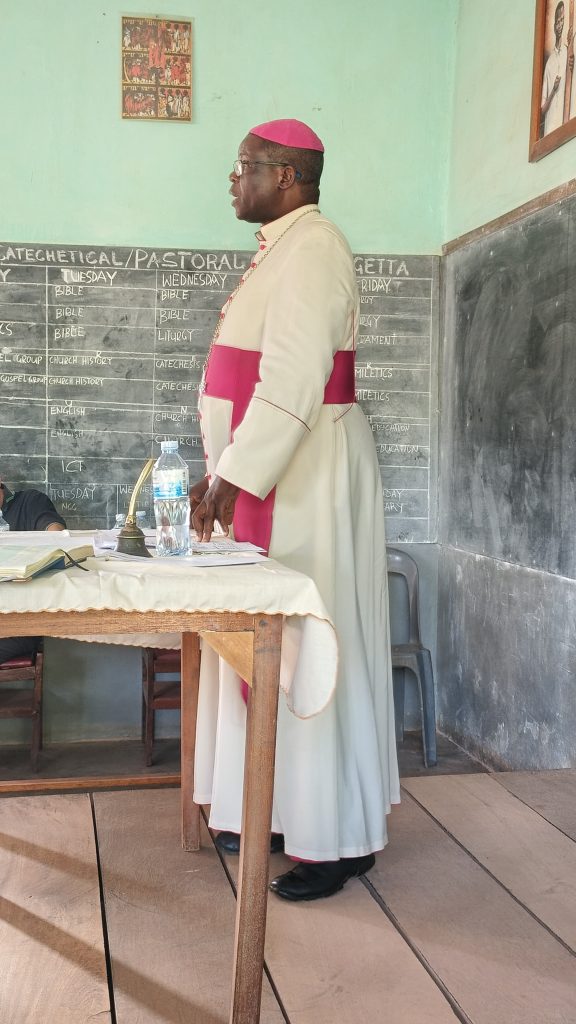
The Bishop made the call on Wednesday while addressing participants at the Diocesan Pastoral Assembly 2026, currently taking place at St. John Bosco Catechetical and Pastoral Centre, Ngetta.

In his address, Bishop Wanok noted that the Church and society are living in critical times that demand strategic thinking and deliberate efforts to build the capacity of people. He emphasized the need to economically empower Christian families in order to improve livelihoods and fight household poverty within communities.

Against the backdrop of dwindling external donor support, the Bishop stressed the urgency of embracing local initiatives such as poultry projects, savings groups, and other small-scale income-generating ventures that enable families to grow within their localities. He challenged Christian leaders to take responsibility for enlightening household members on the importance of economic growth.

“Christians must start thinking big and refrain from low thinking,” the Bishop emphasized.

He further called upon all Christian leaders, church movements, and associations to take the lead in championing income-generating activities aimed at economic empowerment across the Diocese. According to the Bishop, sustained sensitization is necessary to enable Christians to invest wisely and free themselves from household poverty.

In a passionate appeal, Bishop Wanok expressed concern that, as a shepherd, he cannot continue to see his flock suffer from poverty when there are opportunities to work and generate income to meet family and local needs.

The Bishop’s message left participants in deep reflection as they considered practical ways to implement his exhortation across the parishes and communities of Lira Diocese.

End.

Bishop Franzelli Urges Christians to Transmit True Doctrine to the Young

By Fr. Isaac Ojok, Communications Office, Lira Diocese

Bishop Emeritus of the Diocese of Lira, Rt. Rev. Joseph Franzelli, has urged priests and Christians in the diocese to ensure that they transmit true doctrine to the younger generation.

He noted that sound teaching nourishes young people and helps them become active members of the Church, following the example of St. Thomas Aquinas, a saint known for his passion for faith and truth.

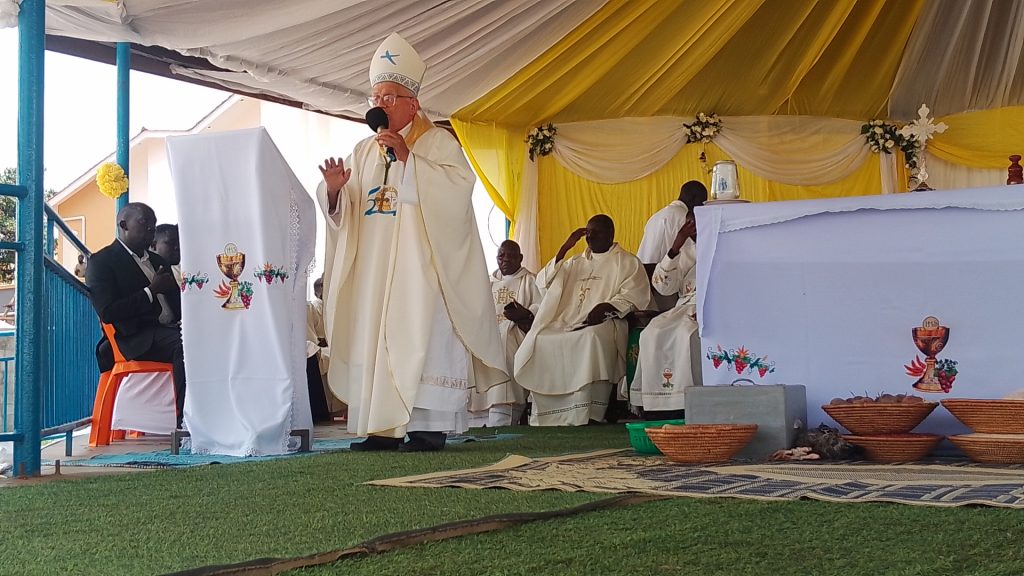
The bishop made these remarks on Wednesday 28th January 2026, while presiding over the Eucharistic celebration for members of the Diocesan Pastoral Council, currently underway at St. John Bosco Catechetical Pastoral Centre (CPC), Ngetta.

He emphasized that this mission should begin with the Word of God, which has power in itself and bears lasting fruit. He added that the Word of God must remain a guiding light in the lives of God’s people.

Bishop Franzelli stressed that sowing the true seed of faith strengthens believers to do the will of God and to become more passionate about the Church.

According to him, all Christians are called to be teachers of the faith. He therefore urged them never to stop reflecting on and deepening their understanding of the Word of God so that it may continue to transform the lives of the people.

End

The Eucharist Is the Heart of a Synodal Church, says Bishop Wanok

“Whenever we celebrate the Eucharist, Christ gathers us, Christ speaks to us, Christ offers Himself for us, Christ unites us, and Christ sends us,” Bishop Wanok said, adding that for this reason, “a synodal Church is first and foremost a Eucharistic Church.”

By Fr. Isaac Ojok, Communications Office, Lira Diocese

Rt. Rev. Sanctus Lino Wanok, the Bishop of Lira Diocese, has emphasized that the Eucharist is the foundation and living heart of a synodal Church, where communion, participation, and mission are nurtured.

Delivering a pastoral teaching to the participants at diocesan pastoral Assembly on 27th January 2026, themed “The Eucharist: The Heart of a Synodal Church”, Bishop Wanok said synodality is not a program, a meeting, or a document, but “a way of being Church that is learned at the Eucharistic table.”

“Whenever we celebrate the Eucharist, Christ gathers us, Christ speaks to us, Christ offers Himself for us, Christ unites us, and Christ sends us,” Bishop Wanok said, adding that for this reason, “a synodal Church is first and foremost a Eucharistic Church.”

He explained that the Eucharist teaches the Church how to walk together by gathering priests and lay faithful, leaders and followers, young and old, around one altar, reminding the faithful that all belong equally through baptism.

According to Bishop Wanok, listening is a key pillar of synodality, beginning with attentive listening to the Word of God during the Eucharistic celebration. “A synodal Church is a listening Church, listening first to God before listening to one another,” he noted.

The Bishop further stressed that true synodality requires sacrifice and self-offering. As bread and wine are presented at the altar, he said, believers are also called to offer their joys, struggles, wounds, hopes, and the life of their communities, rooted in humility and patience.

Quoting St. Paul’s teaching that “because there is one bread, we though many are one body,” Bishop Wanok warned that division, exclusion, and resentment contradict the meaning of the Eucharist and wound the Body of Christ.

He also reminded the faithful that the Eucharist sends the Church out on mission, urging them to carry Christ into their families, communities, and especially to the poor and the forgotten.

Bishop Wanok concluded by noting that the Eucharist heals the Church from clericalism, individualism, and activism without prayer, reaffirming that it is the synodal act par excellence where the Church gathers, listens, discerns, communes, and is sent together.

End

Bishop Wanok Opens Lira Diocesan Pastoral Council 2026, Calls for Synodality and Shared Responsibility

By Fr. isaac Ojok, Communications Office, Lira Diocese

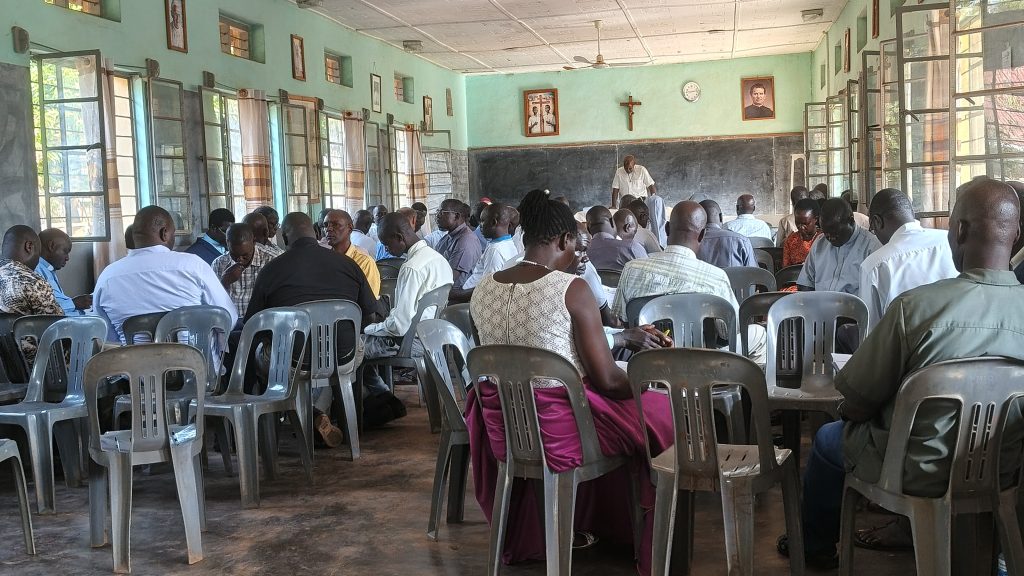
The Diocesan Pastoral Council Assembly of Lira Diocese 2026 has officially begun at the Ngetta Catechetical Pastoral Center. It has drawn together all priests of the diocese, a section of consecrated women, and the head of the laity in Lira Diocese, Hon. Jovino Rose Akaki Ayumu. The assembly commenced on 25th January 2026 with arrivals and will run until 29th January 2026.

At the opening of the Diocesan Pastoral Council, the Bishop of Lira Diocese, Rt. Rev. Sanctus Lino Wanok, warmly welcomed all participants, mentioning them individually and expressing gratitude for their presence. Above all, he extended a special welcome to his predecessor, Rt. Rev. Joseph Franzelli, former Bishop of Lira Diocese.

He emphasized that gathering for the Diocesan Pastoral Council at the beginning of each year is a significant moment in the life of the Church in Lira Diocese. This year’s council is being held under the theme: “Walking together in the spirit of a Synodal Church in the 3rd Millennium: Participation, Communion, and Mission.”

Bishop Wanok explained that synodality is not a new program, but rather the way the Lord is calling His Church to journey in the third millennium. To be synodal means to walk together, listen together, discern together, and carry out the mission together. Quoting Pope Francis, he reminded the assembly that walking together is not optional—it is the path of the Church. Communion, he said, is the essence of the Church: “you and me.” By baptism, no one is a mere spectator; all are called to participate and all are sent.

He clarified that synodality does not replace Church teaching. Instead, it deepens communion, purifies leadership, and strengthens the mission. Authority in the Church, he stressed, means service, and true leadership must be evangelical in nature.

The bishop noted that this assembly comes at a time when the diocese is facing real pastoral challenges. He said by affirming that the strength of synodality lies in communion.

Bishop Wanok further highlighted the pressing needs in areas such as social communications, accountability, health, education, and faith formation. He emphasized that these challenges cannot be addressed by the bishop or the deans alone, but require the shared responsibility of all the baptized.

He noted that the assembly, guided by the Holy Spirit, would seek to discuss and address these issues. The bishop reminded participants that the purpose of the gathering is not to defend positions, give reports, or compete, but to discern the will of God and to listen to the entire diocese. This, he said, requires humility, honesty, and deep prayer. A truly synodal church calls for courage in speaking, attentiveness to the Word of God, openness to the voice of the Spirit, and listening to one another.

He cautioned that listening without discernment leads to problems, while true discernment must lead to mission. If discernment does not result in mission, he said, then its purpose has been missed. Synodality must also lead to ongoing formation, since as the Church gathers, it is also forming itself. Without formation, he warned, the process risks becoming mere noise.

The bishop expressed his hope that the assembly would help the diocese become a Church of communion and mission, a Church that listens and discerns together. He concluded his opening remarks by invoking God’s abundant blessing upon all participants, praying that the assembly may bear fruit for the growth of the Church in Lira Diocese.

End

Where the Cross Was Seen

Moments & Reflections by Flavia Oyuu, Communications Office, Lira Diocese

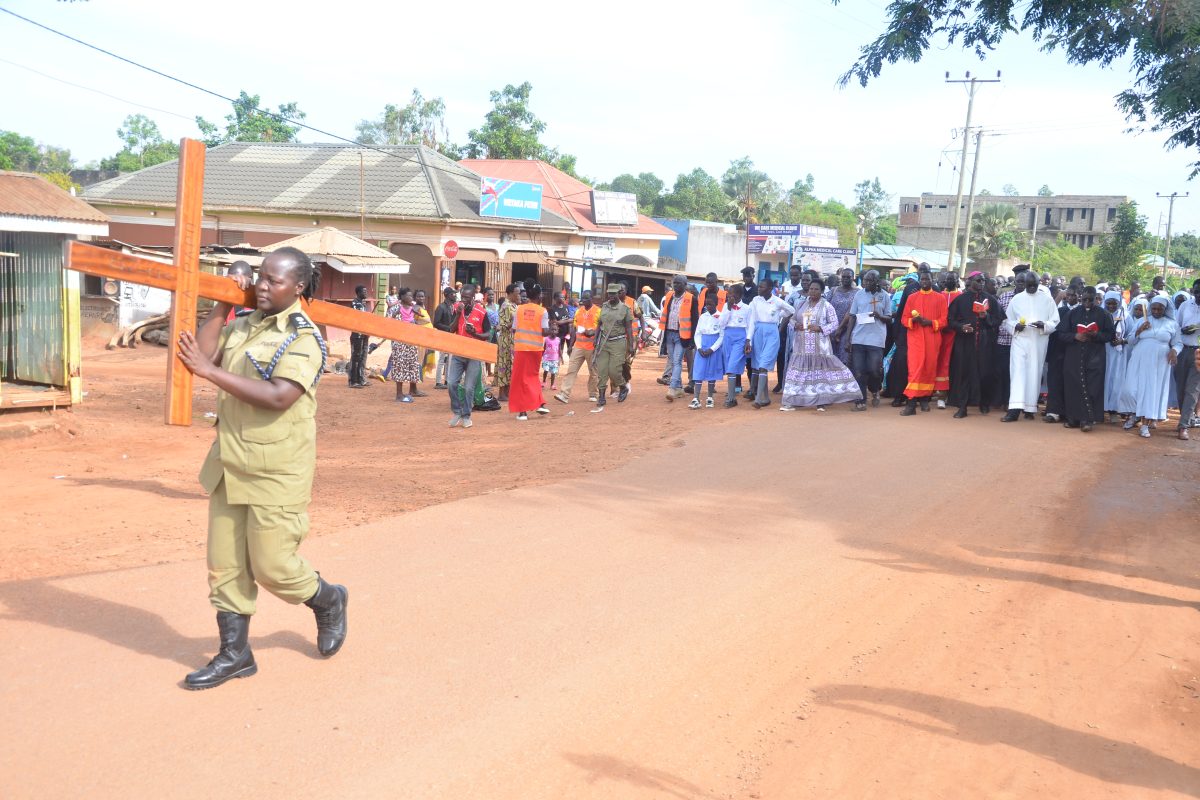
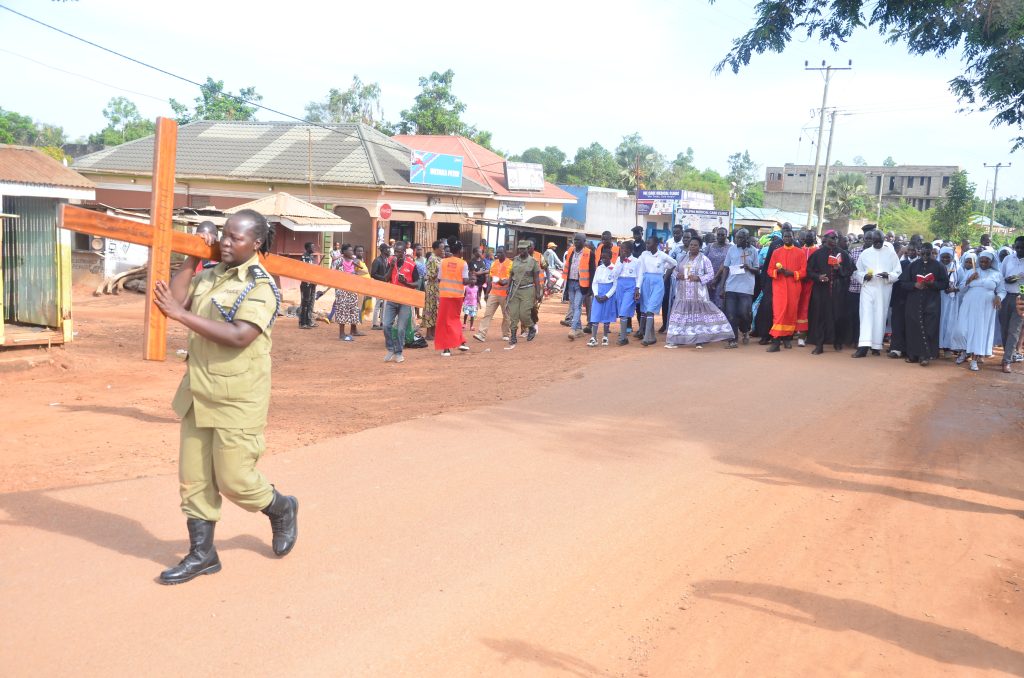
On Good Friday 2025, as the Way of the Cross passed through the streets of Lira City, attention followed the movement of the procession, the hymns, the cross, the slow steps of prayer through the city.

Around Jinja Camp, just a few meters from St Jude Sub Parish, something quieter unfolded behind a doorway.

Inside her home, facing the road, a woman knelt down. She did not simply kneel, she bowed fully, her forehead touching the ground, her body lowered in reverence as the cross passed by outside. There were no words spoken, no crowd watching. Only a posture of deep humility and prayer offered from within her own home.

In that moment, the boundary between street and sanctuary disappeared. Her house became a place of worship, and the road became an altar.

Good Friday reminds us that the cross does not only meet us in public spaces. Sometimes, it is received in silence, in private surrender, and in homes turned briefly into holy ground.