en English
ar Arabiczh-CN Chinese (Simplified)nl Dutchen Englishfr Frenchde Germanit Italianpt Portugueseru Russianes Spanish
What are you looking for?

Yearly Archives: 2026

Bishop Wanok Urges Curia Members to Embrace Mercy and Synodality

Reflecting on the reading from the Book of Daniel, the Bishop highlighted the prophet’s communal confession: “Yours is the integrity, Lord; ours is the shame.” He noted that Daniel did not distance himself from the sins of the people but stood in solidarity with them.

By Fr. Isaac Ojok, Communications Office, Lira Diocese

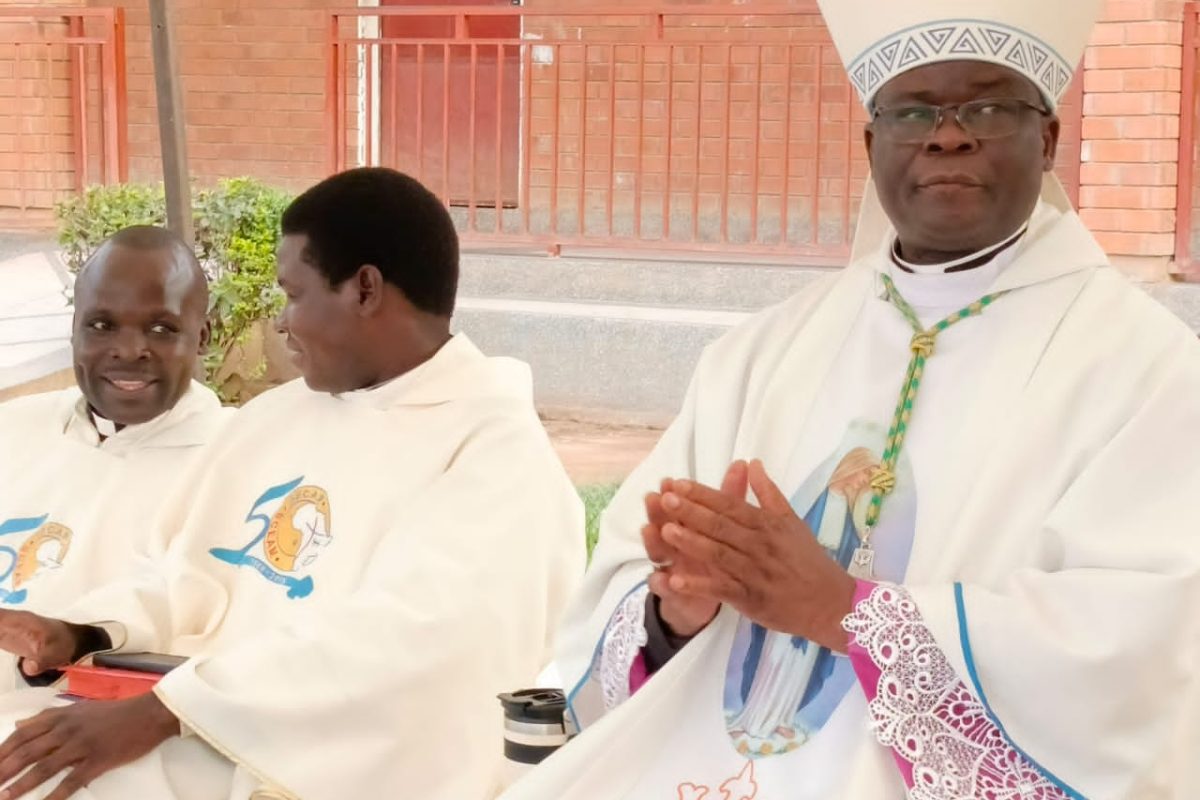
Lira, March 2, 2026 — The Bishop of Lira diocese, Rt. Rev. Sanctus Lino Wanok, has called on heads of department to cultivate a spirit of humility, compassion, and communion in their service to the Church.

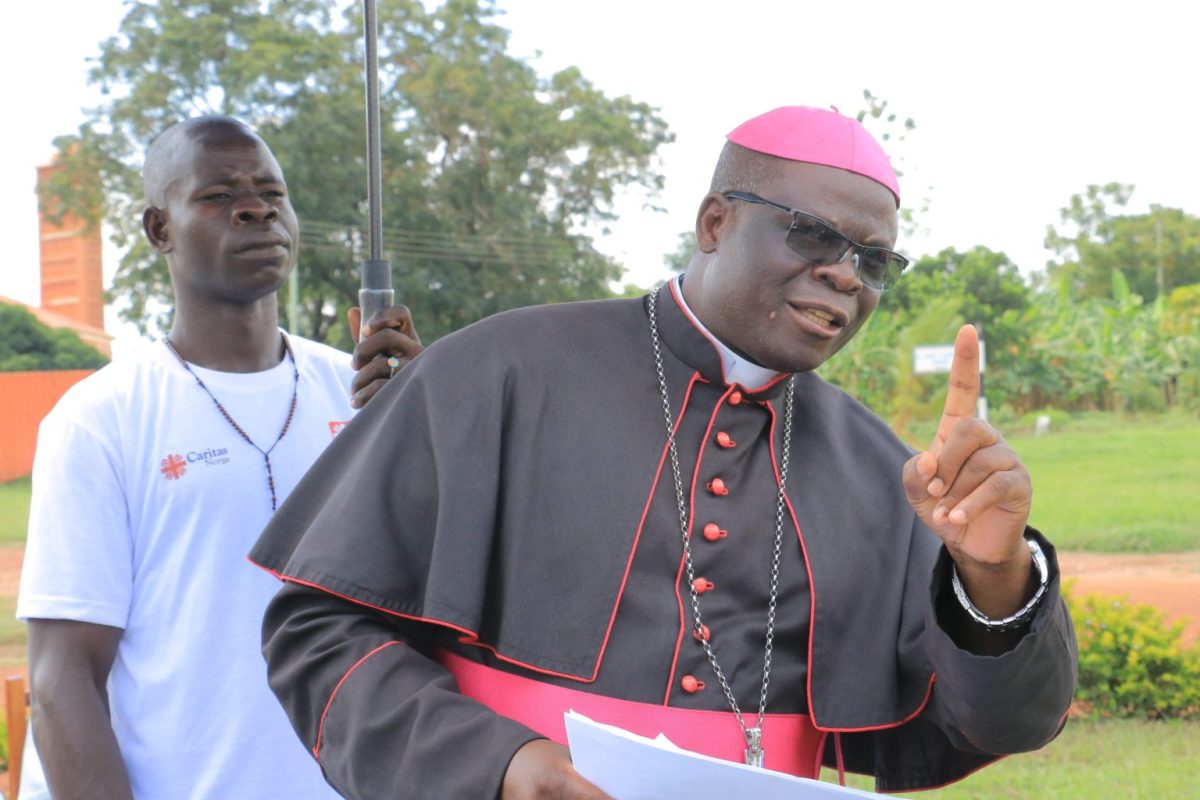
Speaking during a Eucharistic celebration at the Curia chapel in Barogole on Monday, March 2, 2026, Bishop Wanok delivered a homily themed “From Shame to Mercy, From Judgment to Communion,” urging heads of department to embrace synodality not merely as a method of governance but as a spirituality rooted in mercy.

Reflecting on the reading from the Book of Daniel, the Bishop highlighted the prophet’s communal confession: “Yours is the integrity, Lord; ours is the shame.” He noted that Daniel did not distance himself from the sins of the people but stood in solidarity with them.

For us gathered as curia members, this is the first lesson of synodality,” Bishop Wanok said. “We do not stand above the Church. We stand within the church. We do not diagnose from a distance. We discern from inside.”

He cautioned against rigid structures and defensive attitudes in Church administration, reminding the members that integrity belongs to God alone. “A synodal Church begins not with strategies, but with humility,” he emphasized.

Drawing from the Responsorial Psalm — “Do not treat us according to our sins, O Lord”, the Bishop underscored that authentic listening in synodal life must be grounded in mercy. “If we listen in order to judge, we are not truly listening. If we listen in order to defend ourselves, we are not discerning,” he said.

Referencing the Gospel of Luke, Bishop Wanok stressed Christ’s command to “Be compassionate as your Father is compassionate.” He acknowledged that those serving in the departments regularly deal with policies, reports, and decisions, which can easily lead to measuring and classifying others. However, he warned that “the measure we use will be the measure we receive.”

“Synodality is not merely a method of meetings. It is a spirituality of relationship,” the Bishop stated, outlining key virtues necessary for curial service: humility in acknowledging shared weakness, dependence on God’s mercy, and the practice of compassion.

He encouraged curia members to prioritize listening before speaking, unity before winning arguments, pardon before demanding accountability, and communion over competition.

Describing God’s grace as “a full measure, pressed down, shaken together, running over,” Bishop Wanok said generosity of spirit in Church leadership brings abundance to the entire Christian community.

Concluding his homily, delivered during the Lenten season marked by the violet liturgical color of repentance, the Bishop called for interior renewal before structural reform.

“Before we can renew structures, the Lord wants renewed hearts,” he said. “May we measure with mercy, lead with compassion, and listen without judgment.”

The Eucharistic celebration formed part of ongoing efforts within the Diocese to deepen synodal collaboration and spiritual renewal among Church leaders.

End
Bishop Wanok Urges Faithful to ‘Walk, Listen and Be Transfigured Together’ on Second Sunday of Lent

In his homily, Bishop Wanok reflected on the readings of the day taken from the Book of Genesis (12:1–4), the Second Letter of St Paul the Apostle to Timothy (2 Timothy 1:8–10), and the account of the Transfiguration in the Gospel of Matthew (17:1–9). He centered his message on the theme: “Walking Together, Listening Together, Being Transfigured Together.”

By Fr. Isaac Ojok, Communications Office, Lira Diocese

Lira, Uganda – The Bishop of Lira diocese Rt Rev. Sanctus Lino Wanok has called on Christians to embrace a journey of shared faith, deeper listening, and communal transformation on the occasion of Second Sunday of Lent (Year A).

In his homily, Bishop Wanok reflected on the readings of the day taken from the Book of Genesis (12:1–4), the Second Letter of St Paul the Apostle to Timothy (2 Timothy 1:8–10), and the account of the Transfiguration in the Gospel of Matthew (17:1–9). He centered his message on the theme: “Walking Together, Listening Together, Being Transfigured Together.”

A Call to Go Forth in Faith

Drawing from the call of Abram in Genesis, Bishop Wanok emphasized that God invites His people to move forward in trust, even without a clear roadmap.

“‘Go forth… to a land that I will show you,’” the bishop recalled, noting that Abram received a promise rather than detailed directions. He said this reflects the Church’s present journey, where believers are called to leave behind fear, rigidity, and comfort, and trust in the guidance of the Holy Spirit.

“Our God is not static,” he said. “He is a God who calls, who sends, who walks with His people.”

Trust Rooted in Mercy

Referencing the Responsorial Psalm, “Lord, let your mercy be on us, as we place our trust in you”, the bishop underscored that unity within the Church begins with confidence in God’s mercy.

He noted that Christians walk together not because of perfection, but because they are loved by God. In a world marked by cultural and political divisions, he said, the Church is invited to rediscover shared hope grounded in divine kindness.

Bearing Hardship for the Gospel

Turning to St. Paul’s exhortation to Timothy, Bishop Wanok acknowledged that the journey of faith is not without challenges. He encouraged believers to “bear hardship for the Gospel” with courage rooted in grace.

“Walking together means carrying one another’s burdens,” he said, stressing that the Christian vocation is founded not on human achievement but on God’s saving grace revealed in Christ.

Listening at the Heart of the Church

Reflecting on the Transfiguration, the bishop described the moment when Jesus revealed His glory before Peter, James, and John, alongside Moses and Elijah. He highlighted the voice of the Father: “This is my beloved Son, listen to him.”

He emphasized that listening is essential to the Church’s life.

“Before we speak, we must listen, first to Christ, then to one another,” Bishop Wanok said, adding that Christ must remain at the center of every Christian journey.

He also pointed out that after the disciples’ fear subsided, “they saw no one else but Jesus alone,” reminding the faithful that personal agendas and ideologies must give way to Christ.

From the Mountain to Mission

While Peter desired to remain in the glory of the mountaintop, Bishop Wanok observed that Jesus led the disciples back down to continue their journey toward the Cross and Resurrection.

Moments of prayer and reflection, he said, are meant to strengthen believers for service, especially to the poor, the wounded, and those who feel unheard.

A Lenten Path of Transformation

Concluding his homily, Bishop Wanok described Lent as a communal path of transformation. He urged Christians to move forward in faith like Abram, trust in the Lord’s mercy, endure hardship for the Gospel, and listen attentively to Christ.

“May this Lenten journey transfigure us not individually only, but as a people walking together so that the world may see, through us, the light of Christ,” he prayed.

The bishop’s message resonated with the faithful as they continue their Lenten observance, reflecting on how to grow together in faith, unity, and hope.

End

“Serve Without Fear”: Bishop Wanok Challenges CCR Members on Faith and Self-Reliance

Bishop Wanok observed that fear remains one of the major obstacles hindering effective ministry within the CCR. He likened this to the biblical story of Jonah, who initially feared preaching to the people of Nineveh and attempted to flee, only to be renewed after spending three days in the belly of a fish before courageously proclaiming God’s message.

By Flavia Oyuu, Communications Office, Lira Diocese

The Bishop of Lira Diocese, Rt. Rev. Sanctus Lino Wanok, has called upon members of the Catholic Charismatic Renewal (CCR) to strive for financial independence before engaging in ministry, cautioning that dependence on those they minister to can undermine their service.

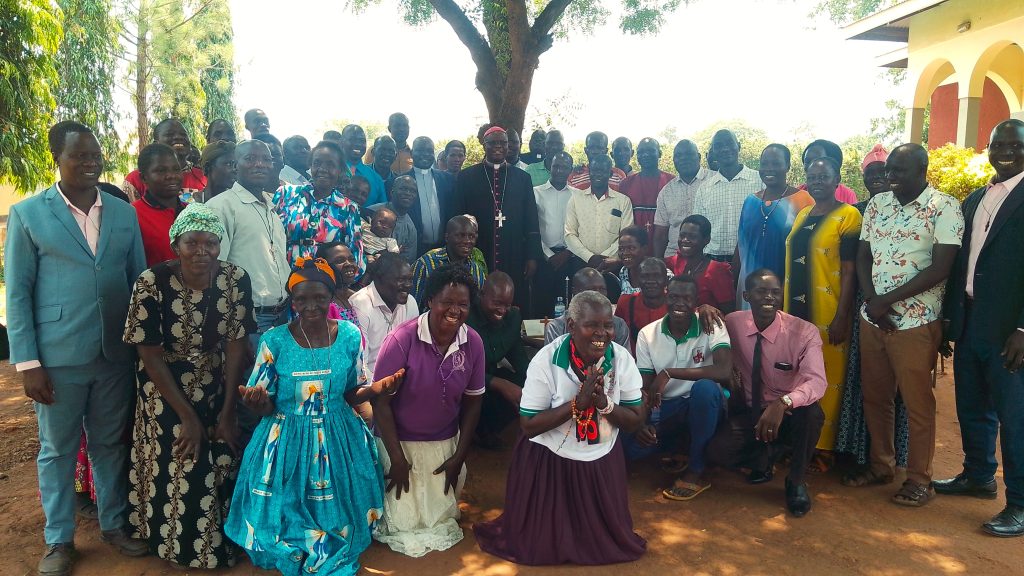
The Bishop made the call on Tuesday, February 25, 2026, during a courtesy visit by CCR diocesan leaders at his temporal residence at Nazareth Family Center, as his permanent residence nears completion.

The CCR leaders used the visit to seek pastoral guidance from the Bishop on various challenges facing the movement in the diocese.

Bishop Wanok observed that fear remains one of the major obstacles hindering effective ministry within the CCR. He likened this to the biblical story of Jonah, who initially feared preaching to the people of Nineveh and attempted to flee, only to be renewed after spending three days in the belly of a fish before courageously proclaiming God’s message.

He encouraged CCR members to renew their faith, repent, and begin afresh with courage and strength drawn from God in their ministry.

Drawing inspiration from St. Paul, who supported himself as a tent maker, the Bishop urged CCR members to have sustainable sources of livelihood to ensure financial stability, rather than relying on those they serve spiritually.

Emphasizing practical self-reliance, Bishop Wanok reiterated his vision that every household in the diocese should aim to rear at least 100 chickens as a means of livelihood. He said this initiative would also support those engaged in ministry to serve freely without financial pressure.

The Bishop further noted the importance of the CCR movement in the Catholic Church and urged its members to embrace humility, set aside pride, and dedicate themselves fully to serving God.

Speaking during the visit, Rev. Fr. Morris Otyang, the Spiritual Director of CCR Lira Diocese, explained that the meeting is an annual engagement during which CCR leaders present reports, share challenges, seek guidance, and receive blessings from the Bishop.

Fr. Otyang noted that some parishes have never participated in CCR meetings, raising concerns about the movement’s visibility across the diocese. He explained that limited parish participation makes it difficult to organize crusades and ministry activities, which would otherwise help Christians better understand CCR.

He added that many Christians mistakenly associate CCR only with healing and deliverance, yet the movement also runs programs in evangelization and outreach, scripture study and formation, social justice and charity, and ecumenical engagement, among others.

Fr. Otyang also reported that the leaders who met the Bishop were recently elected and are working well together. As part of their responsibilities, they mobilized resources to facilitate training for about 20 priests and religious in healing and deliverance at the Emmaus Center, Katikamu.

He noted with pride that Lira Diocese has consistently performed well in training programs at Emmaus Center, resulting in a strong pool of trained Emmaus Pastoral Workers (EPWs) to support pastoral activities. However, he cited poor coordination within the Gulu Ecclesiastical Province as a continuing challenge.

Meanwhile, Abibi Tonny Albo, the Provincial Coordinator of the Gulu Ecclesiastical Province, thanked the Bishop for granting the CCR leaders audience despite his busy schedule. He informed the Bishop about the ongoing construction of the Upper Room Spiritual Center, a facility intended to serve as a hub for CCR programs and formation of the laity. He said financial constraints have hindered completion of the project, and the current structure is insufficient to accommodate the growing number of trained EPWs.

Albo further observed that the Diocesan Students Outreach Ministry is facing challenges, particularly in capacity building. He said limitations in public speaking skills, especially in English, have affected outreach to universities and secondary schools.

He, however, noted that despite these challenges, the Lira Diocese Students Outreach Team remains the best-performing in Uganda.

End

Bishop Wanok Calls Faithful to “Choose Life” at Start of Lent

By Fr. Isaac Ojok, Communications Office, Lira Diocese

Barogole, Lira Diocese- February 22, 2026

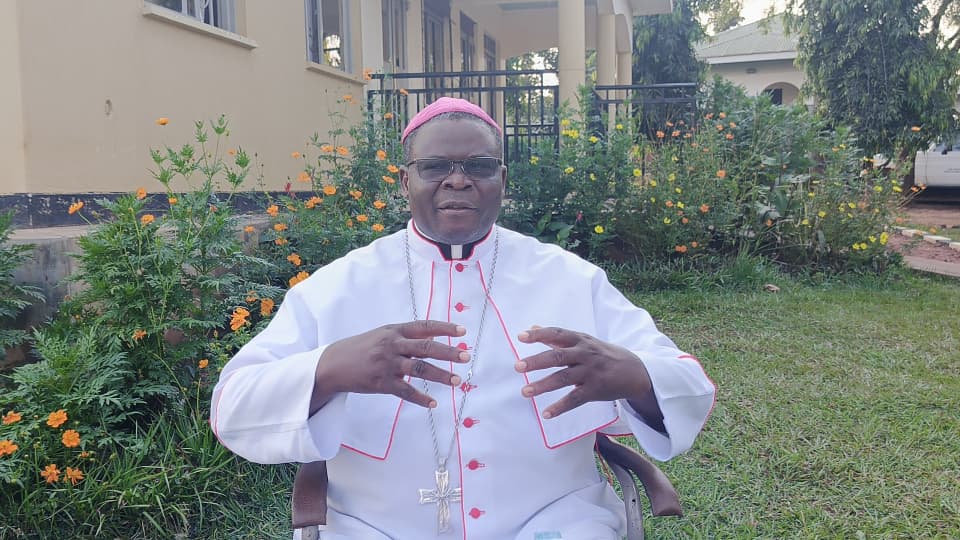
The Rt. Rev. Sanctus Lino Wanok, Bishop of Lira Diocese, on Sunday 22th February 2026 urged Christians to rediscover their true identity in God and to resist temptation by choosing life in Christ, as he presided over the Eucharistic celebration for the First Sunday of Lent at his residence, Nazareth Family Centre, Barogole.

In his homily themed “From the Garden to the Desert and Choosing Life,” Bishop Wanok reflected on the spiritual journey from the Garden of Eden to the desert where Jesus faced temptation, describing the biblical scenes as “mirrors in which we see our own lives.”

From Dust to Dignity

Drawing from the Book of Genesis, the Bishop reminded the faithful that human beings are both fragile and sacred.

“We are dust, fragile, weak, limited. But we are also God’s breath — sacred, dignified, loved,” he said, noting that Lent begins with the humbling but hopeful reminder of Ash Wednesday: “Remember that you are dust, and to dust you shall return.”

He cautioned that sin begins when people forget their identity as creatures dependent on God. “We are creatures, not gods. We are receivers, not masters of life,” he emphasized.

The Root of Temptation: Distrusting God

Reflecting on the fall of Adam and Eve, Bishop Wanok said temptation often begins with doubt.

According to the Bishop, sin promises fulfillment but ultimately leads to shame, fear, and hiding from God. “Sin always promises more, but delivers less,” he told the congregation.

Christ the New Adam

Referencing the Letter of St. Paul to the Romans, Bishop Wanok highlighted the contrast between Adam’s disobedience and Christ’s obedience. While sin entered the world through one man, he noted, grace has overflowed through Jesus Christ.

“Sin is real, but grace is greater,” he proclaimed, describing this as the central hope of the Lenten season.

He drew a striking comparison between Adam and Jesus: “Adam said yes to temptation in a garden full of food. Jesus says no to temptation in a desert of hunger. This is the turning point of history.”

The Three Areas of Temptation

The Bishop explained that Jesus’ temptations in the desert, bread, spectacle, and power, reflect the same struggles faced by believers today: attachment to comfort, pride and self-promotion, and the desire for control without obedience to God.

He noted that Jesus overcame temptation not through displays of power, but through trust in the Father and fidelity to the Word of God.

Lent as Spiritual Medicine

Encouraging practical commitment during the 40-day season, Bishop Wanok described prayer, fasting, and almsgiving as “medicine for the soul.”

“These are not punishments,” he said. “They restore trust in God, free us from slavery to appetite, and break the grip of selfishness.”

Quoting Psalm 51, he called on the faithful to seek a clean heart, a steadfast spirit, and restored joy in salvation, stressing that God desires “not perfect people, but repentant hearts.”

A Message to All

Addressing different groups in society, the Bishop challenged young people to seek meaning beyond pleasure and popularity, encouraged families to rebuild prayer and forgiveness in their homes, and reminded leaders to pursue service over power.

To those struggling or wounded, he offered reassurance: “Christ has already entered your desert.”

A Call to Choose Life

Concluding his homily, Bishop Wanok urged Christians not to see Lent as a season of guilt, but as a time of renewed hope.

“From Adam to Christ, from failure to grace, from temptation to victory, God is offering us again what was lost in the Garden: friendship with Him,” he said.

The First Sunday of Lent marks the beginning of the Church’s 40-day spiritual preparation for Easter, inviting the faithful to deeper conversion and renewed commitment to God.

End

Lira Diocese Education Secretary Urges Lango to Reduce Dependence on Foreign Aid

She emphasized that excessive dependence on foreign donors continues to widen development gaps, particularly in infrastructure such as schools and health facilities.

By Flavia Oyuu, Communications Office, Lira Diocese

The Education Secretary of Lira Diocese, Rev Sr. Agnes Atala, MSMMC has called on leaders and residents of the Lango sub-region to shift away from over-reliance on international donors and embrace local resource mobilization for sustainable development.

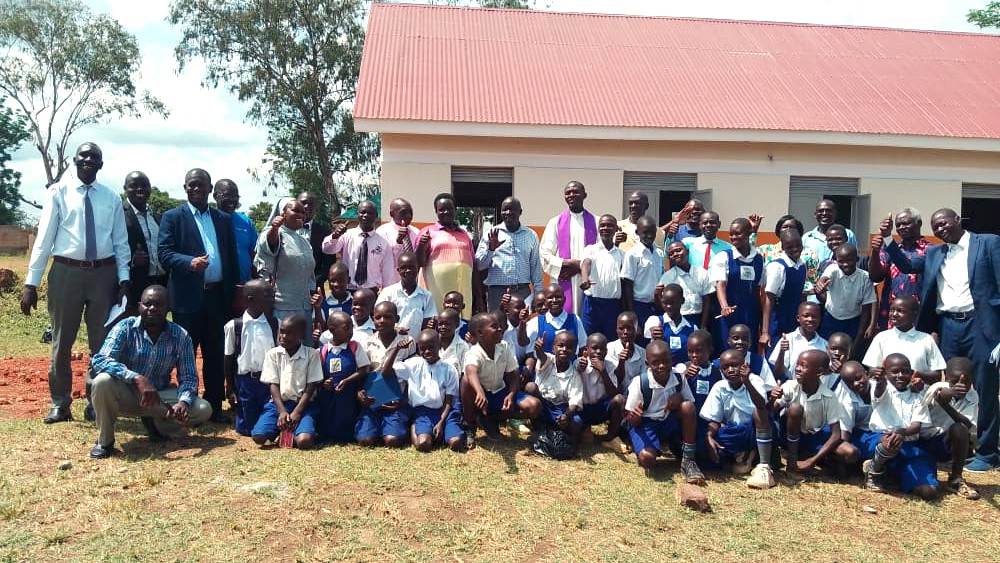
Sr. Atala made the remarks during the official commissioning of a renovated classroom block at Anai Primary School in Anai Ward, Lira City West Division, and Lira City. The renovation was undertaken by Lira Diocese with funding support from the SPICMA a UK based Organization.

She emphasized that excessive dependence on foreign donors continues to widen development gaps, particularly in infrastructure such as schools and health facilities. According to Sr. Atala, meaningful and sustainable development can only be realized if local communities cultivate a culture of contributing towards their own progress.

She encouraged residents to develop a passion for supporting community initiatives, noting that many Western donors sacrifice personal resources to support development projects abroad.

The Parish Priest of St Peters Anai Catholic Parish, Rev. Fr. Isaac Ojok, who authored the project proposal seeking support from the U.K.-based charity, revealed that the diocese secured a grant of 22 million shillings to renovate two classroom blocks at Anai Primary School.

Fr. Ojok, who also serves as the Diocesan Communications Secretary, said the renovated classrooms symbolize partnership, dedication, and a shared vision in delivering quality education. He added that the Church remains committed to nurturing children’s moral values and urged school administrators to maintain the facility responsibly.

He further noted that foundation bodies play a vital role in complementing government efforts in education service delivery.

Lira City Mayor, Sam Atul, commended the school’s headteacher for his commitment to improving academic performance. He disclosed that in the next financial year, the City Council has earmarked funds to fence the school to curb increasing cases of intruders vandalizing school and teachers’ property.

The headteacher, Ojok Joel Rokko, expressed gratitude to Lira Diocese and the SPICMA organization for renovating two classrooms that will benefit Primary Three learners. He noted that the structures had previously been dilapidated and dusty, affecting the learning environment.

Rokko also highlighted the school’s 2025 Primary Leaving Examination (PLE) performance, where out of 50 candidates, eight scored Division One, 37 obtained Division Two, and five achieved Division Three.

END