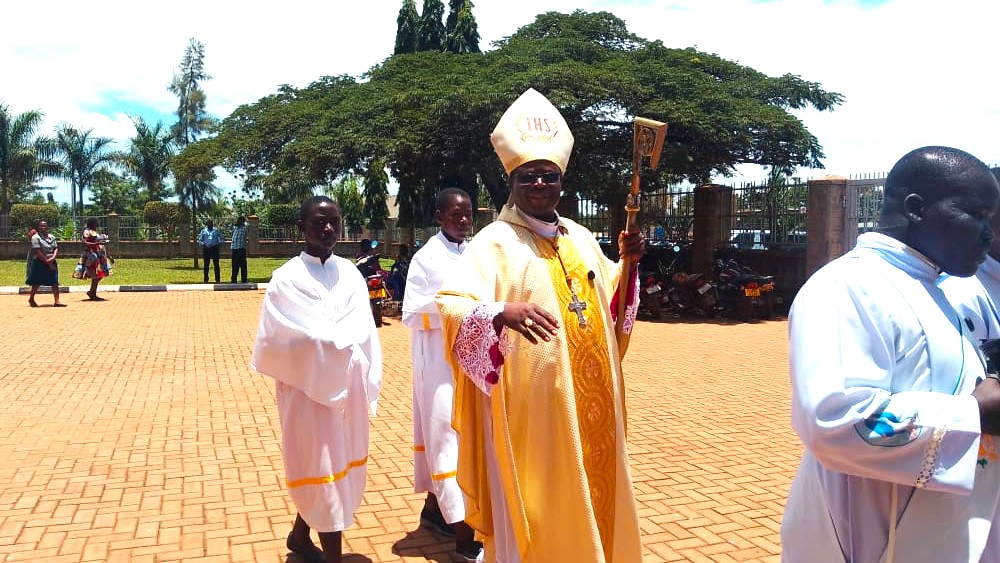
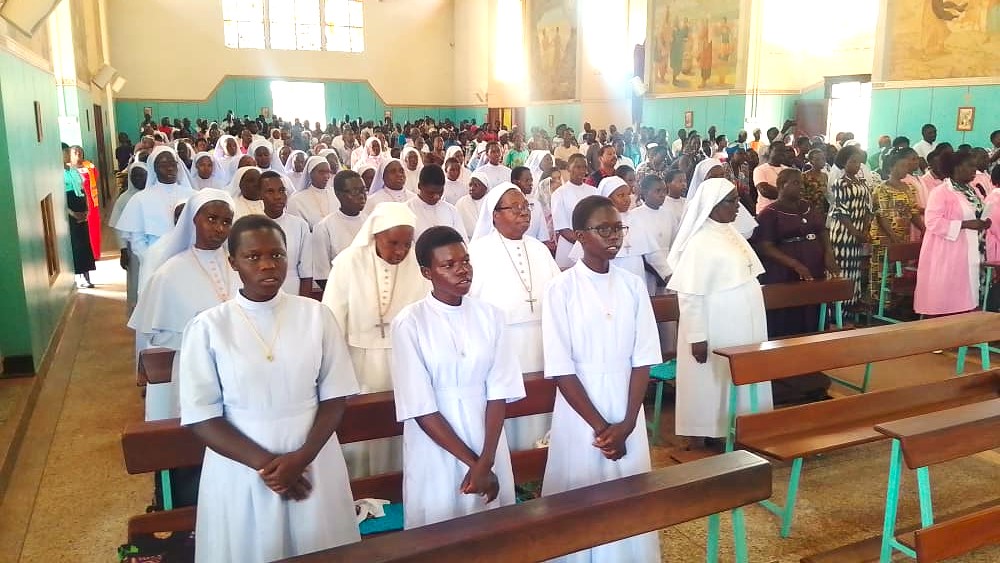
The Bishop of Lira Diocese, Rt. Rev. Sanctus Lino Wanok, has called on Christians to live as witnesses of the Resurrection by embracing hope, rejecting sin, and promoting peace and unity within their communities.
By Flavia Oyuu, Communications Office, Lira Diocese
The Bishop of Lira Diocese, Rt. Rev. Sanctus Lino Wanok, has urged Christians to rejoice in the Resurrection of Jesus Christ and to live as witnesses of the new life brought about by the risen Lord.
Delivering his Easter Sunday homily, Bishop Wanok reminded the faithful that the Resurrection is the foundation of the Christian faith, emphasizing that Christianity stands on the truth that Christ rose from the dead.
Reflecting on the Gospel account, the Bishop explained that Mary Magdalene went to the tomb early in the morning filled with grief, confusion, and love, but instead encountered the greatest message of hope.
“She went to the tomb with grief and confusion, but what she found was not a body; she found an empty tomb. The stone had been rolled away, and the angel announced: ‘He is not here; He is risen.’”
The Bishop said the empty tomb marked the first proclamation of Easter, confirming that Jesus had conquered death.
Drawing from the Acts of the Apostles, Bishop Wanok noted that Saint Peter boldly proclaimed the Resurrection, insisting that the disciples were witnesses to what had happened.
“They put Him to death, but God raised Him on the third day. This is not imagination or a story. We are witnesses.”
He stressed that Christians identify themselves as followers of Christ precisely because Christ is alive, adding that the Resurrection remains the heart of the Christian message.
Bishop Wanok further noted that those who truly encounter the risen Lord cannot remain silent, pointing to Mary Magdalene and the disciples who went out to proclaim the Good News.
He encouraged the faithful to reflect on their own experience of God’s mercy and forgiveness.
“You may not see the empty tomb, but you have experienced His mercy and His love. Your life itself becomes the message that Christ is alive.”
Referencing Saint Paul’s message in the Letter to the Colossians, the Bishop urged Christians to “seek what is above” and not to focus solely on earthly concerns.
He explained that Easter is not just a single day, but a journey that continues throughout the fifty days leading to Pentecost.
“Easter is not just an event; it is a way of life.”
The Bishop also encouraged Christians to move from fear to courage, reminding them that the Resurrection brings hope even in moments of difficulty and uncertainty.
He acknowledged that many people face challenges such as sickness, poverty, and family struggles, but reassured them that Christ’s Resurrection offers renewed hope.
“Where there is fear in your life, family struggles, sickness, lack of food or shelter, do not be afraid. Christ is alive.”
Bishop Wanok called on Christians to embrace a new life by rejecting sin and negative behaviors such as hatred, jealousy, corruption, and dishonesty.
Turning to the social realities of the nation, the Bishop challenged Christians to promote peace, justice, and unity, particularly in Northern Uganda.
He warned that corruption, tribalism, and excessive alcohol consumption continue to undermine the moral fabric of society and urged both leaders and citizens to work toward positive change.
“Tribalism must not be seen or heard in our words or behavior. Hatred must die, and a new life must begin.”
The Bishop also called for greater compassion toward those who are suffering and urged communities to restore the dignity of the vulnerable.
Concluding his homily, Bishop Wanok encouraged Christians to follow the example of Mary Magdalene and theapostles by proclaiming the message of the Resurrection through their daily lives.
“Let us go forth like Mary Magdalene and the disciples to announce to the world that Christ is risen and truly alive.”
He prayed that the risen Lord would strengthen the faith of believers and make them witnesses of hope in their homes, communities, and across the nation.
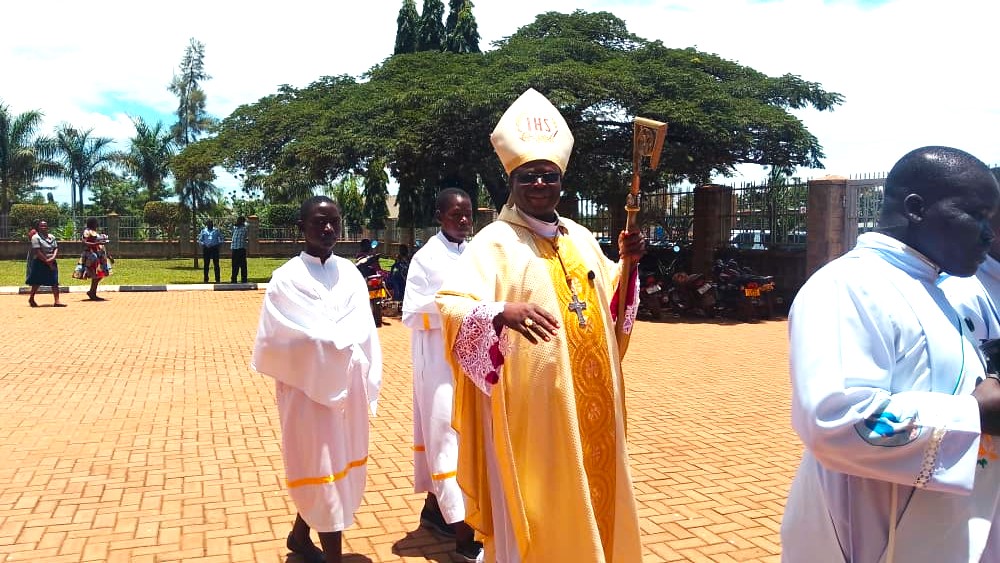
Bishop Wanok flanked by Priests and Religious during the Way of the Cross on Good Friday
Christians in Lira Diocese joined their bishop, Rt. Rev. Sanctus Lino Wanok, for the solemn Good Friday Way of the Cross, marking the climax of the Lenten journey. At the end of the devotion, the Bishop delivered his Easter message, calling on believers to embrace repentance, reconciliation, and become the light of Christ in a world troubled by sin and division.
By Flavia Oyuu, Communications Office, Lira Diocese
Hundreds of Christians joined the Bishop of Lira Diocese, Rt. Rev. Sanctus Lino Wanok, in the solemn Way of the Cross on Good Friday, marking the climax of the Lenten spiritual journey. The faithful walked prayerfully with the Bishop in reflection on the suffering and sacrifice of Jesus Christ.
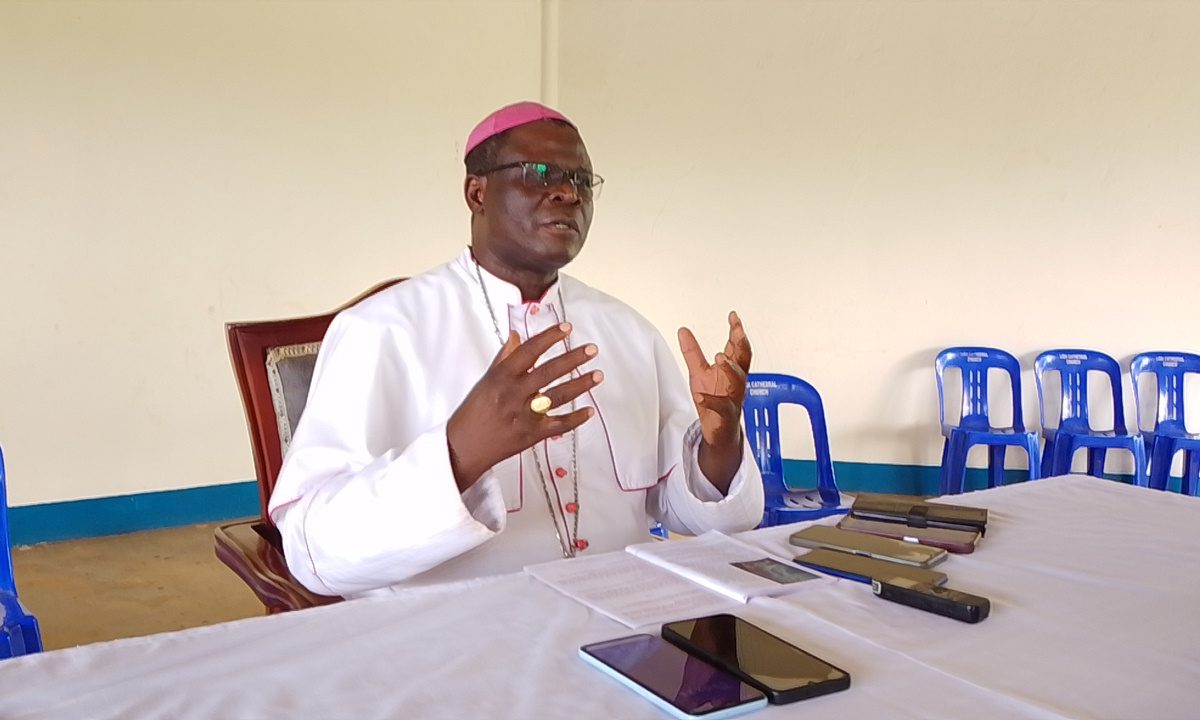
At the end of the devotion, Bishop Wanok addressed journalists and delivered his Easter message, calling on Christians to reflect deeply on the meaning of Christ’s sacrifice and to renew their lives through repentance and love.
The Bishop explained that the Paschal Triduum, the three sacred days from Holy Thursday to Easter Sunday—invites Christians to journey closely with Christ. He recalled that on Holy Thursday, Jesus offered Himself to the Church through the institution of the Eucharist and the priesthood, expressing His total love for humanity. Good Friday, he said, reveals that same love through Christ’s sacrifice on the cross, where He gave His life to take away the sins and burdens of humanity.
“Christ has given us the power through His death on the cross. With this love you can conquer every difficulty,” Bishop Wanok said.
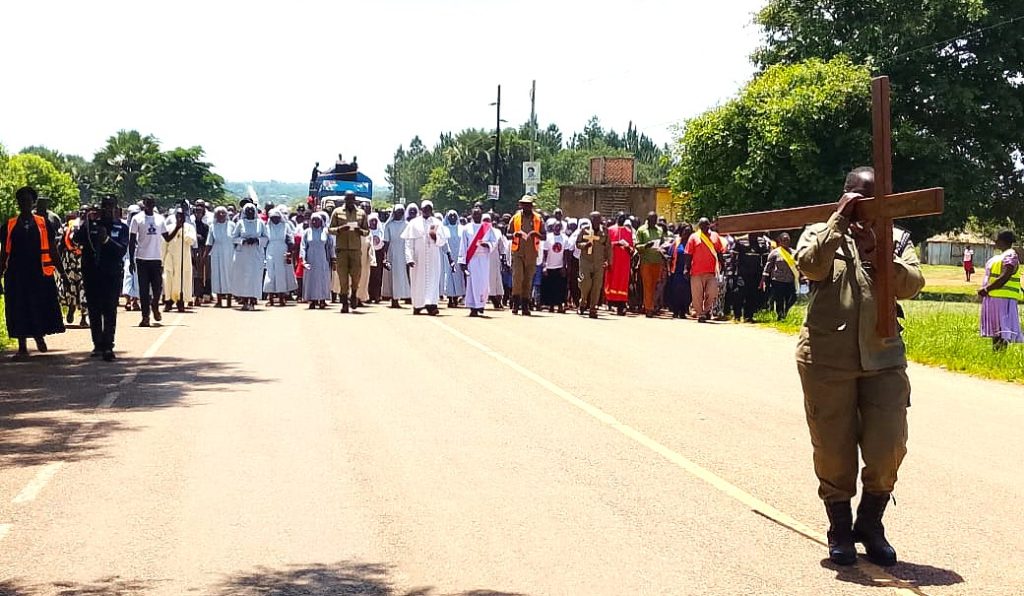
A police officer carries the cross representing the security forces during the Good Friday Way of the Cross procession in Lira Diocese.
Bishop Wanok urged Christians to use Holy Saturday as a Day of Silence and recollection, encouraging the faithful to reflect on whether they have truly accepted Christ’s love and salvation. He noted that the Easter Vigil’s symbolism of light reminds believers that Christ is the light who overcomes the darkness of the world.
He warned that society today is marked by many forms of darkness, including war, jealousy, exploitation, and injustice, but emphasized that Christians are called to overcome these evils by becoming witnesses of love and reconciliation.
The Bishop encouraged the faithful not to fear standing for truth and goodness, reminding them that Christ Himself stood alone in His mission but remained the light of salvation for the world.
He further called on Christians to seek reconciliation with God, particularly through the Sacrament of Confession, explaining that Christ gave priests the mission of helping believers receive forgiveness and healing.
According to the Bishop, the true meaning of Easter is that Christ passes through the lives of believers, lifting them into a new life where they have the strength to overcome sin and live in love. He urged Christians to respect one another, restore broken relationships, and avoid taking what belongs to others.
In his message, Bishop Wanok also prayed for Uganda and its leaders, especially at a time when new leadership appointments are being made at different levels of government. He called on leaders and citizens alike to rise above the divisions and wrongs associated with elections and to embrace Christ as the true guide in serving the nation.
The Bishop also extended prayers to cultural leaders and leaders of other religious denominations, including Muslims, the Orthodox Church, the Church of Uganda, Seventh-day Adventists, and other faith communities, urging mutual respect and cooperation for the good of the country.
He concluded by wishing all Ugandans a blessed and joyful Easter, praying that the resurrection of Christ may renew hearts and strengthen the nation in unity, love, and peace.
Bishop Sanctus Lino Wanok washes the feet of selected faithful during the Holy Thursday Mass of the Lord’s Supper at Uganda Martyrs Cathedral, Lira, symbolizing Christ’s call to humble service.
Preaching during the Holy Thursday Mass of the Lord’s Supper at Uganda Martyrs Cathedral, Lira, Bishop Wanok reminded the faithful that the Eucharist remains the heart of the Church’s life and the source of strength for every Christian.
By Flavia Oyuu, Communications Office, Lira Diocese
Lira, Uganda — The Bishop of Lira Diocese, Rt. Rev. Sanctus Lino Wanok, has called on Christians to deepen their love for the Eucharist and embrace a life of humble service as the Church begins the celebration of the Sacred Triduum.
Preaching during the Holy Thursday Mass of the Lord’s Supper at Uganda Martyrs Cathedral, Lira, Bishop Wanok reminded the faithful that the Eucharist remains the heart of the Church’s life and the source of strength for every Christian.
“The Eucharist we celebrate is not only a symbol; it is the living presence of Jesus giving himself up for us, body and blood,” the Bishop said.
Reflecting on the mystery of the Eucharist, Bishop Wanok explained that through the sacrament Christ continues to remain with His people, nourishing and uniting them as one body.
“Without the Eucharist, the Church would be lost. There is no life in a Church without the Eucharist.”
He noted that every time Christians gather for Mass they come to the table of the new covenant where Christ feeds the hungry, strengthens the weak and offers mercy to sinners.
The Holy Thursday celebration commemorates the institution of the Holy Eucharist and the ministerial priesthood, two gifts Christ entrusted to the Church during the Last Supper.
The Bishop expressed gratitude for priests who dedicate their lives to serving God’s people and reminded them that their vocation is rooted in service rather than privilege.
“Priesthood is never about privilege; it is about service. You are ordained to be a servant of every Christian.”
Drawing from the Gospel account of Jesus washing the feet of His disciples, Bishop Wanok emphasized that Christian leadership must always reflect humility.
“The one who is Lord becomes a servant. The one who gives commandments kneels down in humility,” he said, adding that authority in the Church must always resemble “the towel and the basin.”
The Bishop also challenged the faithful to allow the Eucharist they receive to transform their lives by practicing forgiveness, reconciliation and charity.
“The Christian who receives communion but does not forgive, reconcile or serve others has not yet fully understood the gift.”
Speaking about the realities faced by many families, including poverty and social struggles, Bishop Wanok encouraged Christians to bring the love of Christ into their homes and communities.
“The Eucharist is not only for the sanctuary; it must reach the streets of Lira,” he said. “Every home must become Eucharistic.”
He further cautioned against acts of violence such as mob justice, urging Christians to imitate Christ’s mercy even in difficult situations.
“After meeting Christ who died for sinners, we must behave differently,” the Bishop told the congregation.
In conclusion, Bishop Wanok invited the faithful to pray for three important graces: a deeper love for the Eucharist, a renewed understanding of priesthood, and a humble spirit of service.
He encouraged families in the diocese to intentionally visit the Blessed Sacrament and strengthen their relationship with Christ.
“The Church becomes beautiful when the altar and service belong together, when worship and charity walk hand in hand.”
Holy Thursday marks the beginning of the Easter Triduum, the most sacred period in the Catholic liturgical calendar, during which the Church commemorates the Passion, Death and Resurrection of Jesus Christ.
Speaking during the Chrism Mass at Uganda Martyrs Cathedral, the Bishop reminded the faithful that every baptized person shares in the mission of Christ as priest, prophet and king.
By Flavia Oyuu, Communications Office, Lira Diocese
The Bishop of Lira Diocese Rt Rev Sanctus Lino Wanok has called on Christians to live out their baptismal anointing by bringing hope, compassion and the Good News of Christ to those in need.
Speaking during the Chrism Mass at Uganda Martyrs Cathedral, the Bishop reminded the faithful that every baptized person shares in the mission of Christ as priest, prophet and king.
He said Christians have every reason to thank God who, from eternity, has chosen them and called them to be members of His Church.
The Bishop explained that the Chrism Mass is a special celebration in which the Church blesses and consecrates the holy oils that will be used throughout the year in the administration of the sacraments.
He noted that the Oil of the Sick brings healing and comfort to those suffering from illness, old age, pain and despair, assuring them that God does not abandon His people in moments of weakness.
Blessing of the oil of the sick
The Oil of Catechumens, he said, strengthens those preparing for baptism so that they may courageously embrace the Christian faith and resist evil.
He further explained that the Sacred Chrism, the most solemn of the oils, is used in baptism, confirmation, priestly ordination and the dedication of churches and altars, marking those who receive it as belonging to Christ.
According to the Bishop, the sacred oils are not ordinary symbols but powerful signs of God’s grace and closeness to His people.
Quoting the prophet Isaiah, he reminded the congregation that “The Spirit of the Lord is upon me, because He has anointed me,” explaining that to be anointed means to be chosen and sent to bring good news to the poor, heal the brokenhearted and proclaim freedom to the oppressed.
He emphasized that this mission belongs not only to priests and religious but to every baptized member of the Church.
“The Church is not somewhere far away; the Church is each one of us,” he said, urging Christians to recognize their responsibility in spreading the message of Christ.
The Bishop also reflected on the teaching of the Book of Revelation, noting that Jesus Christ, the faithful witness, has freed humanity from sin and made believers a kingdom of priests for God the Father.
He explained that Christ Himself is the true anointed one whose life and sacrifice on the cross, show believers how to endure the challenges of the world with faith and love.
During his homily, the Bishop Wanok also highlighted the importance of synodality, describing the Church as a community that walks together in faith, listens to one another and works together in mission.
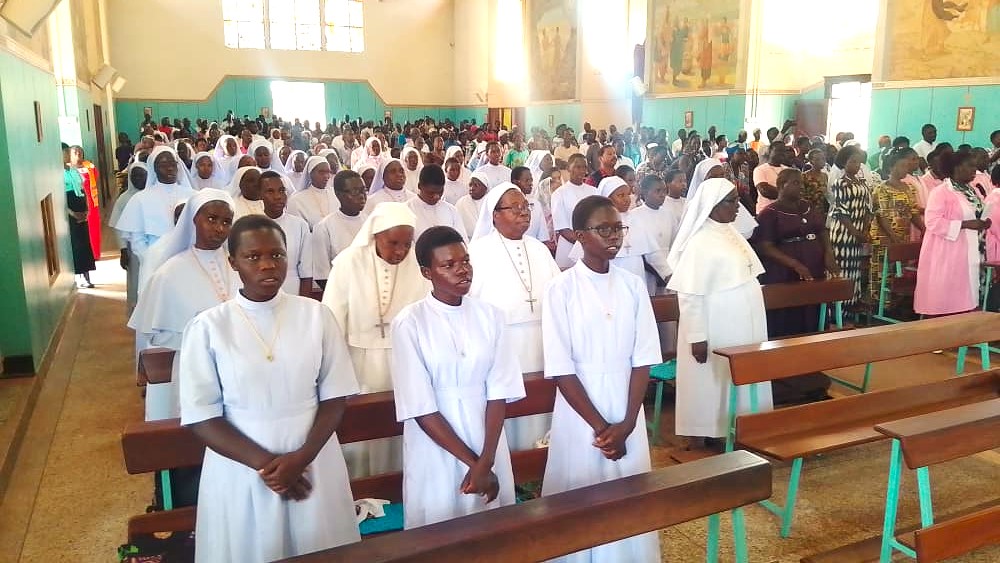
Mother Liberator Mandaun, the Moher General of the Missionary Sisters of Mary Mother of the church (MSMMC) flanked by the sisters of the congregation.
A synodal Church, he said, is not one that remains closed in on itself but one that moves outward to proclaim the Good News and serve those in need.
He urged Christians to examine how they live their faith, asking whether they truly bring hope to the poor, care for the elderly and show compassion to those who suffer.
The Bishop also challenged the faithful to treat others with dignity, especially those who work for them, reminding them that Christian witness is shown in everyday acts of love and respect.
He concluded by calling on the faithful to allow the grace symbolized by the holy oils to transform their lives so that their families, parishes and communities may reflect the presence of Christ.
The Chrism Mass is celebrated annually during Holy Week and brings together priests from across the diocese who renew their priestly promises while the bishop blesses the oils used in the sacraments throughout the year.
Blessings are among the most common sacramentals in the life of the Church. In this reflection, the Commission of Doctrine of Lira Diocese explains the meaning of blessings, their biblical foundations, the different types of blessings, and who may confer them in the life of the Church.
Welcome to our continuing series on sacramentals. In this reflection, we look at blessing as a sacramental, exploring its meaning, types, biblical foundations, and the ministers who confer blessings within the life of the Church.
What is a Blessing?
The Latin root of the word bless helps us understand its meaning more clearly. In Latin, the verb benedicere literally means “to speak well of” or “to praise.”
When human beings bless God, the word carries the meaning “to praise” or “to glorify.” However, when God blesses human beings, it signifies favour, salvation, protection, sanctification, and other gifts given for their material and spiritual welfare.
In the Bible, the word blessing is used in different ways, but three main meanings stand out:
1. Blessing as Praise
In Psalm 34:1, the word bless is synonymous with praise. The Psalmist proclaims:
“I will bless the Lord at all times; His praise shall always be on my lips.”
Here, blessing rises from the creature to the Creator as an act of gratitude and praise for God’s goodness.
2. Blessing as a Wish for Good Fortune
To bless can also mean wishing or desiring good for someone, expressing a hope that God’s goodness may accompany that person. For example, when we say, “It shall be well with you,” we are invoking such a blessing.
Psalm 128:2 expresses this kind of blessing for the one who fears the Lord.
3. Blessing as Sanctification
Blessing can also signify sanctification or dedication of a person, object, or place for sacred use.
Both the Old and New Testaments contain many examples of people, objects, and places being blessed and consecrated.
The people of Israel were consecrated as God’s special possession and a holy nation (Exodus 19:5–6).
Among the tribes, the tribe of Levi was set apart for service to God.
From the Levites, the line of Aaron was designated for the priesthood.
Sacred objects such as temple vessels, linens, and the Temple itself were blessed and dedicated through liturgical rites.
In this article, we focus mainly on the second and third meanings of blessing, those related to good fortune and sanctification, understood from a sacramental perspective.
As a sacramental, a blessing is a liturgical act through which the Church intercedes for God’s favour, preparing the faithful to receive grace and helping them grow closer to Him. It is an invocation asking God to bestow grace, protection, and favour upon persons, objects, or places.
Types of Blessings
There are two main types of blessings in the Church:
1. Invocative Blessing
An invocative blessing consists of prayers asking God to grant His favour upon a person or object without changing its condition permanently.
These blessings can be given by ordained ministers as well as lay persons.
The Catechism of the Catholic Church teaches that:
“By virtue of baptism, all share in the common priesthood of Christ and therefore are called to be a ‘blessing’ and to bless” (CCC 1669).
However, the Catechism also clarifies that:
“The more a blessing concerns ecclesial and sacramental life, the more its administration is reserved to the ordained ministry.”
Pastoral Blessings
A form of invocative blessing known as pastoral blessing was explained in the 2023 document Fiducia Supplicans issued by the Dicastery for the Doctrine of the Faith.
Pastoral blessings are spontaneous prayers offered by a priest or deacon, even to individuals in irregular situations, who sincerely seek God’s grace and closeness. Such blessings do not legitimize those situations, but rather open the person to God’s grace and invite them to a path of conversion and transformation.
2. Constitutive Blessing
A blessing is constitutive when an ordained minister invokes God’s intercession to permanently dedicate a person, object, or place for sacred use.
In this case, the blessed object or person undergoes a permanent sacred designation, meaning it cannot return to ordinary use unless this dedication is revoked by a competent authority.
Examples include the dedication of churches, consecration of religious persons, or blessing of liturgical objects used in worship.
Blessings in the Bible
Throughout Scripture, blessings represent God’s favour, grace, peace, and inheritance.
Blessing was seen as:
“a mark of divine favour and a sure way to secure God’s benevolence, peace and protection.”
Because of this, people sought blessings earnestly—sometimes even through questionable means, as in the case of Jacob obtaining the blessing meant for Esau.
Kings preparing for war often sought God’s blessing before battle to ensure victory.
Forms of Blessings in the Bible
Blessing by Elders
In the Old Testament, elders frequently blessed their children.
Examples include:
Noah blessing Shem and Japheth
Isaac blessing Jacob
Elders had authority to bless or even curse.
Blessing by Priests
Priests also conferred blessings.
For example:
Melchizedek, the High Priest of God, blessed Abraham after his victory in battle (Genesis 14:17–20).
In Numbers 6:22–27, God gives the famous Aaronic blessing, instructing priests how to bless the people of Israel.
Blessing by God
God Himself blesses humanity.
After creation, He blessed the first man and woman:
“Be fruitful, multiply and fill the earth” (Genesis 1:28).
In the New Testament, Jesus blesses children by laying hands on them (Matthew 19:13–14) and blesses bread and wine at the Last Supper, transforming them into His Body and Blood.
Blessing as Something Earned
While blessings are given freely, Scripture also teaches that they can be received through faithful obedience.
In Deuteronomy 30:15–20, Moses presents the people with a choice between blessing and life or curse and death.
Similarly, Psalm 1 teaches that the way of righteousness brings blessing, while wickedness leads to destruction.
In the New Testament, Jesus presents the Beatitudes (Matthew 5:2–12) as the path to true blessedness.
Who Are the Ministers of Blessing?
From the sacramental point of view, blessings are normally conferred by a superior upon those entrusted to their care.
Therefore, ordained ministers are the ordinary ministers of blessings, although some blessings can also be offered by lay people.
Blessings Reserved to the Pope
Examples include:
Urbi et Orbi Blessing given at Christmas and Easter
Blessing of palliums for archbishops
Apostolic blessings for major anniversaries
Blessings Reserved to Bishops
These include:
Dedication of churches
Consecration of virgins
Blessing of abbots
Blessing of sacred liturgical objects such as chalices, patens, and altar linens
A bishop may delegate certain blessings to priests.
Blessings Given by Priests
Priests confer many sacramental blessings such as:
Blessings during Confession
Blessing of holy water, rosaries, scapulars
Blessing of homes and families
Blessing of ashes and palms
Blessings Given by Deacons
Deacons can bless:
Families and homes
Religious objects such as rosaries and medals
Sick persons and travellers
Vehicles and holy water They may also bless ashes and palms when delegated.
Blessings by Lay People
Lay people also share in Christ’s priesthood through baptism and may offer invocative blessings.
Examples include:
Parents blessing their children
Blessing food before meals
Blessing homes
The head of a family leading the blessing of the home
However, constitutive blessings that dedicate persons or objects permanently for sacred use remain reserved to ordained ministers.
Gestures Used in Blessings
Blessings are often accompanied by visible gestures.
Sign of the Cross
A bishop blesses by making the sign of the cross three times.
A priest or deacon blesses by making the sign of the cross once.
Lay leaders invoke God’s blessing rather than imparting it in the same way as ordained ministers.
Laying on of Hands
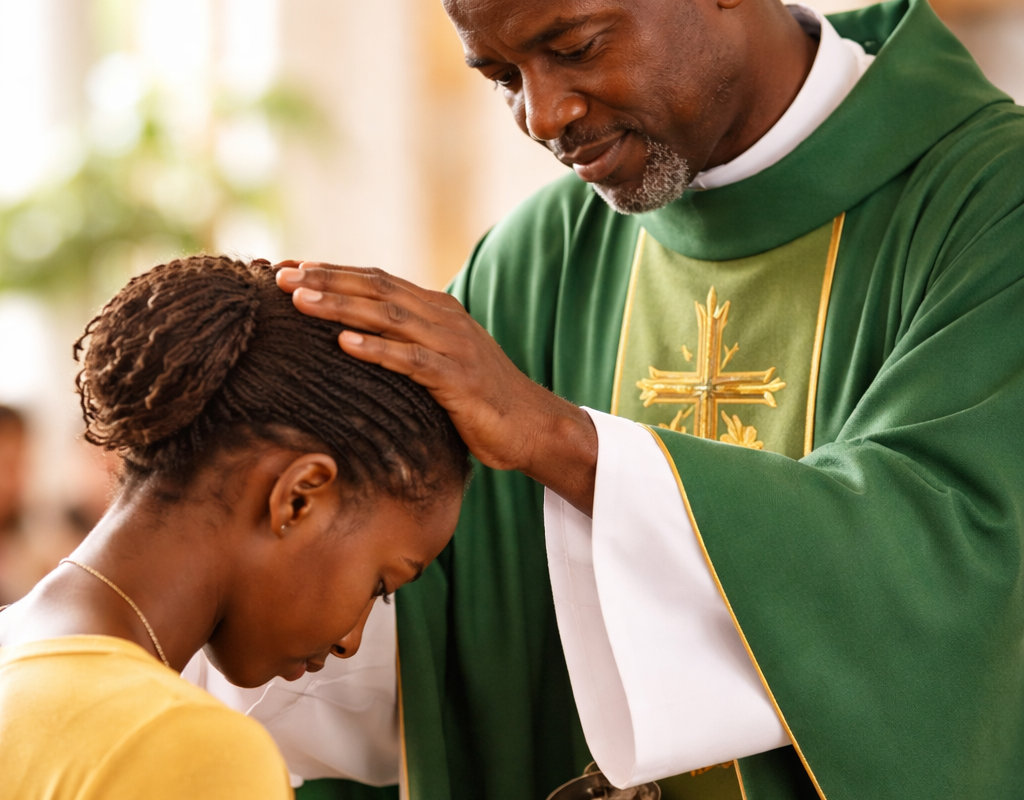
Ordained ministers often extend or lay hands over a person or object when giving a blessing.
Lay people praying for someone may place a hand on the person’s shoulder, but should avoid gestures reserved for ordained ministers.
Conclusion
Blessings are expressions of God’s favour and grace poured out upon His people. They accompany us in the ordinary moments of life and help draw us closer to God.
While many blessings are given by priests and deacons, the Church also reminds us that all the baptized are called to be a blessing to others.
Parents can bless their children, families can bless their homes, and believers can constantly seek God’s favour in their daily lives.
At the same time, Scripture reminds us that we receive God’s blessings most fully when we walk faithfully according to His commandments.
Send in your questions for further inquiries and clarifications.
 English
 Arabic
 Chinese (Simplified)
 Dutch
 French
 German
 Italian
 Portuguese
 Russian
 Spanish