 English
 Arabic
 Chinese (Simplified)
 Dutch
 French
 German
 Italian
 Portuguese
 Russian
 Spanish

The men’s run, scheduled for Friday, November 27, 2026, will start at the Old Akii-Bua Stadium, with participants expected to assemble by 6:00 a.m. The event will be held under the theme “Run in Faith, Serve in Strength,” drawn from 1 Corinthians 9:24, and carries the campaign message, “Run for Your Health. Kick Out Prostate Cancer.”
By Flavia Oyuu, Communications Office, Lira Diocese
The Catholic Diocese of Lira has intensified its campaign against prostate cancer, calling on men, women and other stakeholders across the Lango Sub-region to participate in the forthcoming Lira Diocese Men’s Run 2026, aimed at raising awareness, encouraging early screening and mobilising resources to acquire prostate cancer screening equipment.
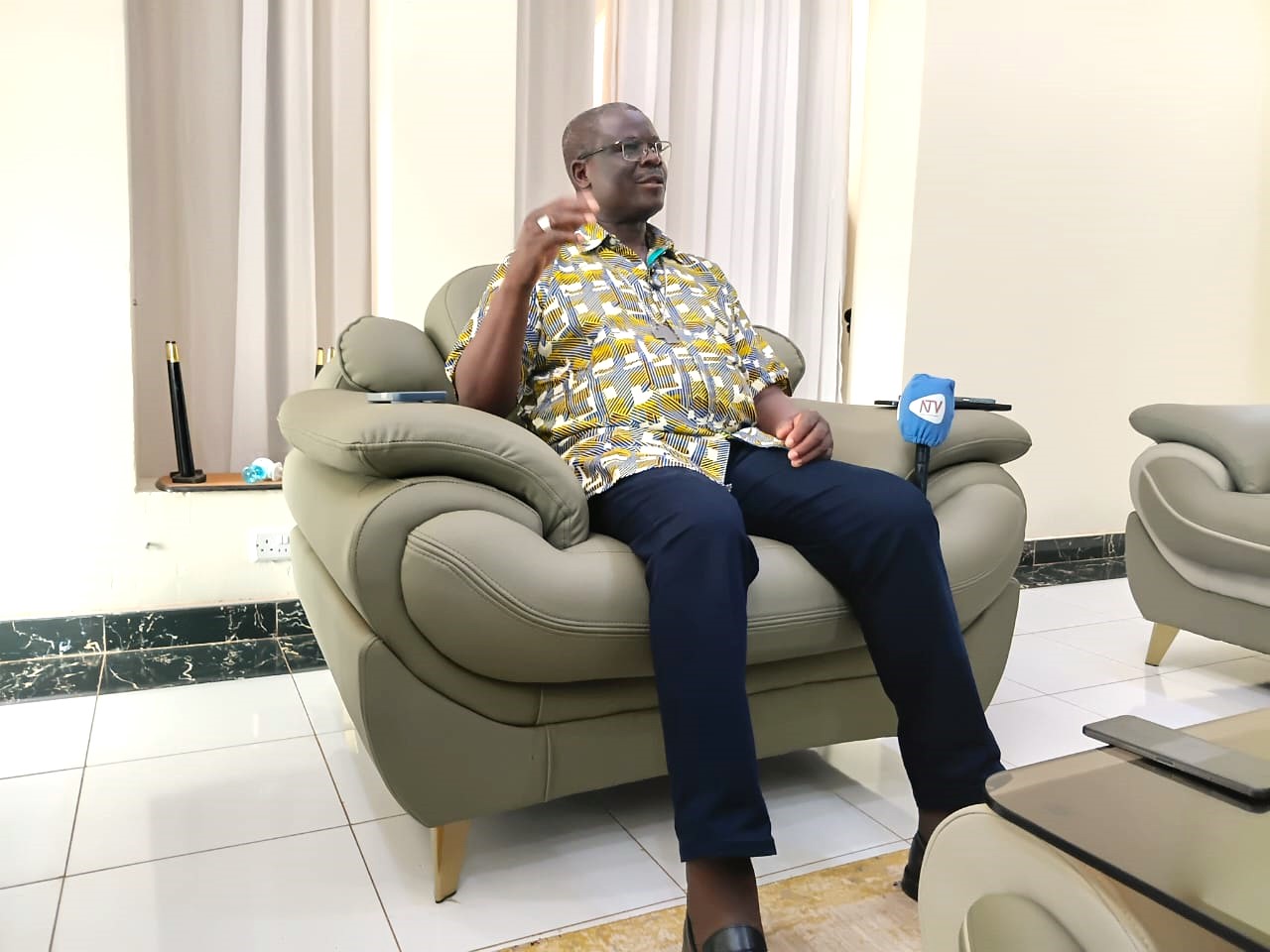
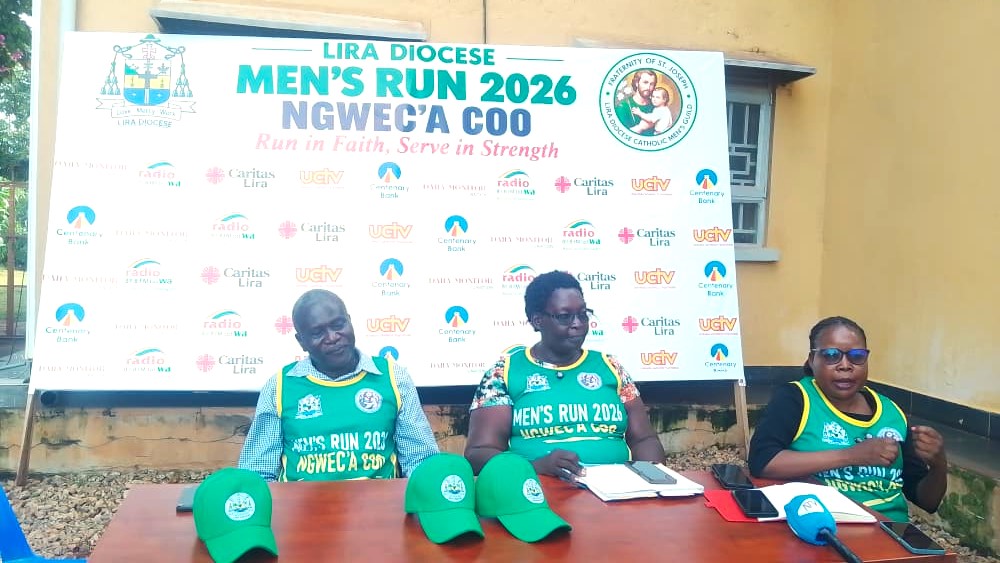
The appeal was made on Thursday, November 19, 2026, during a press conference organised by the Lira Diocese Men’s Run Organising Committee at Radio Wa in Lira City. The Bishop of Lira Diocese, Rt. Rev. Sanctus Lino Wanok, also addressed the media separately at his residence.
The men’s run, scheduled for Friday, November 27, 2026, will start at the Old Akii-Bua Stadium, with participants expected to assemble by 6:00 a.m. The event will be held under the theme “Run in Faith, Serve in Strength,” drawn from 1 Corinthians 9:24, and carries the campaign message, “Run for Your Health. Kick Out Prostate Cancer.”
Bishop Wanok said prostate cancer remains a serious concern because many men are reluctant to discuss symptoms or seek medical attention until the disease has advanced.
He described the disease as a silent killer, noting that embarrassment, fear and stigma often prevent men from speaking openly about their health challenges.
The Bishop explained that some men withdraw from social and religious gatherings because of symptoms such as frequent urination, yet remain unwilling to seek medical help. He said the effects can extend beyond an individual’s health to affect marital relationships and family stability.
“When men keep quiet about these things, they suffer in silence,” the Bishop said, urging men to overcome the shame associated with prostate cancer and seek medical attention.
He said the Men’s Guild had taken the initiative to mobilise the community and raise resources towards acquiring screening equipment that would improve access to early detection across the Lango Sub-region.
Bishop Wanok encouraged men already experiencing symptoms to come forward for testing during the event, saying the Church and families were ready to support them through their health challenges.
He further called on government, cultural leaders, traders, religious leaders and other stakeholders to support the campaign, including people living outside the country who could contribute towards the initiative.
The Bishop described the planned run as the first of its kind in Uganda, adding that it was an opportunity to bring communities together around a health concern affecting men and their families.
He urged participants to observe time, saying they should assemble at 6:00 a.m. for the run to begin at 7:00 a.m. After the run, participants will gather for brief speeches and other activities.
Health Officials Warn Against Late Diagnosis
Dina Apio, a Health Educator from the Diocesan Health Office, said the initiative was important because limited public awareness, stigma and fear continue to contribute to late diagnosis of prostate cancer.
She observed that many men only seek medical attention when symptoms become severe, making treatment more difficult and increasing the burden on families.
Citing statistics presented during the press conference, Apio said Uganda records approximately 2,537 prostate cancer diagnoses annually, with about 1,544 men dying from the disease. She also said prostate cancer accounts for 30 per cent of cancers in the country.
She noted that Uganda and Zimbabwe are among the countries with the highest prostate cancer risk in sub-Saharan Africa. She further referred to Uganda Cancer Institute publications identifying the Mid-North as one of the areas with a high cancer burden, a region that includes the Lango Sub-region.
Apio explained that the challenge in Lango is not necessarily that the disease occurs at a higher rate than elsewhere, but that limited information and delayed diagnosis make it difficult for many men to access timely care.
She identified fear of a possible diagnosis, stigma and limited diagnostic capacity, particularly in rural communities, as some of the barriers preventing men from seeking screening.
“Some men fear going for testing because they ask themselves, if I am found to have cancer, what next?” she said, emphasising the need to encourage people to seek medical advice rather than avoid testing.
Apio explained that there is no single established cause of prostate cancer, cautioning against assumptions that particular behaviours, such as having multiple sexual partners, directly cause the disease.
She identified increasing age and family history as important risk factors and advised men, particularly those aged between 40 and 45 years and above, to seek medical guidance and establish their health status.
She said early diagnosis gives patients a better opportunity to access appropriate treatment, while late presentation makes management more difficult.
According to Apio, the planned screening equipment is intended to improve access to prostate cancer testing and strengthen early detection services in the Lango Sub-region.
Free Screening and Medical Tests Planned
The Lira Diocese Women’s Desk Coordinator, Anna Lumumba-Odongo, said the Women’s Guild was also mobilising women and the wider community to support the event, emphasising that the fight against prostate cancer was a shared responsibility.
She called on men, women, young people and people from different religious denominations and social backgrounds to participate, saying the campaign was not limited to Catholics.
Lumumba-Odongo said a team from Lira Regional Referral Hospital would provide prostate cancer screening during the event, while a medical team from the Uganda People’s Defence Forces (UPDF) would conduct other health tests.
She encouraged men to take advantage of the opportunity to know their health status, while urging women to support and encourage their husbands, relatives and other men to seek screening.
She also appealed to the public to purchase the event’s running kits early to support the campaign.
She said the organising team had initially planned to bring in more than 1,000 kits but had so far received 550, of which approximately 350 had already been sold by the time of the press conference.
The kits are being sold at UGX 30,000 in advance, while those purchased on the day of the event will cost UGX 35,000. She urged interested participants to obtain theirs early because the available stock was limited.
Men’s Guild Seeks to Strengthen Men’s Participation in Church and Society
Benedict Ogwal, the General Secretary of the Men’s Run Organising Committee, said the initiative was also part of a wider effort to strengthen the Catholic Men’s Guild and encourage men to take a more active role in the Church, their families and society.
He explained that the Men’s Guild in Lira Diocese was established partly out of concern that men were not participating as actively as women in Church activities, despite the important role they were expected to play in the life of the Church.
Ogwal said the Bishop had previously raised concern about the limited participation of men in Church activities, prompting renewed efforts to mobilise them.
He noted that the Men’s Guild already existed in other parts of Uganda, including Kampala and Masaka, and that Lira Diocese had since been working to strengthen the fraternity locally.
He said the Guild draws inspiration from St Joseph, the patron saint of the Catholic Men’s Guild, whose life is presented as an example of patience, humility and responsibility in caring for the family.
Ogwal explained that the decision to organise a run was informed by the understanding that men enjoy sports and that a sporting activity could provide an opportunity to bring them together while drawing attention to their health and responsibilities.
He added that the Men’s Guild had established structures across parishes and at chapel level, with chairpersons, secretaries and other leaders helping to coordinate its activities.
Beyond the run, the Guild plans to conduct training programmes through parishes and chapels, including training-of-trainers workshops, to strengthen men’s formation and participation.
Ogwal said the Guild had also prepared formation materials focusing on the example of St Joseph, family responsibilities and the role of men in building strong Christian homes. The materials are being translated into local languages to make them accessible to more members.
He said the Guild intended to make the Men’s Run an annual event, ensuring that the campaign for men’s health and responsibility continues beyond this year’s activity.
He emphasised that the event was open to everyone, regardless of religious affiliation, because prostate cancer affects families and communities beyond denominational boundaries.
A Call for Collective Responsibility
The organisers reiterated that the Men’s Run is not exclusively for men, but a community initiative that requires the participation of women, young people, religious institutions, government and other stakeholders.
The campaign seeks to turn awareness into practical action by encouraging men to seek early medical attention and mobilising resources towards improved screening services in the Lango Sub-region.
With the main run scheduled for November 27, the Diocese is calling on the public to assemble at the Old Akii-Bua Stadium by 6:00 a.m. and join the campaign against prostate cancer.
Through the initiative, Lira Diocese hopes to encourage men to break the silence surrounding prostate cancer, take greater responsibility for their health and protect the wellbeing of their families.
End