en English
ar Arabiczh-CN Chinese (Simplified)nl Dutchen Englishfr Frenchde Germanit Italianpt Portugueseru Russianes Spanish
What are you looking for?

Yearly Archives: 2026

Lira Diocese Urged to Carry Forward Fr. Ponsiano Okalo’s Legacy at First Anniversary Memorial Mass

By Flavia Oyuu, Communications Office, Lira Diocese

LIRA – Priests, religious, family members and the faithful gathered at St. Daniel Comboni Diocesan Headquarters, Bar Ogole, on Saturday, July 25, 2026, to commemorate the first anniversary of the late Rev. Fr. Ponsiano Okalo, with a renewed call to carry forward his legacy of joyful priestly service, faith and compassion.

The memorial Mass was led by the Diocesan Pastoral Coordinator, Rev. Fr. Vincent Orum Nimungu, and concelebrated by Rev. Fr. James Michael Ebong, before proceeding to the blessing of the late priest’s grave where special prayers were offered.

Fr. Ponsiano died on July 25, 2025, at St. John XXIII Aber Hospital after serving the Church for 25 years. At the time of his death, he was a lecturer at Lira University, Episcopal Vicar for the Clergy and curate at Ober Catholic Parish. He was only weeks away from celebrating his Silver Jubilee in the priesthood.

In his homily, Fr. Orum encouraged the faithful to look beyond death and embrace the Christian hope of resurrection, comparing Fr. Ponsiano’s life to a flowering plant that continues to live through its seeds.

“The flower may wither after fulfilling its mission, but it leaves behind seeds that bring forth new life. In the same way, Father Ponsiano is not dead. His life continues, and that is the hope Christ gives us through the resurrection,” he said.

He described the late priest as a man whose life was measured not by its length but by its quality, recalling his ever-present smile, gentle spirit and dedicated ministry.

“The quality of life that he lived is what matters before God. He was a beautiful flower that God planted among us,” Fr. Orum said.

Drawing from the Gospel, he reminded Christians that Christ’s promise, “I am the resurrection and the life,” remains the source of consolation for believers and urged the congregation to remain faithful to the Eucharist, describing it as the path that prepares Christians for eternal life.

“The greatest gift we can give Fr. Ponsiano is to remain close to Jesus in the Eucharist—the same Eucharist he celebrated and shared with God’s people throughout his priestly ministry,” he added.

Remembering his son, Mr. Angelo Jasinta Akula, who served as a catechist for 56 years across what was then Gulu Diocese, thanked the faithful for their continued love and support shown to the family.

He urged those still grieving to celebrate Fr. Ponsiano’s life by continuing his mission rather than remaining in sorrow.

Mr. Kula paid special tribute to Christians of Ober Parish for standing with priests and supporting God’s servants throughout the years.

He also announced that the family will host a posthumous celebration of Fr. Ponsiano Okalo’s Silver Jubilee in the priesthood and his birthday on August 11, 2026, at their home in Bala Sub-county, Kole District, inviting Christians across the diocese to participate.

Also speaking during the memorial, Judith Abude, the Vocations Coordinator of St. Peter Claver Ober Parish, called upon Christians not only to pray for departed priests but also to remember those still serving.

“Many people seek prayers from priests every day, but we often forget that they too need our prayers to overcome the challenges they face in ministry,” she said.

Paying tribute to the late priest, Carlos Okwada described Fr. Ponsiano as “a priest of substance,” recalling his gift as an educator and trained psychologist whose counsel comforted the broken-hearted and restored hope to many people.

Throughout the celebration, family members participated in the offertory procession while the choir led hymns of hope and thanksgiving before the congregation proceeded to the cemetery for the blessing of the grave.

One year after his passing, the memorial celebration became more than a remembrance of a beloved priest. It was a renewed invitation for the faithful to emulate Fr. Ponsiano Okalo’s joyful witness, compassionate service and unwavering faith, ensuring that the seeds he planted continue to bear fruit in the Church and society.

End

AMECEA PLENARY: Prelate Emphasizes Synodal Structures that Promote Shared Responsibility with the Youth

By Fr. Isaac Ojok, Communications Office, Lira Diocese

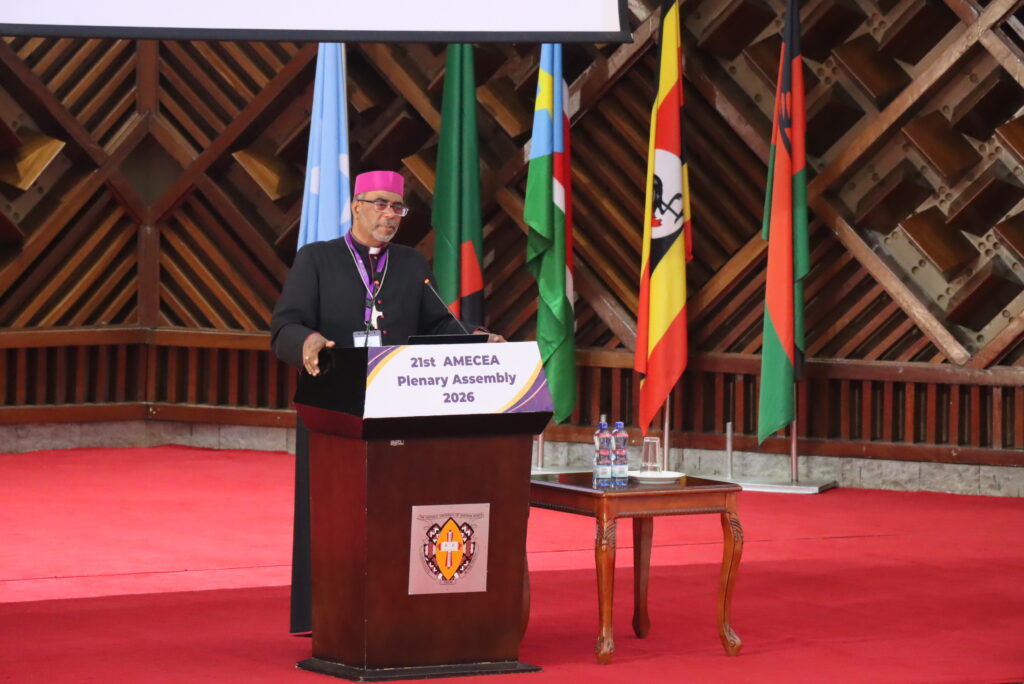
The Metropolitan Archbishop-elect of Addis Ababa, Ethiopia, Most Rev. Tesfaye Tadesse Gebresilasie, has outlined key insights on young people drawn from the Final Document of the Synod on Synodality during the ongoing 21st AMECEA Plenary Assembly in Nairobi.

Addressing the delegates on Tuesday, July 21, Archbishop Tesfaye, a member of the Comboni Missionaries of the Heart of Jesus (MCCJ), reflected on four key lessons from the synodal journey: about young people, directions for youth ministry after the synod, and the pastoral responsibility of bishops in accompanying young people.

Synodality: A Continuing Journey

The Archbishop-elect emphasized that synodality is deeply rooted in the tradition of the early Church, citing Acts 15 as an example of the first synodal experience. He noted that the current synodal journey is a continuation of this heritage.

He recalled that Pope Francis, while marking 50 years since the institution of the Synod of Bishops by St. Paul VI, stressed that synodality is not optional but essential to the Church’s life. With 2026 dedicated to receiving the final synodal document, Archbishop Tesfaye urged local Churches to actively embrace and implement its vision.

He further described synodality as a journey rather than a destination, serving the Church’s mission of evangelization. Guided by the Holy Spirit, the synodal process calls for ongoing consultation, discernment, and concrete action at the local level.

Synodality as Conversion

The Comboni Archbishop underscored that synodality requires a spiritual conversion that shapes the daily life of the Church. This transformation, he said, involves all members of the Church, bishops, priests, religious, and the laity, learning to live and act in a more synodal way.

He encouraged local Churches within AMECEA to continue fostering structures and pathways that promote participation, dialogue, and shared responsibility.

Young People at the Heart of Renewal

Turning to the place of young people in the synodal process, the Archbishop noted that while the synod was not exclusively about youth, it recognizes them as both vulnerable and vital contributors to the Church’s renewal.

He highlighted that young people bring a strong sense of community and are active participants in the life of the Church. The document calls for their meaningful inclusion in decision-making bodies such as parish pastoral councils and diocesan structures not merely as observers, but as contributors to discernment.

The Archbishop also pointed to the growing role of families and institutions in supporting young people, emphasizing the importance of intergenerational dialogue and collaboration.

A Synodal Approach to Youth Ministry

The Ethiopian Prelate stressed that youth ministry must itself be synodal, rooted in listening, accompaniment, and shared journeying. He called for renewed methods and language that resonate with contemporary youth culture, noting that some traditional approaches are no longer effective.

He emphasized the need to spend time with young people, listen to their experiences, and recognize the action of the Holy Spirit in their lives. He said young people are not just recipients but agents of youth ministry.

Pastoral Responsibility of Bishops

On the role of bishops, Archbishop Tesfaye highlighted the growing need for authentic relationships among young people, many of whom are increasingly drawn into virtual interactions at the expense of real human connection.

He called for a “conversion in relationships,” beginning within families and extending to Church communities. Bishops, he said, must be visible signs of hope, inspiring young people to believe in the possibility of change.

The Archbishop also drew attention to the challenges faced by youth, including various forms of abuse, emotional, spiritual, political, and social and urged Church leaders to be prepared to address these realities with compassion and competence.

Call for Coordinated Action

The synodal document, he noted, calls for stronger coordination among diocesan structures, religious congregations, and Church movements working with young people. Bishops are tasked with fostering unity and collaboration to ensure a coherent pastoral approach.

He further highlighted the need for establishing or strengthening youth offices at the diocesan level and promoting synodal formation in seminaries and among candidates for consecrated life.

Navigating the Digital Age

Addressing emerging challenges, Archbishop Tesfaye warned of the risks associated with the unchecked use of artificial intelligence and digital technologies among young people. He called for clear guidelines and formation to help them engage responsibly with these tools.

A Question for the Church

Concluding his reflection, the Archbishop echoed a central question raised by the synod: How can the Church ensure that young people fully participate in its life and mission?

He urged Church leaders across AMECEA to take concrete steps in making the Church a more inclusive, participatory, and hope-filled community for the younger generation.

End

This article was first published by AMECEA

Lira Diocese Launches Revised Lango Catholic Bible, Urges Greater Engagement with God’s Word

The Bible was launched on Friday, July 24, during a one-day Church leaders’ sensitisation workshop held at Nazareth Family Centre in Bar Ogole. The workshop brought together priests, religious, catechists and lay leaders to learn about the Bible Society of Uganda’s ministry, including Scripture translation, trauma healing, youth programmes and support for people with visual disabilities.

By Flavia Oyuu, Communications Office, Lira Diocese

LIRA, Uganda – Lira Diocese, in partnership with the Bible Society of Uganda, has launched the revised edition of the Lango Catholic Bible (Buk Acil), ending more than five years during which the publication had been unavailable and encouraging Catholics to deepen their encounter with God’s Word.

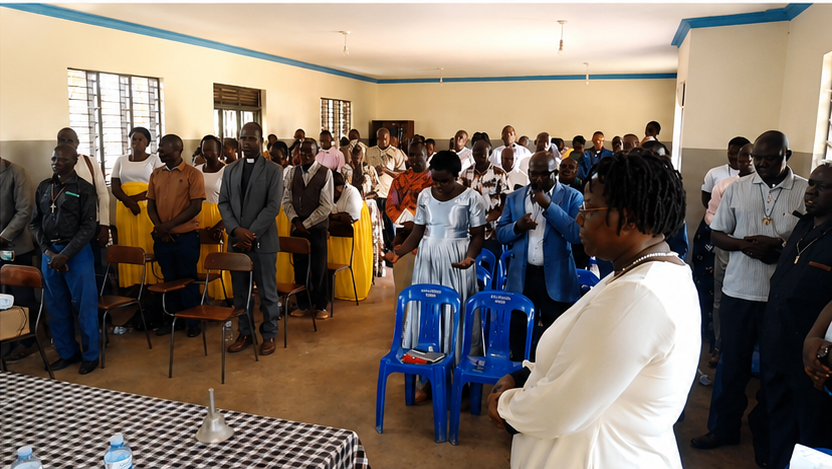
The Bible was launched on Friday, July 24, during a one-day Church leaders’ sensitisation workshop held at Nazareth Family Centre in Bar Ogole. The workshop brought together priests, religious, catechists and lay leaders to learn about the Bible Society of Uganda’s ministry, including Scripture translation, trauma healing, youth programmes and support for people with visual disabilities.

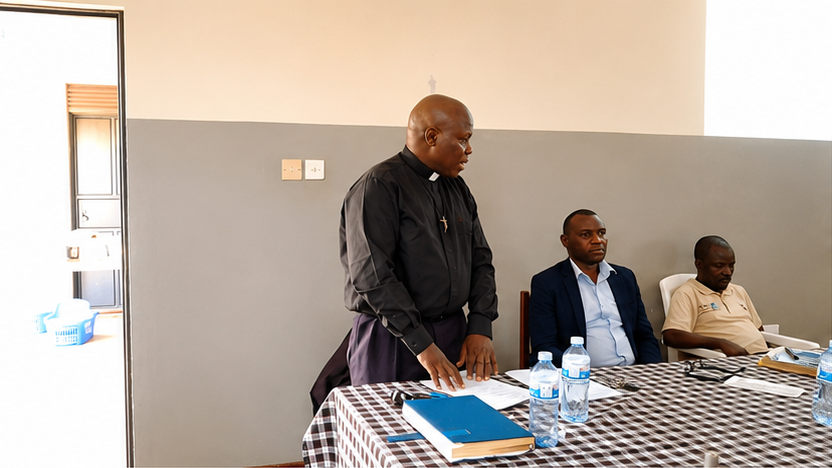
Opening the workshop on behalf of Bishop Rt. Rev. Sanctus Lino Wanok, the Diocesan Pastoral Coordinator, Rev. Fr. Vincent Orum Nimungu, described the Bible apostolate as an important avenue for renewing evangelisation and strengthening missionary discipleship in the Church.

Quoting Pope Francis’ Apostolic Exhortation Evangelii Gaudium, Fr. Orum reminded participants that “the joy of the Gospel fills the hearts and lives of all who encounter Jesus,” noting that the Scriptures remain the primary way through which Christians encounter Christ and listen to the voice of the Holy Spirit.

“In today’s society, we are bombarded by many voices and noises, leaving little time to listen,” he said. “The Holy Spirit communicates to us through the Gospel in the Bible. Therefore, we are called more than ever to become a listening Church.”

He encouraged Christians to rediscover the transforming power of Scripture in their daily lives, saying the Bible apostolate empowers believers to become joyful missionary disciples capable of bringing hope to society.

Speaking on behalf of the Bible Society of Uganda, Fundraising Assistant Jesse Mungalo explained that the organisation serves all Christian denominations through Bible translation, publication and distribution.

He said the Society has so far translated the Bible into 21 Ugandan languages, including Lango, while also producing Braille and audio Bibles to ensure that people living with visual impairment are not left behind.

“This week we have been meeting leaders from different Christian denominations across Lira. Today we are with Catholic priests, catechists and church leaders, sharing the work of the Bible Society and introducing the revised Lango Catholic Bible, which is now available again after being out of stock,” Mungalo said.

He appealed to Christians to obtain and actively use the Scriptures, noting that the Society’s vision is for every Ugandan to have access to the Bible in a language they understand.

The Vicar for Clergy of Lira Diocese and consultant to the Bible Society of Uganda, Rev. Fr. Dr. Polycarp Opio, welcomed the reprinting of the Lango Catholic Bible, describing it as good news for the faithful.

“We are happy to receive the reprint of the Bible in Lango, Buk Acil. This is a great testimony and good news in our diocese,” he said.

Fr. Polycarp also encouraged parishes and church groups to take advantage of the Bible Society’s trauma healing programme, youth initiatives and other outreach programmes, saying they provide valuable support for communities.

“I am empowered to go back, mobilise support for the Bible Society and encourage our people, especially the young, to participate in its mission,” he added.

Closing the workshop, Fr. Orum thanked the Bible Society of Uganda for strengthening participants’ understanding of Scripture ministry and raising awareness about programmes that support vulnerable groups, particularly people living with blindness.

He called on Catholics to become members and supporters of the Bible Society while embracing regular Scripture reading.

“As Catholics we need to own the Bible because, as St. Jerome said, ‘Ignorance of Scripture is ignorance of Christ,'” he said.

He further noted that the diocese had actively participated in several Bible Society activities throughout the week, including programmes for women and youth, expressing confidence that the partnership would bear lasting fruit in strengthening biblical formation across the diocese.

The newly revised Lango Catholic Bible incorporates revisions suited to Catholic liturgical and pastoral use after many years in which Catholics largely relied on the Anglican Luo Bible due to the unavailability of the Catholic edition.

An initial 5,000 copies have been printed and are now available through the Diocesan Procure in Ngetta.

End

Lira Diocese Strengthens Men’s Guild Through International Formation Visit

“The Church is now going very synodal, where participation of all is highly encouraged and nobody is left behind,” he said. “The mothers and the fathers are the pillars of the Church. If there is any lay movement that should never be left behind, it is that of the mothers and the fathers because they are fundamental to the life of the Church.”

By Flavia Oyuu, Communications Office, Lira Diocese

LIRA, Uganda – Lira Diocese has reaffirmed its commitment to strengthening the Paternity of St. Joseph, commonly known as the Men’s Guild, following a three-day formation and mentorship visit by leaders of the Men of St. Joseph International (MOSJI) movement.

The visit brought together the movement’s International representative Richard “Dick” Kiernan from the Diocese of Manchester in New Hampshire, USA, National Coordinator Paul Katuramu, and Gulu Provincial Coordinator Libolio Otim Kithaghenda. They held meetings with Men’s Guild leaders, visited parish initiatives and shared practical strategies aimed at strengthening Catholic men as leaders in their families, communities and the Church.

The visit concluded at the diocesan offices in Bar Ogole with a meeting attended by the Vicar General of Lira Diocese, Msgr. Innocent Valente Opio, Ngetta Deanery Dean Rev. Fr. Simon Peter Olugu, the chaplain of the Paternity of St. Joseph and members of the Men’s Guild.

Speaking at the closing meeting, Msgr. Opio said the Church’s synodal journey requires greater participation from men, noting that many have increasingly become spectators rather than active participants in parish life.

“The Church is now going very synodal, where participation of all is highly encouraged and nobody is left behind,” he said. “The mothers and the fathers are the pillars of the Church. If there is any lay movement that should never be left behind, it is that of the mothers and the fathers because they are fundamental to the life of the Church.”

He urged members of the Men’s Guild not to be discouraged by their current numbers, comparing the movement to the mustard seed that grows into a great tree.

“You are the hope of the Church and the hope of the Diocese. If you remain committed, the impact of your efforts will be evident in the years to come,” he added.

The Vicar General also emphasized that strengthening families begins with fathers, urging men to take a leading role in family catechesis and faith formation.

He observed that many young people drift away from the Church because Christian values are no longer being nurtured within families as they once were.

“We learnt to pray at home before we even went to school. Family catechesis is very important, and it begins with fathers and mothers taking responsibility.”

Msgr. Opio also highlighted the diocesan vision of promoting economic empowerment among lay associations through savings and cooperatives, saying financially stable groups would be better positioned to support parish activities and reduce dependence on collections.

The National Coordinator of Men of St. Joseph Uganda, Paul Katuramu, described the movement as a lay apostolate dedicated to helping men grow in faith, become better husbands and fathers, and serve both their families and the Church.

He shared how the movement began in Kasese Diocese and has since expanded to 14 Catholic dioceses in Uganda and several other African countries including the Democratic Republic of Congo, Rwanda and Nigeria.

Katuramu encouraged members to embrace both spiritual growth and economic empowerment.

“We have realised that men are suffering both spiritually and economically. We encourage our members to pray, work hard and support their families so that they can also support the Church.”

He further called on members to welcome every man into the movement regardless of his circumstances, stressing that formation should precede judgment.

“Leave no man behind,” he said.

Gulu Provincial Coordinator Libolio Otim Kithaghenda reminded participants that St. Joseph remains the model of Christian fatherhood and responsible leadership.

He said the movement seeks to raise “heroic men” who become disciples in their homes, parishes and communities by following the example of St. Joseph.

Drawing from Acts 1:8, he challenged members to become missionary disciples who share the Gospel beyond their immediate communities.

Richard Kiernan, who also serves on the global leadership of Men of St. Joseph International (MOSJI), encouraged the Diocese to invest in leadership formation by multiplying trainers who can establish strong parish groups.

Sharing the experience of the movement’s growth in the United States and internationally, he stressed that effective Catholic men’s ministry depends on prayer, small faith-sharing groups, leadership development and strong parish support.

“Our mission is to multiply disciples and multiply leaders,” he said, noting that Uganda has become one of the fastest-growing countries within the international movement.

He praised the rapid expansion of the movement in Uganda and expressed hope that East African representatives would participate in the next global Men of St. Joseph conference scheduled for Rome in 2027.

Rev. Fr. Simon Peter Olugu thanked the visiting delegation for strengthening the Diocese and expressed confidence that Lira Diocese would continue growing as a self-sustaining local Church.

“You have not simply given us fish to eat; you have taught us how to fish,” Fr. Olugu said. “When you return, you will find us at a different level because we have the leadership, the commitment and the resources to move forward.”

Men’s Guild Coordinator Jimmy Agnes Bongo said the visit enabled the delegation to appreciate several initiatives already being undertaken by guild members, including agricultural training, poultry keeping, fish farming, rabbit rearing and environmental conservation projects in various parishes.

He said discussions also focused on the challenges facing men and strategies for attracting more Catholic men into the fraternity while promoting spiritual growth alongside economic empowerment.

As part of its future activities, the Paternity of St. Joseph plans to organize a diocesan marathon and health camp aimed at increasing awareness of the movement, promoting men’s health and encouraging greater participation in Church life.

“We want to build strong men and strong communities,” Bongo said. “We invite all men to become part of this fraternity so that together we can strengthen our families, our Church and society by following the example of St. Joseph.”

End

Lira Diocese Launches Emergency Food Drive for Famine Victims in Karamoja

By Flavia Oyuu, Communications Office, Lira Diocese

Lira Diocese has launched an emergency food collection campaign to support communities affected by severe food shortages in the Dioceses of Kotido and Moroto following an appeal by the Uganda Episcopal Conference.

In a communication issued through the Social Communications Office, the Vicar General of Lira Diocese, Monsignor Innocent Valente Opio, called upon priests, religious, Christians and all people of goodwill to respond generously to the worsening humanitarian crisis in the Karamoja Sub-region.

According to the communication, prolonged drought has devastated livelihoods, leaving many families without food and exposing children, the elderly and other vulnerable people to hunger and hardship.

To coordinate the relief effort, every parish in Lira Diocese has been directed to establish a food collection centre where Christians and other well-wishers can donate food items for the affected communities.

Caritas Lira Diocese will serve as the main collection centre and coordinate the transportation and delivery of the donations to the Dioceses of Kotido and Moroto. Parish priests, in collaboration with Caritas officials, have also been tasked with ensuring that all collected food items are delivered to the diocesan collection centre in Lira.

The Diocese has designated the months of July and August for the emergency food collection exercise, while September will be reserved for the annual Mission Appeal in support of St. Joseph’s Minor Seminary, Aboke.

The Vicar General appealed to the faithful to respond with compassion, reminding them that supporting those in need is a practical expression of Christian faith. Quoting the Gospel of Matthew, he encouraged the faithful to live out Christ’s call to feed the hungry and care for those in distress.

Christians and people of goodwill have been encouraged to contribute according to their ability by donating food items such as maize, beans, cassava, millet, sorghum, rice and other non-perishable foods to help ease the suffering of families affected by the famine.

Lira Diocese has appealed for unity and generosity, expressing hope that the collective support of the faithful will bring relief and hope to communities facing one of the most severe humanitarian challenges in the Karamoja Sub-region.

End