en English
ar Arabiczh-CN Chinese (Simplified)nl Dutchen Englishfr Frenchde Germanit Italianpt Portugueseru Russianes Spanish
What are you looking for?

Monthly Archives: March 2026

Understanding Blessings as a Sacramental (Cont’d)

Blessings are among the most common sacramentals in the life of the Church.
In this reflection, the Commission of Doctrine of Lira Diocese explains the meaning of blessings, their biblical foundations, the different types of blessings, and who may confer them in the life of the Church.

Commission of Doctrine – Lira Diocese

Fr. Constanz Opiyo, MCCJ
Secretary, Doctrinal Commission

Welcome to our continuing series on sacramentals. In this reflection, we look at blessing as a sacramental, exploring its meaning, types, biblical foundations, and the ministers who confer blessings within the life of the Church.

What is a Blessing?

The Latin root of the word bless helps us understand its meaning more clearly. In Latin, the verb benedicere literally means “to speak well of” or “to praise.”

When human beings bless God, the word carries the meaning “to praise” or “to glorify.” However, when God blesses human beings, it signifies favour, salvation, protection, sanctification, and other gifts given for their material and spiritual welfare.

In the Bible, the word blessing is used in different ways, but three main meanings stand out:

1. Blessing as Praise

In Psalm 34:1, the word bless is synonymous with praise. The Psalmist proclaims:

“I will bless the Lord at all times; His praise shall always be on my lips.”

Here, blessing rises from the creature to the Creator as an act of gratitude and praise for God’s goodness.

2. Blessing as a Wish for Good Fortune

To bless can also mean wishing or desiring good for someone, expressing a hope that God’s goodness may accompany that person. For example, when we say, “It shall be well with you,” we are invoking such a blessing.

Psalm 128:2 expresses this kind of blessing for the one who fears the Lord.

3. Blessing as Sanctification

Blessing can also signify sanctification or dedication of a person, object, or place for sacred use.

Both the Old and New Testaments contain many examples of people, objects, and places being blessed and consecrated.

  • The people of Israel were consecrated as God’s special possession and a holy nation (Exodus 19:5–6).
  • Among the tribes, the tribe of Levi was set apart for service to God.
  • From the Levites, the line of Aaron was designated for the priesthood.
  • Sacred objects such as temple vessels, linens, and the Temple itself were blessed and dedicated through liturgical rites.

In this article, we focus mainly on the second and third meanings of blessing, those related to good fortune and sanctification, understood from a sacramental perspective.

As a sacramental, a blessing is a liturgical act through which the Church intercedes for God’s favour, preparing the faithful to receive grace and helping them grow closer to Him. It is an invocation asking God to bestow grace, protection, and favour upon persons, objects, or places.

Types of Blessings

There are two main types of blessings in the Church:

1. Invocative Blessing

An invocative blessing consists of prayers asking God to grant His favour upon a person or object without changing its condition permanently.

These blessings can be given by ordained ministers as well as lay persons.

The Catechism of the Catholic Church teaches that:

“By virtue of baptism, all share in the common priesthood of Christ and therefore are called to be a ‘blessing’ and to bless” (CCC 1669).

However, the Catechism also clarifies that:

“The more a blessing concerns ecclesial and sacramental life, the more its administration is reserved to the ordained ministry.”

Pastoral Blessings

A form of invocative blessing known as pastoral blessing was explained in the 2023 document Fiducia Supplicans issued by the Dicastery for the Doctrine of the Faith.

Pastoral blessings are spontaneous prayers offered by a priest or deacon, even to individuals in irregular situations, who sincerely seek God’s grace and closeness. Such blessings do not legitimize those situations, but rather open the person to God’s grace and invite them to a path of conversion and transformation.

2. Constitutive Blessing

A blessing is constitutive when an ordained minister invokes God’s intercession to permanently dedicate a person, object, or place for sacred use.

In this case, the blessed object or person undergoes a permanent sacred designation, meaning it cannot return to ordinary use unless this dedication is revoked by a competent authority.

Examples include the dedication of churches, consecration of religious persons, or blessing of liturgical objects used in worship.

Blessings in the Bible

Throughout Scripture, blessings represent God’s favour, grace, peace, and inheritance.

Blessing was seen as:

“a mark of divine favour and a sure way to secure God’s benevolence, peace and protection.”

Because of this, people sought blessings earnestly—sometimes even through questionable means, as in the case of Jacob obtaining the blessing meant for Esau.

Kings preparing for war often sought God’s blessing before battle to ensure victory.

Forms of Blessings in the Bible

Blessing by Elders

In the Old Testament, elders frequently blessed their children.

Examples include:

  • Noah blessing Shem and Japheth
  • Isaac blessing Jacob

Elders had authority to bless or even curse.
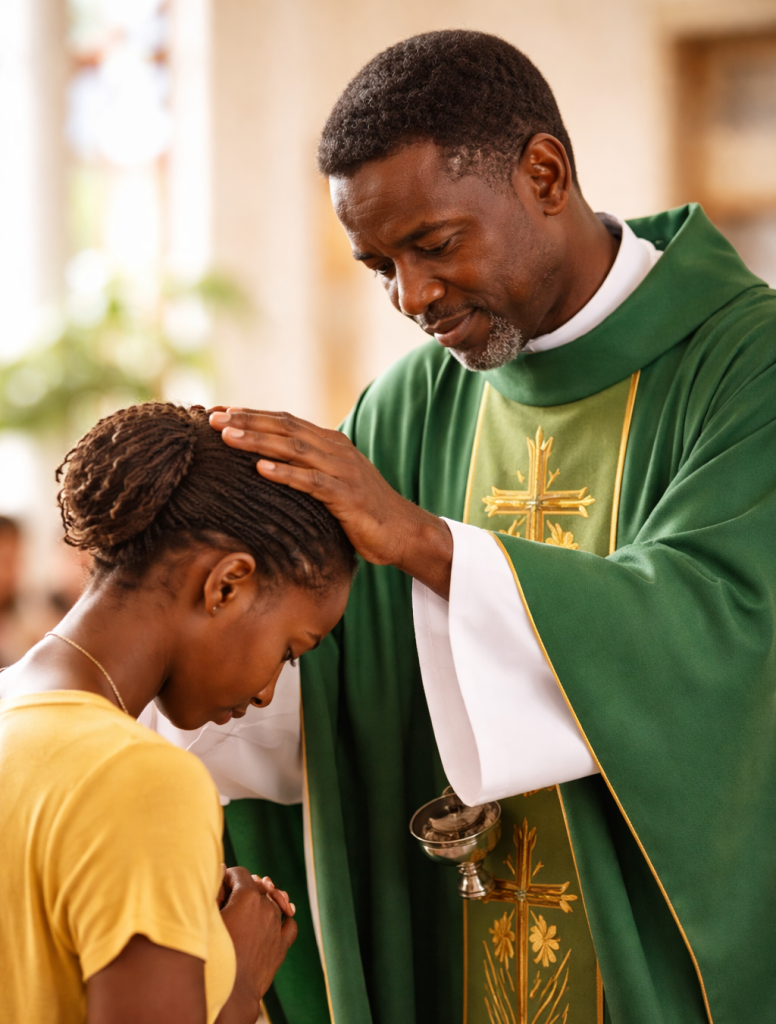
Blessing by Priests

Priests also conferred blessings.

For example:

  • Melchizedek, the High Priest of God, blessed Abraham after his victory in battle (Genesis 14:17–20).
  • In Numbers 6:22–27, God gives the famous Aaronic blessing, instructing priests how to bless the people of Israel.

Blessing by God

God Himself blesses humanity.

After creation, He blessed the first man and woman:

“Be fruitful, multiply and fill the earth” (Genesis 1:28).

In the New Testament, Jesus blesses children by laying hands on them (Matthew 19:13–14) and blesses bread and wine at the Last Supper, transforming them into His Body and Blood.

Blessing as Something Earned

While blessings are given freely, Scripture also teaches that they can be received through faithful obedience.

In Deuteronomy 30:15–20, Moses presents the people with a choice between blessing and life or curse and death.

Similarly, Psalm 1 teaches that the way of righteousness brings blessing, while wickedness leads to destruction.

In the New Testament, Jesus presents the Beatitudes (Matthew 5:2–12) as the path to true blessedness.

Who Are the Ministers of Blessing?

From the sacramental point of view, blessings are normally conferred by a superior upon those entrusted to their care.

Therefore, ordained ministers are the ordinary ministers of blessings, although some blessings can also be offered by lay people.

Blessings Reserved to the Pope

Examples include:

  • Urbi et Orbi Blessing given at Christmas and Easter
  • Blessing of palliums for archbishops
  • Apostolic blessings for major anniversaries

Blessings Reserved to Bishops

These include:

  • Dedication of churches
  • Consecration of virgins
  • Blessing of abbots
  • Blessing of sacred liturgical objects such as chalices, patens, and altar linens

A bishop may delegate certain blessings to priests.

Blessings Given by Priests

Priests confer many sacramental blessings such as:

  • Blessings during Confession
  • Blessing of holy water, rosaries, scapulars
  • Blessing of homes and families
  • Blessing of ashes and palms

Blessings Given by Deacons

Deacons can bless:

  • Families and homes
  • Religious objects such as rosaries and medals
  • Sick persons and travellers
  • Vehicles and holy water
    They may also bless ashes and palms when delegated.

Blessings by Lay People

Lay people also share in Christ’s priesthood through baptism and may offer invocative blessings.

Examples include:

  • Parents blessing their children
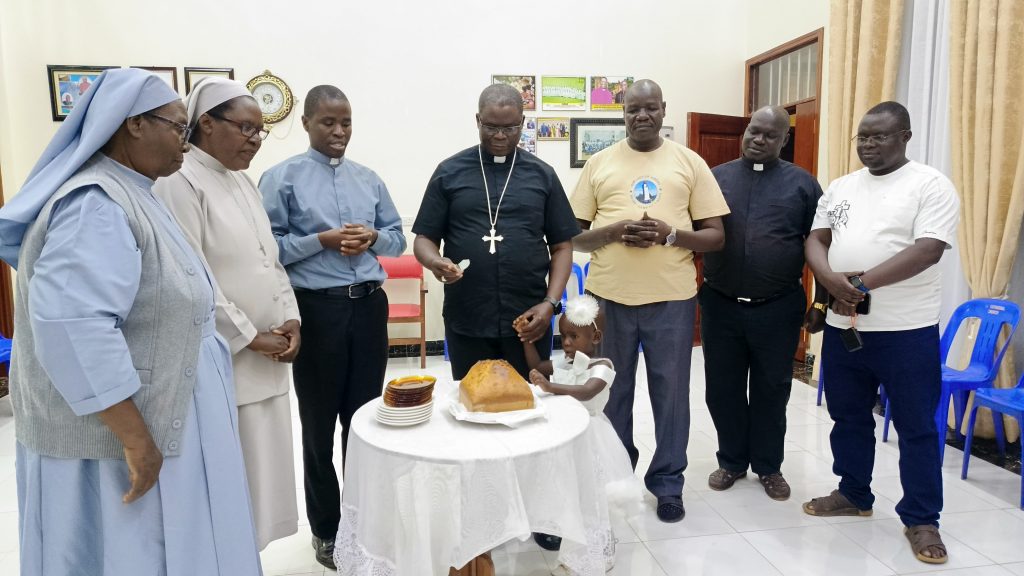
  • Blessing food before meals
  • Blessing homes
  • The head of a family leading the blessing of the home

However, constitutive blessings that dedicate persons or objects permanently for sacred use remain reserved to ordained ministers.

Gestures Used in Blessings

Blessings are often accompanied by visible gestures.

Sign of the Cross

  • A bishop blesses by making the sign of the cross three times.
  • A priest or deacon blesses by making the sign of the cross once.
  • Lay leaders invoke God’s blessing rather than imparting it in the same way as ordained ministers.

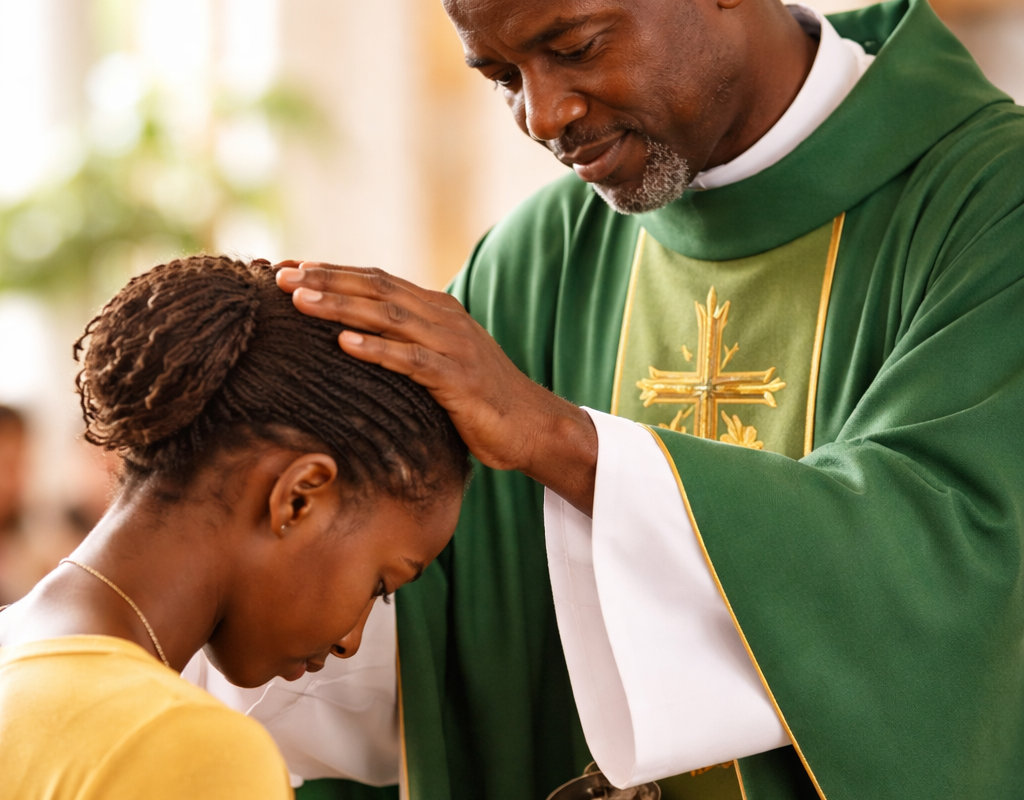
Laying on of Hands

Ordained ministers often extend or lay hands over a person or object when giving a blessing.

Lay people praying for someone may place a hand on the person’s shoulder, but should avoid gestures reserved for ordained ministers.

Conclusion

Blessings are expressions of God’s favour and grace poured out upon His people. They accompany us in the ordinary moments of life and help draw us closer to God.

While many blessings are given by priests and deacons, the Church also reminds us that all the baptized are called to be a blessing to others.

Parents can bless their children, families can bless their homes, and believers can constantly seek God’s favour in their daily lives.

At the same time, Scripture reminds us that we receive God’s blessings most fully when we walk faithfully according to His commandments.

Send in your questions for further inquiries and clarifications.

End
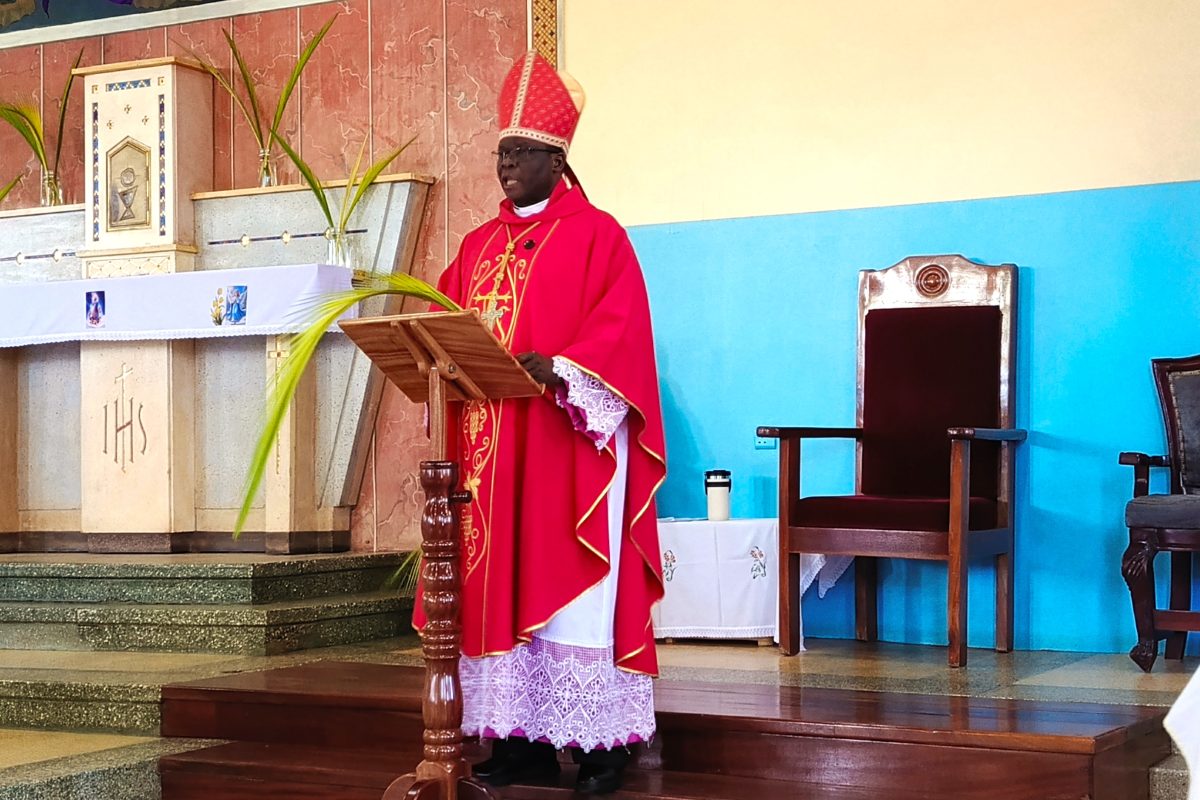
Bishop Wanok Calls for Faith, Unity, and Renewal in Palm Sunday Message to Lira Diocese

In his Palm Sunday message, the bishop reflected on the dual nature of the day’s liturgy, Jesus’ triumphant entry into Jerusalem and the solemn reading of His Passion. He emphasized that true Christian discipleship involves not only moments of celebration but also walking with Christ through suffering and the Cross.

By Fr. Isaac Ojok, Communications Office, Lira Diocese

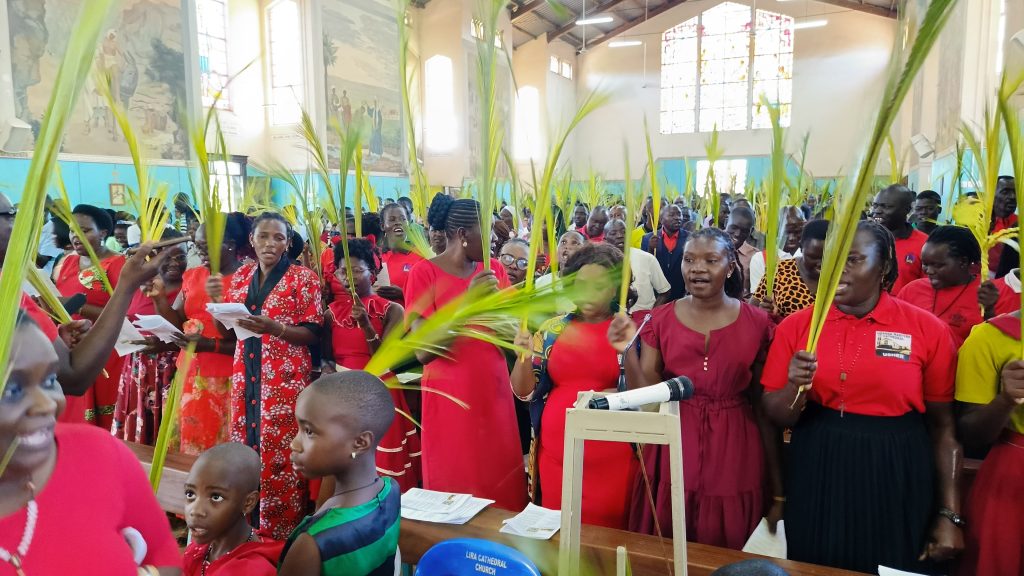
As Christians across the world marked Palm Sunday, on 29th March 2026, the beginning of Holy Week, thr Rt. Rev. Sanctus Lino Wanok, the of Lira diocese delivered a heartfelt homily to the faithful of Lira Diocese and listeners of Radio WA, urging them to embrace both the joy and sacrifice at the heart of the Christian journey.

In his Palm Sunday message, the bishop reflected on the dual nature of the day’s liturgy, Jesus’ triumphant entry into Jerusalem and the solemn reading of His Passion. He emphasized that true Christian discipleship involves not only moments of celebration but also walking with Christ through suffering and the Cross.

Highlighting the humility of Jesus, who entered Jerusalem riding on a donkey rather than in royal splendor, Bishop Wanok described Him as “a different kind of king

the king who serves, saves, and gives his life for his people.” He challenged believers to reflect personally on their relationship with Christ, asking, “Who is Jesus in your life?”

Drawing from Scripture, the bishop connected the Suffering Servant in Isaiah, the lament of the Psalms, and Saint Paul’s teaching on Christ’s self-emptying love to illustrate the depth of Jesus’ sacrifice. He reminded the faithful that Christ understands human suffering and remains close to those experiencing hardship, poverty, and discouragement.

Bishop Wanok also spoke about the importance of humility, service, and communal unity, especially within what he described as a “synodal Church”, a Church that walks together. He encouraged Christians to support one another, listen deeply, and carry each other’s burdens during this sacred season.

Reflecting on the Passion narrative, he noted the different human responses to Jesus, from betrayal and denial to faithfulness and courage. He urged believers to use Holy Week as a time for personal reflection, repentance, and renewal.

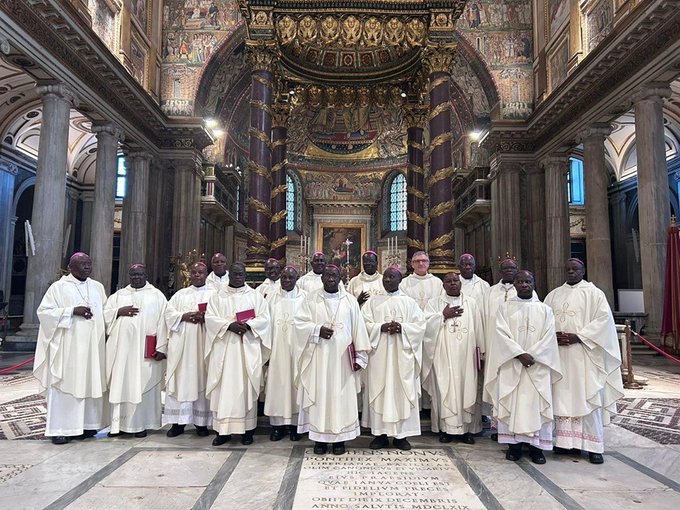
Recalling his recent visit to Rome for the ad limina apostolorum, the bishop shared how praying at the tombs of Saints Peter and Paul inspired hope, noting that even in human weakness, God’s grace leads to transformation and strength.

He concluded by encouraging practical actions during Holy Week: fostering forgiveness within families, participating in liturgical celebrations, caring for the poor and vulnerable, and seeking reconciliation with God.

“Palm Sunday reminds us that carrying palms is only the beginning,” Bishop Wanok said. “We are called to walk with Christ through the entire journey, toward the Cross and ultimately the joy of the Resurrection.”

The bishop ended his message with a prayer for families, youth, clergy, and the wider Church, asking for renewed faith, unity, and strength during Holy Week.

 End

Bishop Wanok Returns from Ad Limina Apostolorum Visit to Rome

By Flavia Oyuu, Communications Office

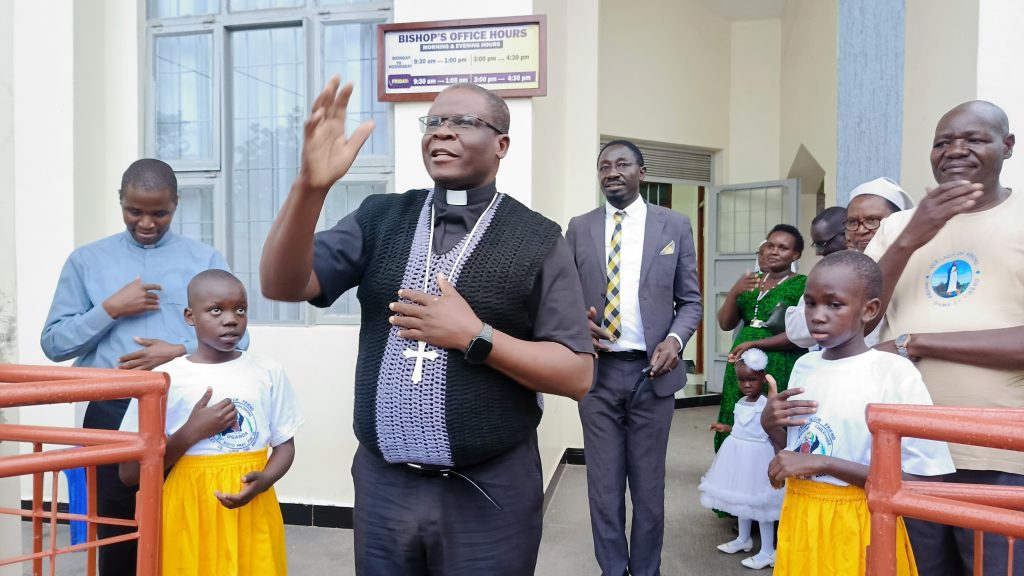
The Bishop of Lira Diocese, Rt. Rev. Sanctus Lino Wanok, on Saturday evening returned to Uganda Martyrs Cathedral in Lira after a week-long Ad Limina Apostolorum visit to Rome.

Bishop Wanok arrived at the cathedral a few minutes past 6:00 p.m. and was received by a joyful crowd of pupils from St. Kizito Primary School accompanied by their school band.

In his welcome remarks, the Vicar General of Lira Diocese, Msgr. Innocent Valente Opio, said it gladdened the hearts of the faithful to receive “the father of the home” after two weeks of his absence from the diocese.

He thanked the Bishop for representing the people of Lira Diocese well before the Holy Father during the visit.

Msgr. Opio added that due to the ongoing war in the Middle East, Christians in the diocese had been praying for the Bishop to travel safely to Rome and return home without difficulty.

He also assured the Bishop that the diocese remained stable during his absence, noting that only a few minor challenges had occurred. Among them, he mentioned that Msgr. Polycarp Opio, the Vicar for the Clergy, had recently lost his uncle.

Speaking after the welcome, Bishop Wanok expressed gratitude to the faithful for the warm reception and for keeping him in prayer throughout his journey.

The Bishop shared that the visit to Rome had been both spiritually enriching and demanding, involving meetings with various Vatican offices as well as a personal audience with the Holy Father together with other bishops.

He said the Pope showed great concern about the wellbeing of Christians in their dioceses and encouraged the bishops to continue strengthening the faith of their people. According to Bishop Wanok, the Holy Father expressed joy that Uganda remains one of the strongest countries in Africa in matters of faith, largely because of the witness of the Uganda Martyrs.

The Bishop also noted that during the meetings, the bishops shared reports on different aspects of Church life, including education, health services, charitable work through Caritas and the general pastoral mission of the Church.

While in Rome, the bishops also visited important pilgrimage sites, including the tombs of the Apostles Peter and Paul, where they prayed for the Church, the clergy, religious and the faithful back home.

Bishop Wanok said he remained in Rome briefly after the official meetings to make a personal retreat, during which he spent time in prayer for the people of Lira Diocese, the country and all those who had asked for his prayers.

He concluded by thanking the Christian community for their unity and commitment to supporting the mission of the Church in the diocese.

End

Bishop Wanok Urges Renewal and Unity During Ad Limina Visit in Rome

By Fr Isaac Ojok, Communications Office, Lira Diocese

The Bishop of Lira Diocese, Rt. Rev. Sanctus Lino Wanok, has called on the faithful to embrace spiritual renewal, unity, and practical Christian living during this Lenten season.

Delivering his homily from Vatican City, Rome, where he is participating in the Ad Limina visit of Catholic Bishops from Uganda, Bishop Wanok reflected on the message of the Fifth Sunday of Lent, emphasizing that the Word of God speaks directly to the realities faced by Christians in Lango subregion.

He highlighted key challenges affecting communities, including family conflicts, poverty, youth unemployment, weakening faith, and divisions within society and Church groups. Despite these difficulties, the Bishop reassured the faithful of God’s promise of new life and restoration.

Drawing from the Gospel account of the raising of Lazarus, Bishop Wanok underscored the importance of listening, collaboration, and shared responsibility within the Church. He encouraged Christians to become a listening community, to work together in overcoming challenges, and to actively support one another in faith.

The Bishop also called on individuals to reflect on personal and communal obstacles such as unforgiveness, division, corruption, and lack of active participation in Church life, urging them to take concrete steps toward change.

He emphasized that true renewal in Lira Diocese will come through a deeper relationship with God and openness to the Holy Spirit, rather than plans alone.

As part of his Lenten message, Bishop Wanok proposed three key actions for the faithful: deepening prayer life, strengthening Small Christian Communities, and taking practical steps to reconcile, support the needy, and guide the youth.

He concluded by encouraging hope and faith among the faithful, reminding them that God continues to call His people to new life.

The Bishop delivered his homily during the ongoing Ad Limina visit, a significant moment of prayer and reflection for bishops in communion with the universal Church, in the Vatican City, Rome. 

End

Understanding Sacramentals in the Life of the Church

Commission of Doctrine – Lira Diocese
By Fr. Constanz Opiyo, MCCJ

Introduction

The Commission of Doctrine warmly welcomes esteemed readers of our diocesan website to a series of reflections on topical issues concerning the faith and morals of the People of God in Lira Diocese. We begin with the theme of sacramentals. This week we shall introduce the topic. Your questions will enrich our discussions; therefore, we invite you to read, make comments, and give your questions. We shall try to respond as promptly and exhaustively as we can.

Sacramentals

What are Sacramentals?

Sacramentals “are sacred signs which bear a resemblance to the sacraments. They signify effects, particularly of a spiritual nature, which are obtained through the intercession of the Church. By them, men are disposed to receive the chief effect of the sacraments, and various occasions in life are rendered holy” (Catechism of the Catholic Church, CCC 1667).

They can also be objects or actions instituted by the Church to sanctify the faithful daily. They resemble the sacraments and prepare the faithful to receive grace through the sacraments. Sacramentals help to sanctify various circumstances of life, protect against evil, and foster devotion. Every sacramental involves prayer accompanied by a specific sign like the sign of the cross or sprinkling with holy water.

Examples/Categories of Sacramentals

  • Blessings: given to people, meals, homes, machines, religious objects, etc.
  • Prayers: of exorcism, healing, and deliverance, etc.
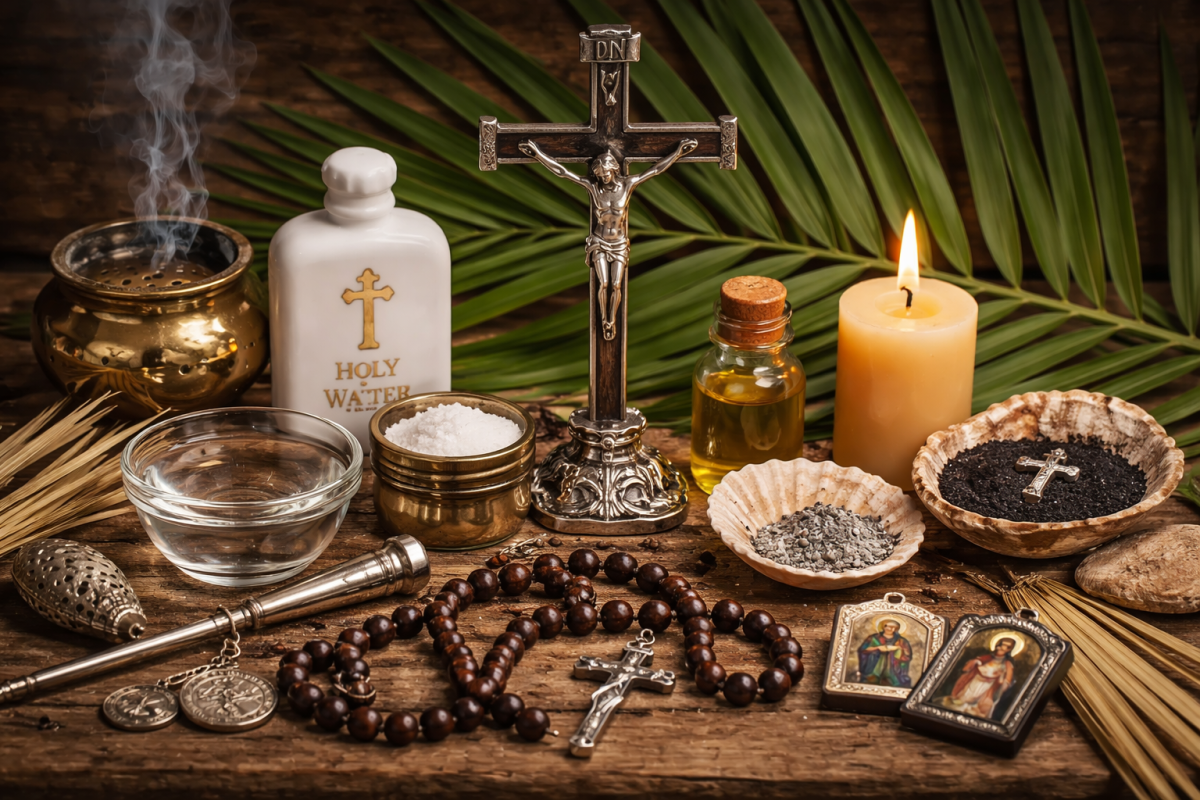
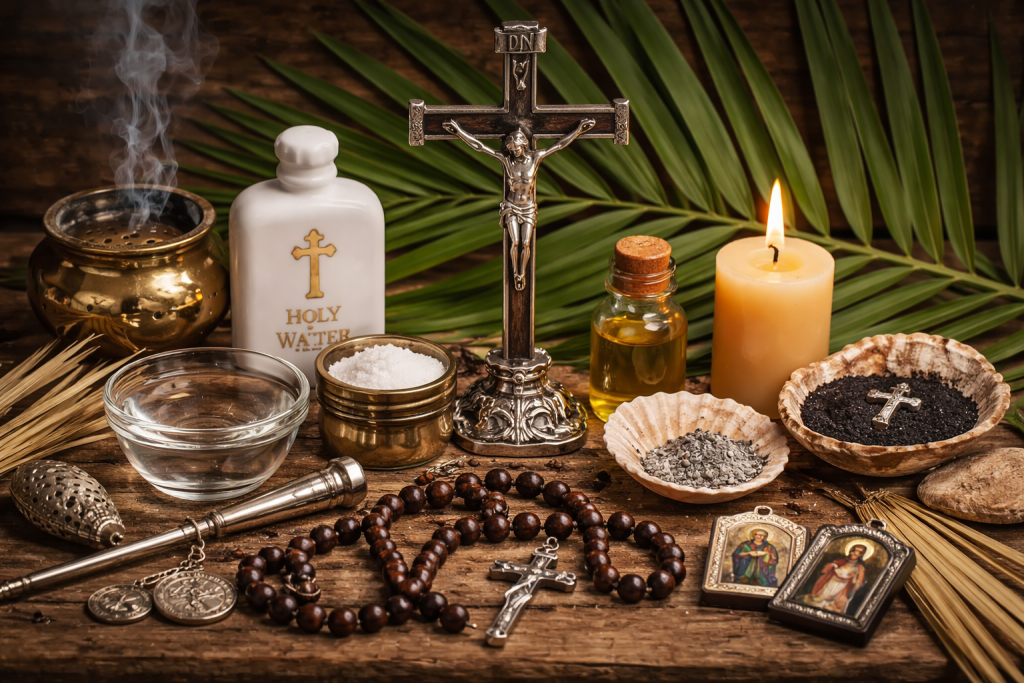
  • Objects: holy water, crucifixes, rosaries, medals, candles, ashes, palms, etc.
  • Actions/Devotions: the sign of the cross, stations of the cross, pilgrimages, exorcism, healing and deliverance, etc.

What is the Difference Between Sacraments and Sacramentals?

Sacraments

Sacraments are visible and efficacious signs of grace instituted by Christ through which God communicates his divine life to us. There are seven sacraments of the Church:

  1. Sacraments of Christian initiation: Baptism, Confirmation, Eucharist
  2. Sacraments of healing: Penance and Anointing of the Sick
  3. Sacraments at the service of communion: Holy Orders and Matrimony

Sacraments are necessary for salvation. Without them, we are deprived of the grace of God that enables us to attain salvation. For example, without baptism, one cannot be called a Christian nor enter the kingdom of God. In John 3:5, Jesus states clearly:

“In all truth I tell you, no one can enter the kingdom of God without being born through water and the Spirit.” By water and spirit is implied the sacraments of baptism and confirmation. Regarding the Eucharist, Jesus says: “In all truth I tell you, if you do not eat of the flesh of the Son of man and drink his blood, you have no life in you” (John 6:53).

Sacraments are absolutely necessary for our salvation and they operate in such a way that the grace conferred by each sacrament is received as it is being administered, provided the conditions for its valid celebration are met. It is termed in Latin as ex opere operato.

Sacramentals

Sacramentals, on the contrary, depend on the faith of the user and the intercession of the Church. They are meant to foster devotion but do not replace the sacraments themselves. While they may be very important because through them we are sanctified or receive graces we need to live in a manner worthy of our Christian calling, they are not absolutely necessary for our salvation.

Examples:

  • When we eat, we begin by blessing the food, recognizing it as a gift from God and at the same time asking Him to make us receive from it the energy we need to work to earn our living. We also recognize in the simple meal a foretaste of the heavenly banquet.
  • When we sprinkle blessed water at home to bless the house and those living in it, we do it by faith that God may bless us and make our home His dwelling place.

By sprinkling the house with blessed water, we show faith in God who came to dwell among us in His Son Jesus Christ.

The Danger of Superstition

However, when we use sacramentals as though they had power in themselves, we have passed from faith to superstition. For example, when water is sprinkled at home without faith, it does not bring the desired effect; God does not come to dwell in that home. Instead, the act becomes devoid of meaning and more of a superstition.

What is Superstition?

Superstition is when one sees an object as having power in itself, not as a sign. Superstition is when we believe that certain objects have power in themselves and we use them not out of faith in God but out of our belief that the object possesses its own power capable of bringing the desired effect.

The use of sacramentals should never degenerate into superstition. There are objects we use such as water, salt, oil, incense, etc. They are used by faith and through the intercession of the Church to sanctify our lives daily, but not because of any power they have of their own. When we think salt has power in itself, then it is superstition.

Some Possible Questions That May Arise

Question 1:

What about our grandparents and ancestors who died without receiving baptism or any other sacrament? Are they condemned to hell fire?

Response:

Luke 12:47-48 states:

“The servant who knows what his master wants, but has got nothing ready and done nothing in accord with those wishes, will be given a great many strokes of the lash. The one who did not know, but has acted in such a way that deserves a beating, will be given fewer strokes. When someone is given a great deal, a great deal will be demanded of that person; when someone is entrusted with a great deal, of that person more will be expected.”

Jesus tells us that the person who does not know even if he has acted wrongly cannot suffer the same magnitude of punishment as the one who knows. Our ancestors lived at a time when they did not know God as revealed by Jesus Christ, yet even in their traditional religion, they sought to know God and to serve Him. Every people and culture had their own approach to religion and morality. Concepts of good and evil are universal and are known beyond the confines of Christianity.

Therefore, our ancestors who lived good moral lives do in fact share the glory of heaven, because they sought to know God, serve Him, and live in a worthy manner. However, those ancestors who were wicked suffer the consequence of their actions. Their punishment may not be as severe as for those who have been enlightened by the Gospel of Christ. This is the reason why we pray for the souls in purgatory. For us today who have received the Gospel, we cannot excuse ourselves. We need the sacraments for our salvation.

Question 2:

How do I know if I am using a sacramental according to the faith of the Church and not acting in a superstitious manner?

Response:

In Acts 8:9-24, we find information on a certain man called Simon the magician. He was baptized and became a Christian by the deacon Philip, but he did not abandon his former life of witchcraft. He tried to bribe Peter and John when he saw them praying over the people to receive the Holy Spirit. He thought Peter and John had the power to give the Holy Spirit to people they laid their hands on and that he could pay them to give him some of their power to do the same.

Simon needed the power so that he could make money from his magic performances. Simon did not recognize that the power or authority to give the Holy Spirit comes from God and not from the apostles themselves. This is exactly what we call superstition.

When we think we have power in ourselves to lay hands on others so that they are healed or receive some grace, we become magicians. It is God who gives the power and authority. The authority does not come from us.

Similarly, when we think an object like salt has power in itself and not as a sign of God’s grace working through the blessed object, we are acting in a superstitious way. For example, if I sprinkle salt around the house thinking that the salt will protect my house instead of God Himself, I am acting in a superstitious manner.

Psalm 127:1 says:

“If Yahweh does not build the house, in vain do its builders toil. If Yahweh does not guard the city, in vain does its guard keep watch.”

It is clear therefore that the power comes from God and not from us. Sacramentals are used with faith in God who acts through these visible signs to bring to us His blessings, protection, and divine life.

Add Your Questions to Enrich the Topic

Readers are invited to submit their questions, which will enrich the discussion.

Next Topic

First Category of Sacramentals: Blessings

Fr. Constanz Opiyo, MCCJ
Secretary, Doctrinal Commission
Lira Diocese