en English
ar Arabiczh-CN Chinese (Simplified)nl Dutchen Englishfr Frenchde Germanit Italianpt Portugueseru Russianes Spanish
What are you looking for?

Monthly Archives: March 2026

Thousands Mark 116th Omach Pilgrimage Anniversary in Nebbi Diocese

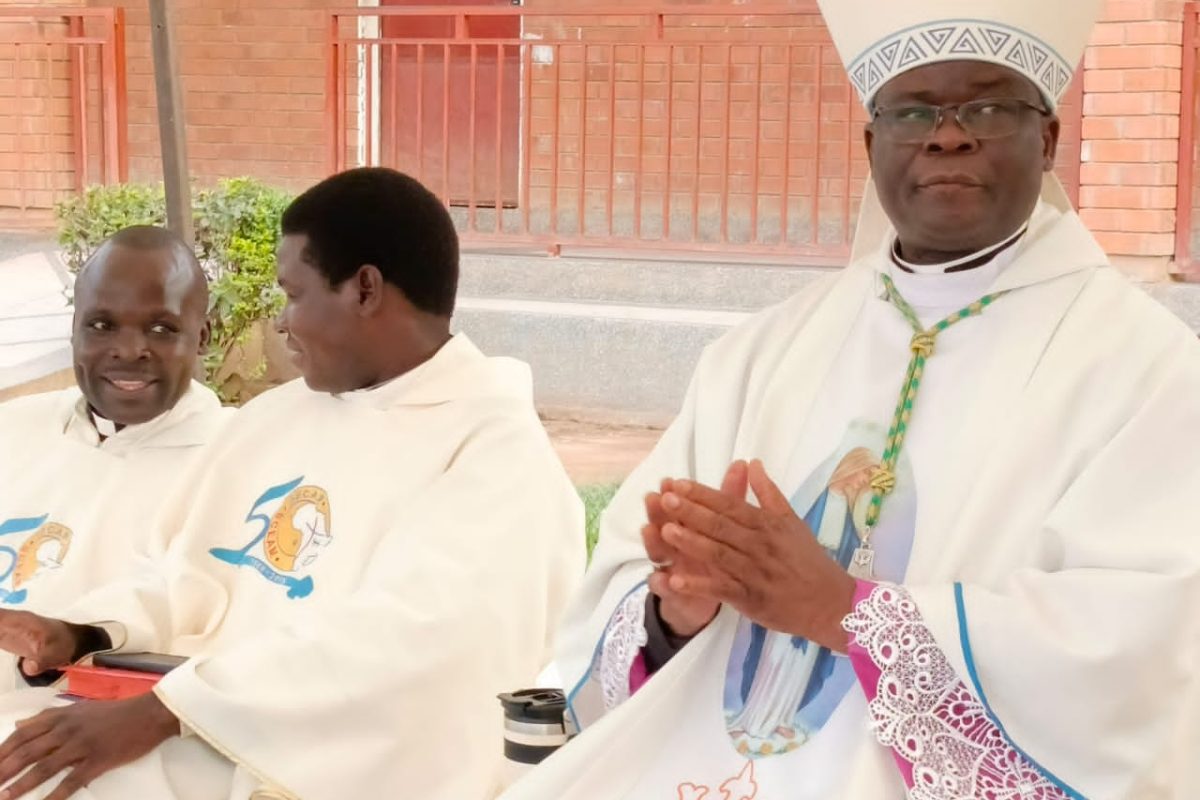
The Bishop of Roman Catholic Diocese of Lira, Sanctus Lino Wanok, who served as the main celebrant at the Mass attended by thousands of pilgrims, said the gathering was a moment to reflect on God’s great gift of faith.

By Pelegrine Otonga, Editor Radio Wa, Lira Diocese

The 116th pilgrimage anniversary to Omach in Pakwach, Nebbi Diocese, held on Friday, March 6, was described as a celebration of a historic miracle brought by the Comboni Missionaries who introduced the Catholic faith to the region.

The Bishop of Roman Catholic Diocese of Lira, Sanctus Lino Wanok, who served as the main celebrant at the Mass attended by thousands of pilgrims, said the gathering was a moment to reflect on God’s great gift of faith. Pilgrims came from across the Gulu Ecclesiastical Province, which includes the dioceses of Gulu, Arua, Nebbi, and Lira (GANAL).

Bishop Wanok emphasized that the faithful did not gather by coincidence but through God’s grace and the strength of their faith. He explained that the pilgrimage commemorates the historic moment in 1910 when the Eucharist first reached Omach on the shores of the River Nile, brought by missionaries who traveled through the area carrying the Blessed Sacrament.
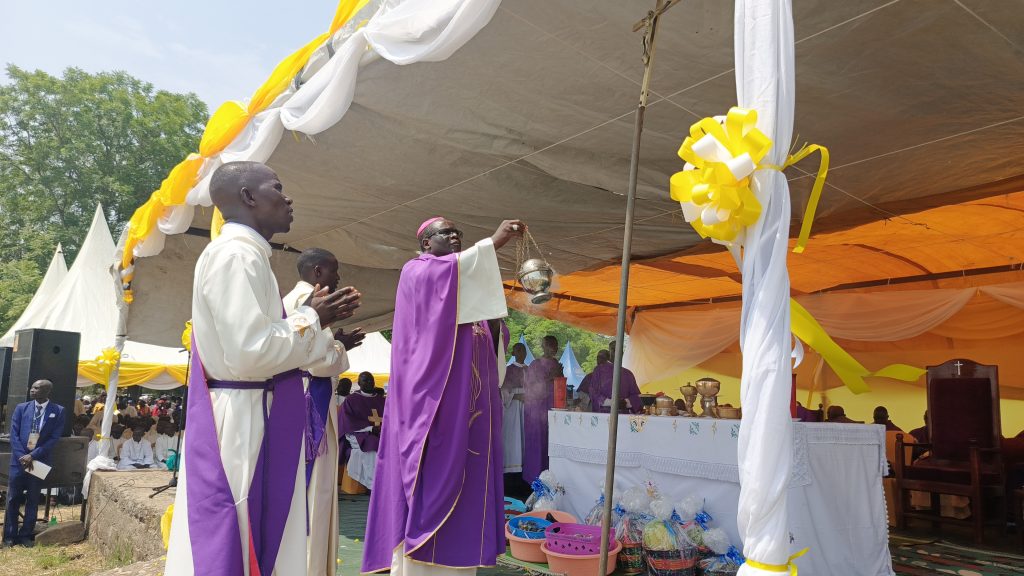
He noted that the Eucharist remains the center of Christian communion, strengthening believers in their faith and love for God and encouraging unity among people. The bishop urged Christians to nurture communion beginning within families and extending to society and the nation, as a path to achieving the peace and brotherhood that God desires.

Among those present at the celebration were the Archbishop of Roman Catholic Archdiocese of Gulu, Raphael p’Mony Wokorach, Archbishop Emeritus John Baptist Odama, Bishop Sabino Ocan Odoki of the Roman Catholic Diocese of Arua, Bishop Constantine Rupiny of the Roman Catholic Diocese of Nebbi, and Bishop Emeritus Joseph Franzelli of the Roman Catholic Diocese of Lira.

The annual Omach pilgrimage continues to be a powerful reminder of the roots of Christianity in the region and the enduring significance of the Eucharist in the life of the Church. As thousands gather each year to commemorate this historic moment, the celebration strengthens unity among believers and renews their commitment to faith, peace, and communal harmony.
Bishop Wanok Urges Curia Members to Embrace Mercy and Synodality

Reflecting on the reading from the Book of Daniel, the Bishop highlighted the prophet’s communal confession: “Yours is the integrity, Lord; ours is the shame.” He noted that Daniel did not distance himself from the sins of the people but stood in solidarity with them.

By Fr. Isaac Ojok, Communications Office, Lira Diocese

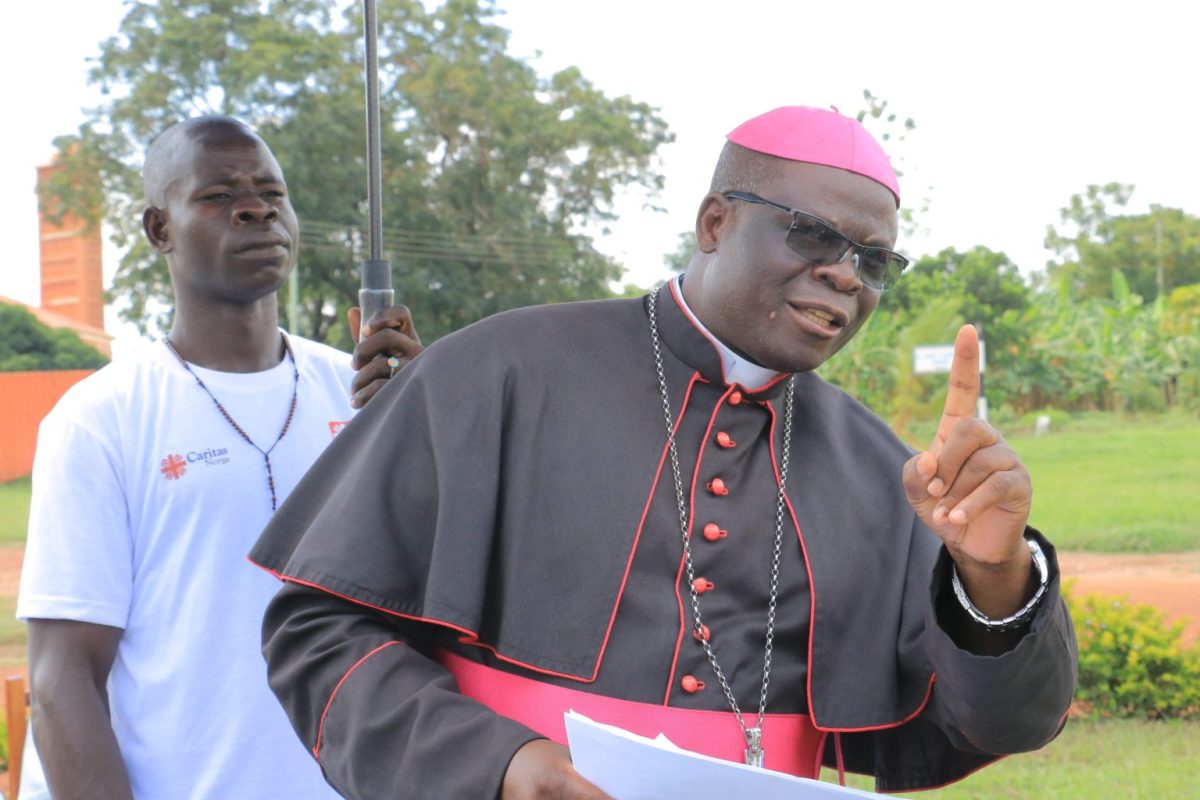
Lira, March 2, 2026 — The Bishop of Lira diocese, Rt. Rev. Sanctus Lino Wanok, has called on heads of department to cultivate a spirit of humility, compassion, and communion in their service to the Church.

Speaking during a Eucharistic celebration at the Curia chapel in Barogole on Monday, March 2, 2026, Bishop Wanok delivered a homily themed “From Shame to Mercy, From Judgment to Communion,” urging heads of department to embrace synodality not merely as a method of governance but as a spirituality rooted in mercy.

Reflecting on the reading from the Book of Daniel, the Bishop highlighted the prophet’s communal confession: “Yours is the integrity, Lord; ours is the shame.” He noted that Daniel did not distance himself from the sins of the people but stood in solidarity with them.

For us gathered as curia members, this is the first lesson of synodality,” Bishop Wanok said. “We do not stand above the Church. We stand within the church. We do not diagnose from a distance. We discern from inside.”

He cautioned against rigid structures and defensive attitudes in Church administration, reminding the members that integrity belongs to God alone. “A synodal Church begins not with strategies, but with humility,” he emphasized.

Drawing from the Responsorial Psalm — “Do not treat us according to our sins, O Lord”, the Bishop underscored that authentic listening in synodal life must be grounded in mercy. “If we listen in order to judge, we are not truly listening. If we listen in order to defend ourselves, we are not discerning,” he said.

Referencing the Gospel of Luke, Bishop Wanok stressed Christ’s command to “Be compassionate as your Father is compassionate.” He acknowledged that those serving in the departments regularly deal with policies, reports, and decisions, which can easily lead to measuring and classifying others. However, he warned that “the measure we use will be the measure we receive.”

“Synodality is not merely a method of meetings. It is a spirituality of relationship,” the Bishop stated, outlining key virtues necessary for curial service: humility in acknowledging shared weakness, dependence on God’s mercy, and the practice of compassion.

He encouraged curia members to prioritize listening before speaking, unity before winning arguments, pardon before demanding accountability, and communion over competition.

Describing God’s grace as “a full measure, pressed down, shaken together, running over,” Bishop Wanok said generosity of spirit in Church leadership brings abundance to the entire Christian community.

Concluding his homily, delivered during the Lenten season marked by the violet liturgical color of repentance, the Bishop called for interior renewal before structural reform.

“Before we can renew structures, the Lord wants renewed hearts,” he said. “May we measure with mercy, lead with compassion, and listen without judgment.”

The Eucharistic celebration formed part of ongoing efforts within the Diocese to deepen synodal collaboration and spiritual renewal among Church leaders.

End

Bishop Wanok Urges Faithful to ‘Walk, Listen and Be Transfigured Together’ on Second Sunday of Lent

In his homily, Bishop Wanok reflected on the readings of the day taken from the Book of Genesis (12:1–4), the Second Letter of St Paul the Apostle to Timothy (2 Timothy 1:8–10), and the account of the Transfiguration in the Gospel of Matthew (17:1–9). He centered his message on the theme: “Walking Together, Listening Together, Being Transfigured Together.”

By Fr. Isaac Ojok, Communications Office, Lira Diocese

Lira, Uganda – The Bishop of Lira diocese Rt Rev. Sanctus Lino Wanok has called on Christians to embrace a journey of shared faith, deeper listening, and communal transformation on the occasion of Second Sunday of Lent (Year A).

In his homily, Bishop Wanok reflected on the readings of the day taken from the Book of Genesis (12:1–4), the Second Letter of St Paul the Apostle to Timothy (2 Timothy 1:8–10), and the account of the Transfiguration in the Gospel of Matthew (17:1–9). He centered his message on the theme: “Walking Together, Listening Together, Being Transfigured Together.”

A Call to Go Forth in Faith

Drawing from the call of Abram in Genesis, Bishop Wanok emphasized that God invites His people to move forward in trust, even without a clear roadmap.

“‘Go forth… to a land that I will show you,’” the bishop recalled, noting that Abram received a promise rather than detailed directions. He said this reflects the Church’s present journey, where believers are called to leave behind fear, rigidity, and comfort, and trust in the guidance of the Holy Spirit.

“Our God is not static,” he said. “He is a God who calls, who sends, who walks with His people.”

Trust Rooted in Mercy

Referencing the Responsorial Psalm, “Lord, let your mercy be on us, as we place our trust in you”, the bishop underscored that unity within the Church begins with confidence in God’s mercy.

He noted that Christians walk together not because of perfection, but because they are loved by God. In a world marked by cultural and political divisions, he said, the Church is invited to rediscover shared hope grounded in divine kindness.

Bearing Hardship for the Gospel

Turning to St. Paul’s exhortation to Timothy, Bishop Wanok acknowledged that the journey of faith is not without challenges. He encouraged believers to “bear hardship for the Gospel” with courage rooted in grace.

“Walking together means carrying one another’s burdens,” he said, stressing that the Christian vocation is founded not on human achievement but on God’s saving grace revealed in Christ.

Listening at the Heart of the Church

Reflecting on the Transfiguration, the bishop described the moment when Jesus revealed His glory before Peter, James, and John, alongside Moses and Elijah. He highlighted the voice of the Father: “This is my beloved Son, listen to him.”

He emphasized that listening is essential to the Church’s life.

“Before we speak, we must listen, first to Christ, then to one another,” Bishop Wanok said, adding that Christ must remain at the center of every Christian journey.

He also pointed out that after the disciples’ fear subsided, “they saw no one else but Jesus alone,” reminding the faithful that personal agendas and ideologies must give way to Christ.

From the Mountain to Mission

While Peter desired to remain in the glory of the mountaintop, Bishop Wanok observed that Jesus led the disciples back down to continue their journey toward the Cross and Resurrection.

Moments of prayer and reflection, he said, are meant to strengthen believers for service, especially to the poor, the wounded, and those who feel unheard.

A Lenten Path of Transformation

Concluding his homily, Bishop Wanok described Lent as a communal path of transformation. He urged Christians to move forward in faith like Abram, trust in the Lord’s mercy, endure hardship for the Gospel, and listen attentively to Christ.

“May this Lenten journey transfigure us not individually only, but as a people walking together so that the world may see, through us, the light of Christ,” he prayed.

The bishop’s message resonated with the faithful as they continue their Lenten observance, reflecting on how to grow together in faith, unity, and hope.

End