en English
ar Arabiczh-CN Chinese (Simplified)nl Dutchen Englishfr Frenchde Germanit Italianpt Portugueseru Russianes Spanish
What are you looking for?

Category Archives: Church Event

Dokolo Catholic Parish Launches UGX 600 Million Drive to Renovate Church

By Fr. Isaac Ojok, Communications Office, Lira Diocese

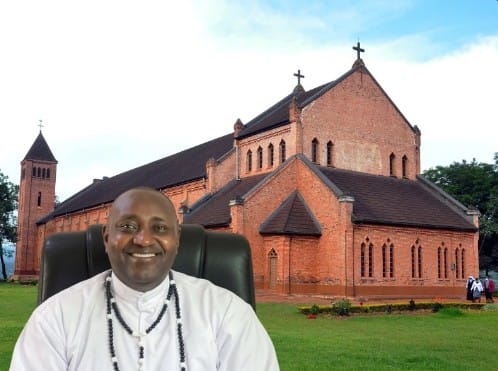
Dokolo Catholic Parish has launched a fundraising campaign to raise UGX 600 million for the renovation of its parish church, which has developed structural challenges after decades of use.

The fundraising drive will culminate in a Grand Fundraising event on September 26, 2026, at the parish, as the Catholic community seeks to restore and improve the historic church.

The parish priest, Rev. Fr. Augustine Odongo, said the renovation project is ready for implementation once the required funds are mobilised.

He said the estimated cost of the project is UGX 600 million and that the renovation is intended to address the deteriorating condition of the church while creating a safer and more conducive environment for worship.

“This project is not merely about repairing a building. It is about preserving our spiritual home and creating a safe, dignified, and welcoming place where future generations can continue to encounter Christ,” Fr. Odongo said.

The church, which serves as the headquarters of Dokolo Deanery, has been affected by years of use, with the ageing iron-sheet roof leaking during heavy rains and cracks developing in parts of the walls.

The parish also says the growing number of faithful has created a need for additional space, while the renovation will seek to modernise and beautify the church without losing its historical and spiritual character.

A parish with a long history

Founded in 1958 and dedicated to St. Francis Xavier, Dokolo Catholic Parish has grown into an important centre of evangelisation in the Diocese of Lira.

The parish currently has 61 chapels, excluding those under Bata Sub-Parish, and serves a number of primary and secondary schools within its pastoral jurisdiction.

It also coordinates pastoral activities among the neighbouring parishes of St. John Fisher Amolatar, St. Luke the Evangelist Aputi, St. Francis of Assisi Abuli and Our Lady of Fatima Agwata.

Over the years, the parish has contributed to the growth of the Catholic Church through vocations, producing seven diocesan priests, while several deacons and seminarians continue their formation.

The parish community is largely dependent on agriculture and small-scale businesses for its livelihood and is characterised by the peaceful coexistence of the Lango and Kumam communities.

Renovation to support pastoral ministry

According to the parish leadership, the renovation is expected not only to improve the physical condition of the church but also to strengthen pastoral activities, faith formation and the parish’s wider social and educational programmes.

The parish says the improved church will provide a more suitable environment for worship and enable it to continue serving as a centre for evangelisation and community engagement.

During the recent pastoral visit of Rt. Rev. Sanctus Lino Wanok, Bishop of Lira Diocese, to Dokolo Deanery, parish leaders, youth, women and other stakeholders expressed their commitment to the renovation project.

Their support, according to the parish, reflects a shared desire to preserve the church’s history while preparing it to serve future generations.

Grand fundraising event

Fr. Odongo said the main fundraising event will take place at Dokolo Catholic Parish on September 26, 2026.

The event is expected to attract government officials, Members of Parliament, local leaders and other invited guests. The communication says Rt. Hon. Robinah Nabbanja, Prime Minister of Uganda, is expected to attend, alongside other cabinet ministers and distinguished guests.

The parish has appealed to parishioners, members of the diaspora, friends of the Church, development partners and other people of goodwill to support the renovation campaign.

The initiative forms part of wider efforts within Lira Diocese to improve Church infrastructure. Similar renovation works are ongoing at Assumption of the Blessed Virgin Mary Bala Parish, where Christians are renovating the presbytery, and at St. Paul’s Catholic Parish Aboke, where renovation of the parish church is also underway.

The parish leadership says contributions towards the Dokolo Catholic Parish Church renovation can be made through the parish priest, Rev. Fr. Augustine Odongo, or the assistant parish priest, Rev. Fr. George Ochieng.

For contributions and further information:
Rev. Fr. Augustine Odongo – Parish Priest: +256 778 975 538
Rev. Fr. George Ochieng – Assistant Parish Priest: +256 770 453 858

The parish has placed the project under the words of Psalm 127:1: “Unless the Lord builds the house, the builders labour in vain.”

End

Bishop Wanok Urges Newly Ordained Clergy to ‘Descend the Mountain’ and Serve God’s People as Lira Diocese Ordains Record Number of Priests

By Flavia Oyuu, Communications Office, Lira Diocese

LIRA CITY, August 6, 2026 – Lira Diocese on Thursday celebrated one of the largest ordinations in its history as Rt. Rev. Sanctus Lino Wanok ordained 11 priests and eight deacons, calling on them to embrace lives of holiness and selfless service by taking Christ to the poor, the sick, the broken-hearted and those on the margins of society.

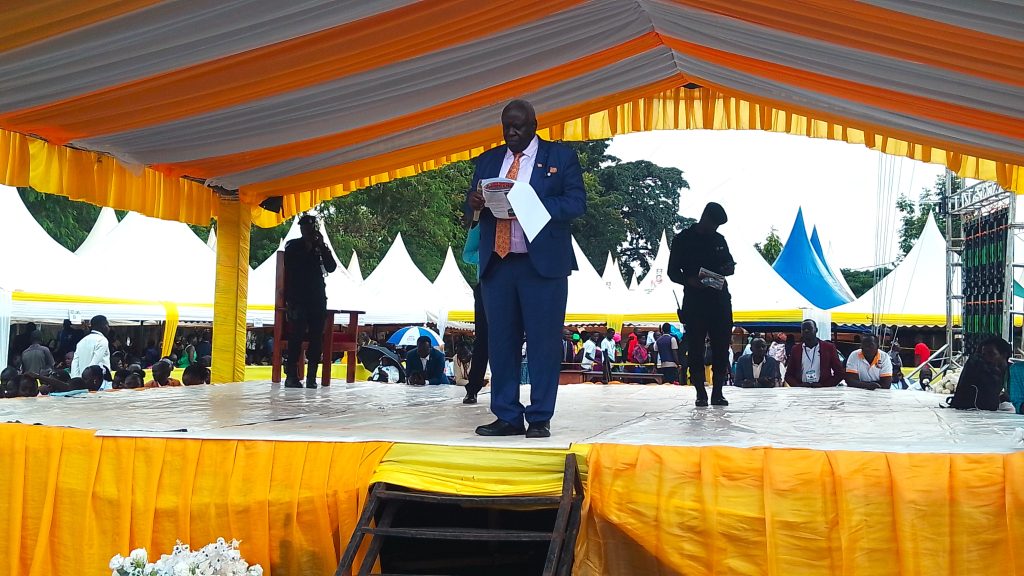
The solemn Eucharistic celebration, held on the Feast of the Transfiguration of the Lord at Uganda Martyrs Cathedral Ordination Grounds, attracted thousands of faithful who packed the ordination grounds. The Mass was concelebrated by Bishop Emeritus Joseph Franzelli, dozens of priests from Lira Diocese and other dioceses in Uganda and Kenya, religious sisters and brothers, government officials, traditional leaders, families of the ordinands and Christians from across the diocese.

The 11 newly ordained priests are Rev. Fr. Ambrose Oroma of Iceme Catholic Parish, Rev. Fr. Dicken Opoo of Otwal Parish, Rev. Fr. Samson Odongo of Lira Cathedral Parish, Rev. Fr. Ambrose Adupa of Aber Parish, Rev. Fr. Jimmy Dila of Aboke Parish, Rev. Fr. Emmanuel Okello of Anyeke Parish, Rev. Fr. Isaac Opio of Te-Boke Parish, Rev. Fr. Caesar Opio of Lira Cathedral Parish, Rev. Fr. Lawrence Ojok of Anyeke Parish, Rev. Fr. David Onyango of Omoro Parish and Rev. Fr. Brian Obong of Agweng Parish.

The newly ordained deacons are Caesar Ajuk of Dokolo Parish, Joseph Etot of St. Jude Parish, Steven Ocen of Alanyi Parish, Christopher Ogwal of Dokolo Parish, Caesar Tyan of Amolatar Parish, Morris Ogwang of Te-Boke Parish, Denis Hamson Obua of Ober Parish and Fredik Onyango of Aber Parish.

The ordination marked the highest number of priests ordained at one time in the history of Lira Diocese. It also celebrated a significant milestone with the ordination of Rev. Fr. Ambrose Oroma into the Congregation of the Apostles of Jesus (AJ), the first priest from the congregation to be ordained in the diocese in about 20 years.

The celebration was filled with emotion as some of the deacons shed tears after responding, “Here I am,” when their names were called by the Bishop before being presented by their parish priests. Parents and guardians proudly handed over their sons to the Bishop, symbolizing their offering to the service of God and the Church.

The liturgy featured the traditional rites of priestly ordination, including the Litany of Saints during which the priesthood candidates lay prostrate before the altar in total surrender to God, followed by the laying on of hands and the Prayer of Ordination. The choir from Aber Deanery animated the celebration with hymns throughout the Mass.

Drawing his homily from the Feast of the Transfiguration, Bishop Wanok reminded the newly ordained ministers that the glory experienced on the mountain was only a preparation for the mission awaiting them among God’s people.

“Today you ascend the mountain not to remain here but to descend into the villages, the schools, the hospitals, the prisons, the parishes and families where Christ waits to be served,” the Bishop said.

He explained that just as Jesus led His disciples down from Mount Tabor after revealing His glory, priests and deacons are called to leave moments of celebration and dedicate themselves to serving people in their daily struggles.

The Bishop urged the newly ordained clergy to make holiness their first priority, saying the Church needs ministers rooted in prayer more than activity.

“People do not first need very busy priests or ministers. They need holy priests and ministers who are available,” he said.

He encouraged them to remain faithful to prayer, the Eucharist and the Sacrament of Reconciliation, warning that ministry without prayer easily becomes mere performance.

“Never allow administration to replace adoration,” he cautioned. “Spend time before the Blessed Sacrament because it is there that you receive the strength to nourish God’s people spiritually.”

Bishop Wanok further challenged the priests and deacons to become faithful servants of the Gospel, resisting the temptation to preach personal opinions or seek popularity.

“Our people are surrounded by many voices—politics, social media, tribal divisions and false promises. They need to hear the voice of Christ from you,” he said.

Quoting the rite of ordination, he reminded them: “Believe what you read, teach what you believe and practice what you teach.”

Speaking about their pastoral mission, the Bishop said their priesthood would be lived not in comfort but among ordinary people facing life’s hardships.

He told them they would encounter broken marriages, abandoned children, struggling youth, families burdened by poverty, elderly people who have been forgotten, prisoners, the sick and the dying.

“Go to them. Walk with them. Listen before speaking. Heal them before judging. Welcome them before condemning them,” he said.

The Bishop reminded the new priests that from the day of ordination they become spiritual fathers to God’s people.

“People will call you Father. This title is not an honour but a responsibility. They are asking you to help them know God,” he said.

Addressing the families of the newly ordained clergy, Bishop Wanok thanked parents and relatives for nurturing vocations within their homes through prayer and sacrifice.

“You have presented these sons to the Church. Continue praying for them. They now belong to a larger family—the family of Lira Diocese,” he said.

He concluded by reminding the ordinands that priesthood is a lifelong mission of sacrifice rather than prestige.

“Today these men do not receive crowns; they receive crosses. They are not coming for comfort but for mission,” the Bishop said, encouraging them to remain faithful to Christ throughout their ministry.

The Minister for Disaster Preparedness and Refugees and Erute South Member of Parliament, Hon. Sam Engola, who was the chief guest, congratulated the newly ordained clergy for responding to God’s call and urged them to remain humble servants of the people.

“As you begin your ministry, preach the Word of God, guide the faithful to God’s mercy through the Sacrament of Reconciliation and proclaim the Gospel with truth and passion,” he said.

Quoting Matthew 20:28, Hon. Engola reminded them that Christ “did not come to be served but to serve,” urging them to remain close to the poor and serve God’s people with love and sacrifice.

The Paramount Chief of Lango, His Highness Eng. Dr. Michael Odongo Okune, called on the people of Lango to protect the environment through tree planting to replace trees lost to deforestation.

He also encouraged households to improve sanitation by constructing and using latrines, expressing concern over continued open defecation in some communities. He further urged political leaders to remain accessible to the people they serve and to listen attentively to the concerns of their constituents.

The celebration concluded with thanksgiving, blessings and joyful celebrations as families, friends and Christians congratulated the newly ordained priests and deacons on the beginning of their sacred ministry in the Church.

End

AMECEA PLENARY: Prelate Emphasizes Synodal Structures that Promote Shared Responsibility with the Youth

By Fr. Isaac Ojok, Communications Office, Lira Diocese

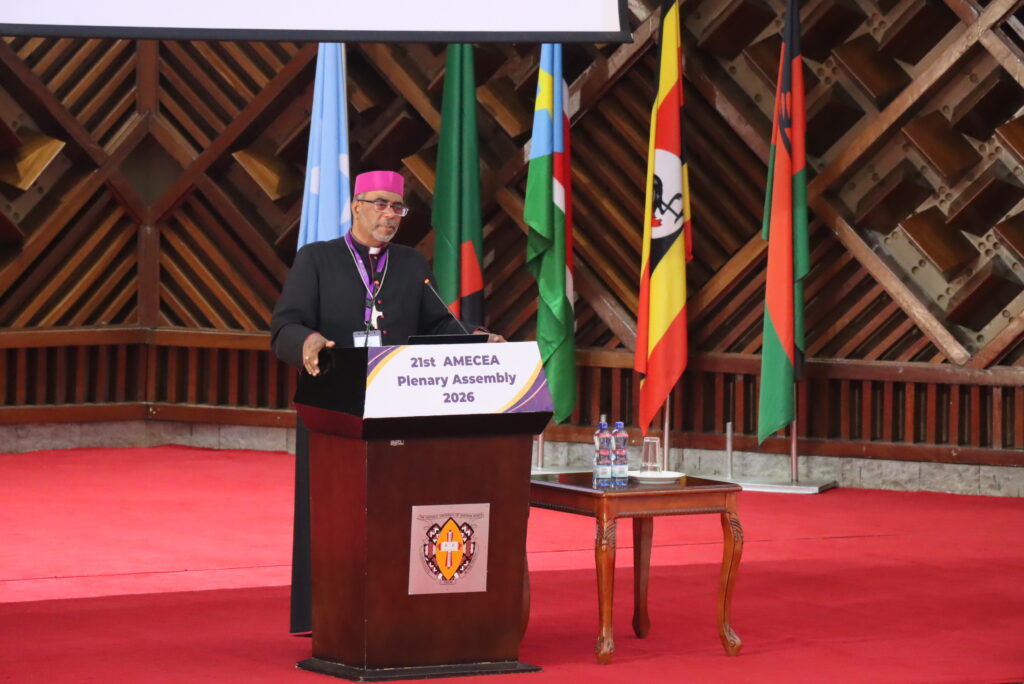
The Metropolitan Archbishop-elect of Addis Ababa, Ethiopia, Most Rev. Tesfaye Tadesse Gebresilasie, has outlined key insights on young people drawn from the Final Document of the Synod on Synodality during the ongoing 21st AMECEA Plenary Assembly in Nairobi.

Addressing the delegates on Tuesday, July 21, Archbishop Tesfaye, a member of the Comboni Missionaries of the Heart of Jesus (MCCJ), reflected on four key lessons from the synodal journey: about young people, directions for youth ministry after the synod, and the pastoral responsibility of bishops in accompanying young people.

Synodality: A Continuing Journey

The Archbishop-elect emphasized that synodality is deeply rooted in the tradition of the early Church, citing Acts 15 as an example of the first synodal experience. He noted that the current synodal journey is a continuation of this heritage.

He recalled that Pope Francis, while marking 50 years since the institution of the Synod of Bishops by St. Paul VI, stressed that synodality is not optional but essential to the Church’s life. With 2026 dedicated to receiving the final synodal document, Archbishop Tesfaye urged local Churches to actively embrace and implement its vision.

He further described synodality as a journey rather than a destination, serving the Church’s mission of evangelization. Guided by the Holy Spirit, the synodal process calls for ongoing consultation, discernment, and concrete action at the local level.

Synodality as Conversion

The Comboni Archbishop underscored that synodality requires a spiritual conversion that shapes the daily life of the Church. This transformation, he said, involves all members of the Church, bishops, priests, religious, and the laity, learning to live and act in a more synodal way.

He encouraged local Churches within AMECEA to continue fostering structures and pathways that promote participation, dialogue, and shared responsibility.

Young People at the Heart of Renewal

Turning to the place of young people in the synodal process, the Archbishop noted that while the synod was not exclusively about youth, it recognizes them as both vulnerable and vital contributors to the Church’s renewal.

He highlighted that young people bring a strong sense of community and are active participants in the life of the Church. The document calls for their meaningful inclusion in decision-making bodies such as parish pastoral councils and diocesan structures not merely as observers, but as contributors to discernment.

The Archbishop also pointed to the growing role of families and institutions in supporting young people, emphasizing the importance of intergenerational dialogue and collaboration.

A Synodal Approach to Youth Ministry

The Ethiopian Prelate stressed that youth ministry must itself be synodal, rooted in listening, accompaniment, and shared journeying. He called for renewed methods and language that resonate with contemporary youth culture, noting that some traditional approaches are no longer effective.

He emphasized the need to spend time with young people, listen to their experiences, and recognize the action of the Holy Spirit in their lives. He said young people are not just recipients but agents of youth ministry.

Pastoral Responsibility of Bishops

On the role of bishops, Archbishop Tesfaye highlighted the growing need for authentic relationships among young people, many of whom are increasingly drawn into virtual interactions at the expense of real human connection.

He called for a “conversion in relationships,” beginning within families and extending to Church communities. Bishops, he said, must be visible signs of hope, inspiring young people to believe in the possibility of change.

The Archbishop also drew attention to the challenges faced by youth, including various forms of abuse, emotional, spiritual, political, and social and urged Church leaders to be prepared to address these realities with compassion and competence.

Call for Coordinated Action

The synodal document, he noted, calls for stronger coordination among diocesan structures, religious congregations, and Church movements working with young people. Bishops are tasked with fostering unity and collaboration to ensure a coherent pastoral approach.

He further highlighted the need for establishing or strengthening youth offices at the diocesan level and promoting synodal formation in seminaries and among candidates for consecrated life.

Navigating the Digital Age

Addressing emerging challenges, Archbishop Tesfaye warned of the risks associated with the unchecked use of artificial intelligence and digital technologies among young people. He called for clear guidelines and formation to help them engage responsibly with these tools.

A Question for the Church

Concluding his reflection, the Archbishop echoed a central question raised by the synod: How can the Church ensure that young people fully participate in its life and mission?

He urged Church leaders across AMECEA to take concrete steps in making the Church a more inclusive, participatory, and hope-filled community for the younger generation.

End

This article was first published by AMECEA

Pope Leo XIV Appoints Rev. Fr. Bosco Bonaventure Gubazire Bishop of Kabale Diocese

By Flavia Oyuu, Communications Office, Lira Diocese

Pope Leo XIV has appointed Rev. Fr. Bosco Bonaventure Gubazire, MAfr, of the Missionaries of Africa, as the new Bishop of Kabale Diocese, ushering in a new chapter in the leadership of the diocese following the retirement of Bishop Callistus Rubaramira.

The appointment was officially announced through the Apostolic Nunciature in Uganda and later communicated to hundreds of faithful who gathered at Rushoroza Cathedral in Kabale.

Bishop-elect Gubazire becomes the fourth Ordinary of Kabale Diocese and the second member of the Missionaries of Africa to lead the diocese after Bishop Robert Marie Gay.

Ordained to the priesthood on August 10, 2003, by Bishop Callistus Rubaramira, Bishop-elect Gubazire has been serving as the Rector of St. Martin of Tours Formation House in Ejisu, Ghana.

Although he was unable to attend the announcement ceremony in person, Bishop-elect Gubazire sent a message expressing gratitude for the confidence the Holy Father had placed in him. He admitted that his initial reaction to the appointment was to ask, “Why me?” but said he accepted the responsibility with humility and trust in God.

He entrusted his episcopal ministry to God’s guidance, asking for the grace and strength to serve the people of Kabale Diocese with dedication, faith and love.

Bishop Callistus Rubaramira will continue serving as Apostolic Administrator of Kabale Diocese until Bishop-elect Gubazire is ordained and canonically takes possession of the diocese.

The appointment follows Bishop Rubaramira’s resignation after attaining the canonical retirement age of 75, in accordance with the provisions of the Code of Canon Law governing diocesan bishops.

Established on February 1, 1966, Kabale Diocese has been under Bishop Rubaramira’s pastoral leadership since 2003. The appointment of Bishop-elect Gubazire marks the beginning of a new pastoral mission as the diocese prepares to welcome its fourth bishop.

The clergy, religious and faithful of Lira Diocese join the Universal Church in congratulating Bishop-elect Bosco Bonaventure Gubazire and the people of Kabale Diocese on this joyful occasion.

End

Lira Diocese Celebrates 58th Diocesan Day with a Renewed Call to Walk Together in Christ

By Fr. Isaac Ojok, Communications Office, Lira Diocese

The Bishop of Lira Diocese, Rt. Rev. Sanctus Lino Wanok, has called on the faithful of the Diocese to embrace a life of communion, participation and mission, urging every baptized person to take an active role in building a holy and missionary Church.

Bishop Wanok made the call during the celebration of the 58th Diocesan Day of Lira Diocese, a diocese under the watchful care of the Uganda martyrs. The celebration held at Uganda martyrs cathedral focused on the theme: “Walking Together in Christ: Communion, Participation and Mission for a Eucharist-Centered Church in a Synodal Church.”

The celebration brought together representatives from parishes across Lira Diocese, including the laity, religious men and women, and priests, reflecting the unity and communion of the Diocese. The presence of the clergy gathered around their Bishop was a visible expression of priestly collegiality, fraternity and their shared commitment to the mission of the Church.

This year’s Diocesan Day celebration was animated by Dokolo Deanery, whose vibrant liturgical preparations enriched the occasion. Their choir led the congregation in the celebration with their melodious hymns, beautifully blending songs in Lango with hymns in Ateso and Kumam. This rich cultural and liturgical harmony was a powerful expression of the unity, diversity and universality of the Church, demonstrating how different communities come together as one family in Christ.

In his homily, the Bishop reminded the faithful that the Diocesan Day was an occasion of thanksgiving, renewal and celebration of God’s faithfulness since the establishment of Lira Diocese on 12 July 1968.

“Today, we celebrate the faith that has been handed on to us. We celebrate the family of God that is Lira Diocese and all that God has done among us. Above all, we celebrate that Christ continues to walk with His people,” Bishop Wanok said.

Reflecting on the words of the Prophet Isaiah, “Do not fear, for I have redeemed you; I have called you by name; you are mine,” the Bishop emphasized the dignity and responsibility of every baptized Christian.

He said that before people identify themselves through tribe, profession, political affiliation or social status, their first identity is found in Christ through Baptism.

“Every baptized person matters. No one is too poor, no one is too young, no one is too old, and no one is insignificant. Every baptized person has received gifts from the Holy Spirit and has a place and mission in the Church,” he said.

Bishop Wanok challenged the faithful to draw inspiration from the Uganda Martyrs, who, despite being ordinary lay people, remained faithful to Christ and gave their lives for the faith.

“The Uganda Martyrs chose Christ over comfort, truth over compromise, and eternal life over earthly security. Their witness challenges us today to take our Baptism seriously and strive for holiness,” he said.

 Walking Together in Christ

The Bishop explained that synodality means walking together as a people of God because Christ walks with His Church.

Drawing from the Letter of Saint Paul to the Ephesians, he highlighted humility, gentleness, patience and love as essential qualities of a synodal Church.

“Synodality is walking together because Christ walks with us. It is listening to one another because the Holy Spirit speaks to all the baptized. It is discerning together because the mission belongs to Christ,” Bishop Wanok said.

He expressed his desire to see every parish in Lira Diocese become a true family where Christians pray together, listen to one another and support those in need.

“My dream for Lira Diocese is that every parish becomes a true family; that no widow feels abandoned, no elderly person forgotten, no young person useless, and no family carries its burdens alone,” he said.

 The Eucharist at the Heart of Diocesan Life 

Reflecting on the Gospel account of the disciples on the road to Emmaus, Bishop Wanok encouraged Christians who feel discouraged or distant from God to recognize that Christ continues to walk with them.

He noted that many people today experience struggles that lead them away from faith, including family challenges, unemployment, addiction, violence and loss of hope.

However, he emphasized that Christ meets His people, listens to them, speaks through Scripture and reveals Himself in the breaking of the Bread.

“Everything changes at the table of the Eucharist. The Eucharist is the heart of the Church. It is where strangers become brothers and sisters, where sinners receive mercy, and where Christ forms us into one Body,” he said.

The Bishop warned that receiving the Eucharist must lead to a transformed life, calling Christians to reject corruption, hatred, tribalism, dishonesty, violence and all forms of injustice.

“We cannot receive the Body of Christ and continue destroying the Body of Christ in society. The Eucharist must transform us,” he said.

 A Call to Mission and Servant Leadership

Bishop Wanok reminded the faithful that the Eucharist sends Christians out on mission, just as the disciples of Emmaus returned to Jerusalem after encountering the risen Christ.

He said that every baptized person is called to bring Christ into homes, villages, schools, hospitals, workplaces and communities.

Addressing young people, the Bishop encouraged them to build their lives on Christ and resist forces that threaten their future.

“You are not only the future of the Church. You are the Church today. Develop your talents, work hard, pray faithfully and serve generously,” he said.

The Bishop also appealed to leaders in government, institutions, parishes and families to embrace servant leadership.

“Leadership is not a privilege. Leadership is service. Uganda does not simply need more leaders; Uganda needs servant leaders who fear God, respect human dignity and seek the common good,” he said.

 Renewing the Mission of Lira Diocese 

At the conclusion of his homily, Bishop Wanok invited the faithful to renew four commitments: to cherish their Baptism, to walk together as one people, to place the Eucharist at the centre of their lives, and to become missionary disciples.

He said that by living these commitments, Lira Diocese would become not only a successful Diocese but a holy Diocese.

“A Diocese where communion overcomes division, where participation replaces exclusion, where mission conquers fear, and where the Eucharist shapes every decision,” he said.

The Bishop concluded by invoking the intercession of the Uganda Martyrs and the Blessed Virgin Mary, Mother of the Church, asking that they accompany the Diocese on its synodal journey.

“May the Risen Lord, whom we recognize in the breaking of the Bread, continue to bless Lira Diocese, so that walking together in Christ, we may become ever more a Church of Communion, Participation and Mission, centered always on the Holy Eucharist,” Bishop Wanok prayed.

During the Eucharistic Celebration marking the 58th Diocesan Day, Bishop Sanctus Lino Wanok formally admitted 11 seminarians as candidates for Holy Orders, a significant milestone in their journey of formation as they prepare for ordained ministry.

The Bishop also instituted nine seminarians into the ministries of Lector and Acolyte, entrusting them with greater responsibility in the proclamation of the Word of God and service at the altar as they continue their formation.

As part of the celebration, the faithful from across the Diocese presented gifts to the Bishop in both cash and kind as a sign of their gratitude, solidarity and support for his pastoral ministry. The offertory reflected the shared commitment of the people of God to the mission of the Church and their partnership with the Bishop in advancing the pastoral work of the Diocese.

 End