Fr. Isaac Ojok, Communications Office, Lira Diocese
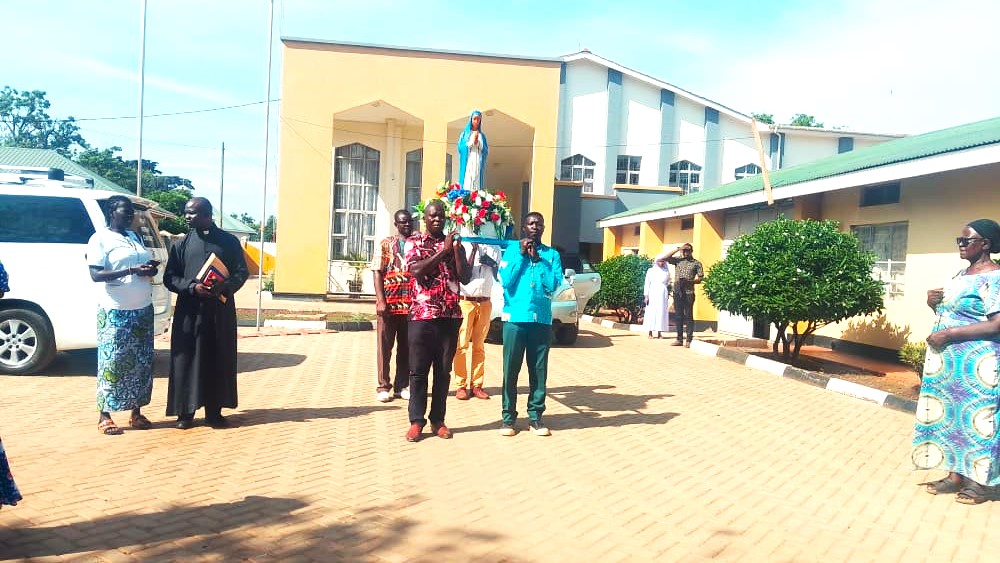
Every October, Catholics around the world dedicate special attention to the Holy Rosary, a period that invites the faithful to deepen their devotion to the Blessed Virgin Mary through prayer and reflection. In Lira Diocese, this year’s Rosary month has been marked by the pilgrimage of the image of Our Lady of Kibeho, which is being taken from parish to parish.
The image arrived in Lira Diocese at the beginning of October 2026. On 1 October 2026, it was received with joy by the faithful at Uganda Martyrs Cathedral, Lira, before being taken to St Peter Anai Catholic Parish. From there, the Marian image proceeded to Boroboro St Leo the Great Parish and St Peter Claver Ober Parish, as part of the ongoing visitation to Catholic communities across the diocese.
According to the programme drawn for the Marian visitation, the image of Our Lady of Kibeho will visit all 31 parishes and four sub-parishes in Lira Diocese. The programme is intended to give Catholic communities across the diocese an opportunity to welcome the image, gather in prayer and reflect on the messages associated with Marian devotion.
The visitation is being coordinated by Mary Bashaasha, Coordinator of the Visionaries in Uganda. The programme draws attention to the reported apparitions of the Blessed Virgin Mary at Kibeho, Rwanda, which began in 1981 and continued until 1989.
The three visionaries recognized by the Catholic Church in connection with the Kibeho apparitions are Alphonsine Mumureke, Nathalie Mukamazimpaka and Marie-Claire Mukangango. Alphonsine reported the first apparition on 28 November 1981, while Nathalie and Marie-Claire subsequently reported apparitions beginning in 1982. The apparitions associated with Alphonsine continued until 28 November 1989.
During the October visitation, particular emphasis is being placed on prayer, especially the Rosary of the Seven Sorrows of Our Lady. The faithful are being encouraged to use the month of the Holy Rosary as an opportunity for deeper prayer, reflection and renewed devotion.
In addition to the Seven Sorrows, the programme includes reflection on the ten points associated with the messages attributed to the Blessed Virgin Mary during the reported apparitions at Kibeho. These teachings form part of the spiritual content being shared with Catholic communities as the image visits different parishes.
The pilgrimage of the image provides an opportunity for parishioners to gather in prayer and to reflect on the role of Marian devotion in the spiritual life of the Church. Through the October programme, the faithful in Lira Diocese are being invited to make prayer, particularly the Rosary, a central part of their observance of the month dedicated to the Holy Rosary.
As the image continues its journey through the diocese, all 31 parishes and four sub-parishes are expected to receive it in prayer, reflection and devotion, making the October visitation a diocese-wide Marian prayer programme.
Fr. Constanz Opiyo Commission of Doctrine, Lira Diocese
Dear readers,
It has been some time since our last reflection in this series. As we continue our journey of exploring the Sacraments and sacramentals in the life of the Church, we now turn our attention to another important aspect of Catholic spiritual life: popular devotions.
Devotions are familiar to many Catholics and take many different forms. Yet, what exactly does the Church mean by devotion? What place do these practices have in the life of a Christian? How should they be understood and practised so that they truly lead us closer to God?
Let us reflect on these questions.
Popular Devotions
The Second Vatican Council, while affirming the primacy of the Liturgy as “the summit toward which the activity of the Church is directed…and fount from which all her power flows” (Sacrosanctum Concilium, n. 10), emphasised that the spiritual life of the Church is not limited solely to participation in the Liturgy. It is also nourished by “the pious practices of the Christian people” (ibid., n. 12).
The Catechism of the Catholic Church teaches that popular piety, or devotions, springs from the religious sense of the Christian people and finds “expression in various forms of piety surrounding the Church’s sacramental life, such as the veneration of relics, visits to sanctuaries, pilgrimages, processions, the stations of the cross, religious dances, the rosary, medals, etc.” (CCC, n. 1674).
Therefore, devotions that have been commended by the Apostolic See or approved by a local bishop can be very helpful in promoting and deepening the faith of the Christian people.
Definition
Devotions are personal or communal prayers and acts of piety that foster growth in faith and draw one closer to God. They “denote a certain ardour of affection in the things of God” (Popular Devotions, New Advent Catholic Encyclopaedia Online).
They include various forms of prayer, piety and spiritual exercises through which the faithful express their love for God, the Blessed Virgin Mary and the Saints, and deepen their participation in the mystery of Christ.
Unlike Sunday Mass and Holy Days of Obligation, devotions, whether public or private, are not generally obligatory. Rather, they express and strengthen one’s commitment to God.
Devotions are rooted in Sacred Scripture, Tradition, the lives of the saints and the spiritual experiences of the faithful.
History of Popular Devotions
Popular devotions have developed throughout the history of the Church.
The Early Christian Period
In the early Christian period, devotional life centred mainly on the celebration of the Eucharist, then understood as the Breaking of the Bread, prayer and the reading of Sacred Scripture.
The early Christians also had a special devotion to the martyrs who had given their lives for Christ. They buried the martyrs with honour and visited the catacombs to pray and ask for their intercession.
The Medieval Period
During the medieval period, there was significant growth in devotional life. Devotions such as the Rosary, the Stations of the Cross, Eucharistic Adoration and devotion to the Passion of Christ developed and became more widespread.
The Rosary, originally consisting of 150 Hail Marys and reflecting the three groups of mysteries—Joyful, Sorrowful and Glorious—developed in connection with the practice of praying the Psalter of 150 Psalms. To pray the complete Rosary, therefore, was traditionally associated with praying 150 Hail Marys. The Rosary was consequently also known as the Psalter of Our Lady.
The devotion of the Stations of the Cross, on the other hand, developed from the practice of pilgrims in Jerusalem who followed the path of Jesus to Calvary. For Christians who could not make the pilgrimage to Jerusalem, similar stations were established in their local churches as a way of participating spiritually in this journey. Later, the Stations of the Cross became established within churches.
Meanwhile, devotion to Eucharistic Adoration was fostered by the Church’s teaching on the real presence of Jesus Christ in the Eucharist.
The Protestant Reformation
During the period of the Protestant Reformation, a number of devotional practices were questioned by the Reformers. However, the Council of Trent reaffirmed the legitimacy of venerating the saints, relics and sacred images, while insisting that such practices remain properly ordered towards Christ.
The Modern Era
In the modern era, new forms of devotion developed and became widespread, including devotion to the Sacred Heart of Jesus, Divine Mercy, the Immaculate Heart of Mary, the Brown Scapular, the Miraculous Medal and devotion to the Holy Spirit, particularly through the Charismatic movement.
Different Forms of Devotions
There are many different forms of devotions. We can mention a few.
Devotions to the Holy Trinity
These include prayers addressed to the Father, novenas to the Holy Spirit, the Holy Spirit Chaplet and other prayers centred on the mystery of the Holy Trinity.
Christ-Centred Devotions
These include devotion to the Sacred Heart of Jesus, Divine Mercy, the Holy Face, the Infant Jesus, the Precious Blood, the Stations of the Cross, Eucharistic Adoration and Eucharistic processions.
Some Christ-centred devotions focus particularly on the Passion of Christ. These include the Way of the Cross, meditation on the Seven Last Words of Jesus, the Sorrowful Mysteries of the Rosary, devotion to the Holy Wounds and devotion to the Precious Blood.
Devotion to the Holy Spirit
In the late 1960s, the Charismatic movement developed with a renewed emphasis on the experience and action of the Holy Spirit, drawing inspiration from the Pentecost event.
Members of the movement emphasise the use of the charisms given by the Holy Spirit for the good of the Church. Today, there are many charismatic groups within the Church.
Devotion to the Angels
This includes prayers to the Guardian Angels, devotion to St. Michael the Archangel, the Chaplet of St. Michael and the Angelus.
Marian Devotions
Marian devotions include the Rosary, the Angelus, the Regina Caeli, the Brown Scapular devotion, the Miraculous Medal devotion, the First Saturday devotion, Marian consecration and May devotions.
Devotions to the Saints
These are expressed through novenas to saints, patron-saint devotions, the veneration of relics, pilgrimages to shrines and celebrations of the feast days of the saints.
Penitential Devotions
These find expression through fasting and abstinence, Lenten devotions, acts of reparation, examination of conscience and penitential pilgrimages.
Devotions for the Holy Souls in Purgatory
These include prayers for the dead, November devotions, the prayer for Eternal Rest, Mass intentions for the deceased and visits to cemeteries.
Popular and Seasonal Devotions
These include Advent devotions such as the Advent wreath and candles, Christmas novenas, Lenten devotions, May devotions to Mary, June devotions to the Sacred Heart, October Rosary devotions and November prayers for the dead.
Common Forms of Devotional Practice
Devotions are practised in different ways. Some of the common forms include:
Novenas
Chaplets
Litanies
Processions
Pilgrimages
Meditative prayer
The use of sacred images and icons
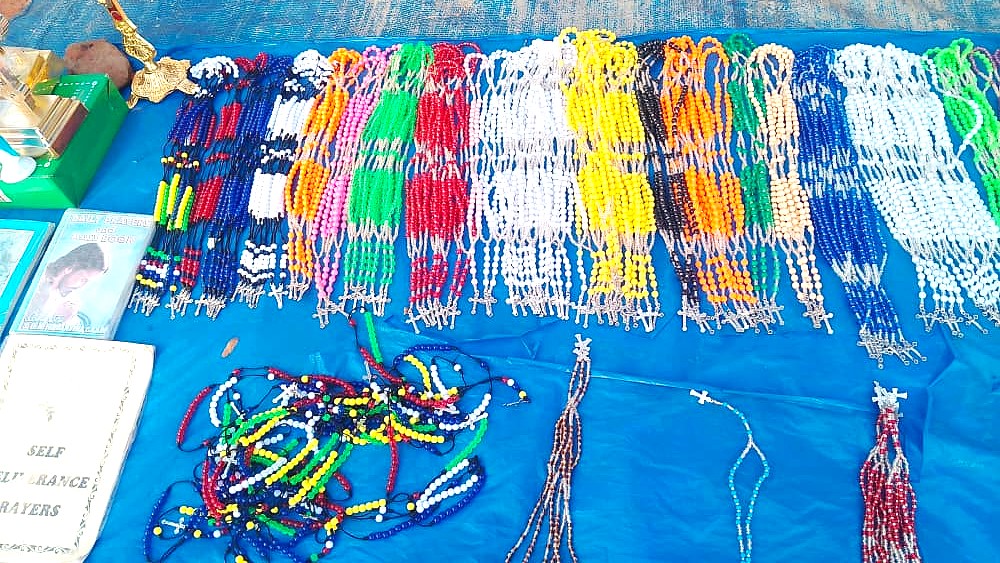
Wearing or using sacramentals such as rosaries, scapulars, medals and crucifixes
Norms Regarding Popular Devotions
There are certain norms that guide authentic popular devotions in the life of the Church.
1. Devotions must lead the faithful closer to Christ
The Church teaches that authentic devotions should lead the faithful closer to Christ and foster active participation in the Liturgy, especially the Eucharist.
If a particular devotion draws a person away from Christ or does not foster a better participation in the Liturgy, it should be corrected or, where necessary, prohibited by the competent ecclesiastical authority.
2. Devotional practices should have proper ecclesiastical approval
The established public prayers attached to pious devotions and the various acts associated with pious exercises must be properly approved by the competent ecclesiastical authority (cf. Congregation for Divine Worship and the Discipline of the Sacraments, Directory on Popular Piety and the Liturgy, 2001, n. 18).
This is why the faithful should pay attention to the approval of devotional books and materials.
Two terms are particularly important here: Imprimatur and Nihil Obstat.
Imprimatur is a Latin term meaning that permission has been given for a Catholic work to be published by the competent ecclesiastical authority.
Nihil Obstat, meaning “nothing stands in the way,” is an affirmation that, following the appropriate examination, no doctrinal or moral error has been found that would prevent the work from being published.
The faithful should therefore be careful when buying devotional books and other religious materials, especially from unregulated sources. It is important to know what a particular devotion teaches and whether its materials have been properly examined or approved by the competent ecclesiastical authority.
Some Common Abuses
The Church has also warned against deviations that can arise in popular piety and emphasises the need to evangelise and purify popular piety so that devotional practices remain faithful to their proper purpose.
Some of the deviations and abuses include:
Taking a devotion as more important than the Church’s Liturgy
There are some Christians who prefer the prayer meetings of their particular groups to the Liturgy. They may miss Mass but feel that they cannot miss the prayer meeting of their CCR group, Legion of Mary or another devotional group.
When this happens, the sense of belonging to the universal Church can gradually be replaced by an excessive attachment to a particular group. In extreme cases, this can lead to the group taking on characteristics that separate it from the wider life of the Church.
Fanatical attachment to a particular prayer formula
Some devotions may promise certain spiritual rewards after an exact number of prayers or acts have been performed. When a person becomes excessively focused on fulfilling the required number in order to obtain a promised spiritual benefit, the deeper meaning of prayer can be lost.
Prayer can then become mechanical rather than a free ascent of the heart to the Lord and an expression of a personal relationship with Him.
Elevating a saint at the expense of the sovereignty of Christ
Some Christians can become so attached to a particular saint that they unconsciously diminish the sovereignty of Christ. In such a case, the creature can appear to receive more attention and honour than the Creator.
The veneration of the saints must always lead us to God, who is the source of all holiness.
Superstitious use of devotional objects
Devotional objects can also be used superstitiously when they are seen as possessing power in themselves. When this happens, objects intended to assist prayer can be treated as if they were magical objects.
Some practices, such as burying verses written on pieces of paper, can portray such a superstitious mentality.
Devotional objects should therefore always be understood in their proper context: they are aids to Christian prayer and devotion, not objects possessing magical power.
Dichotomy between devotional practice and real life
Another danger is the separation of devotional practice from everyday Christian life.
Some Christians may spend hours or days participating in particular devotions while remaining detached from the responsibilities of daily life. Authentic devotion should not lead a person away from Christian responsibility, charity and service to others. Rather, it should strengthen the Christian to live the Gospel more faithfully in everyday life.
Conclusion
Devotions are an important part of the spiritual life of the Church. They are encouraged by the Church because they can foster growth in faith and help the faithful participate more deeply in the mysteries of Christ.
However, care must always be taken to avoid superstition, exaggeration and practices that separate devotional life from the Liturgy and from the demands of Christian living.
Popular devotions should therefore always lead us back to Christ, deepen our participation in the sacramental life of the Church and help us live our faith more faithfully.
Pastoral agents are invited to do more to evangelise and purify popular devotions so that they may truly serve their proper purpose in the life of the faithful.
As we continue journeying together through this series, feel free to send in any questions you may have regarding the teachings of the Church on the Sacraments and sacramentals for clarification in future reflections.
NB:Feel free to send in any questions you may have for clarification.
By Flavia Oyuu, Communications Office, Lira Diocese
Pope Leo XIV has dedicated his prayer intention for October 2026 to mental health ministry, calling on the Catholic Church to become a welcoming and safe place for people experiencing mental health challenges.
Through his monthly “Pray with the Pope” video, Pope Leo invited Catholics and people of good will to pray for those living with mental health conditions and for the families, professionals and volunteers who accompany them.
The Pope’s Worldwide Prayer Network, which produces the monthly prayer intention, says the October intention seeks to encourage the Church to listen without judging and to accompany people without stigma or exclusion.
In his prayer, Pope Leo remembered people who suffer from anxiety, depression and other mental health conditions, particularly those who experience their struggles in silence.
Holding an image of St. Dymphna, traditionally regarded as a patron saint of people suffering from mental disorders and of mental health professionals, the Pope prayed that those experiencing mental health challenges may find dignity, hope and compassionate support.
He also asked forgiveness for occasions when Christians have contributed to stigma and discrimination by ignoring or distancing themselves from people experiencing mental illness.
“Let the Church be an open house,” the Pope prayed, asking that Christian communities become spaces where everyone has a place and where people are accompanied rather than excluded, listened to without judgement and approached without fear.
Praying for those who care for others
Pope Leo also placed before God those who care for people experiencing mental health difficulties, including health professionals, family members and volunteers.
He prayed for strength and compassion for those who accompany people through their struggles, while urging the Church to integrate mental health care more fully into the life and mission of Christian communities.
The International Director of the Pope’s Worldwide Prayer Network, Fr. Cristóbal Fones, said many people experiencing mental illness continue to face judgement and misunderstanding and therefore struggle to speak openly about their experiences.
He encouraged Catholics to use the month of October to pray for people living with mental health conditions as well as those who support and care for them.
According to information accompanying the Pope’s prayer intention, about one in seven people worldwide lives with a mental health condition, with many experiencing stigma and isolation.
The Pope’s Worldwide Prayer Network also highlighted the work already being done by Catholic mental health ministries, universities, parishes and support groups in accompanying people affected by mental health challenges and their families.
Pope Leo’s October prayer intention calls on the wider Church to strengthen this ministry by promoting greater understanding, compassion and inclusion for people living with mental health conditions.
By Flavia Oyuu, Communications Office, Lira Diocese
Pope Leo XIV has joined children from parishes and schools in Rome in praying the Rosary for peace, as millions of children and families around the world take part in the “One Million Children Praying the Rosary” initiative.
The Pope joined about 1,300 people, including 700 children, at the Grotto of Lourdes in the Vatican Gardens on October 1, marking the beginning of the week-long prayer initiative organised by Aid to the Church in Need.
The five decades of the Rosary were prayed in five languages—Italian, Spanish, Urdu, German and Arabic—reflecting the international nature of the initiative.
The prayer brought together children, families and Christian communities around the world in a special appeal for peace, particularly for children and families affected by war and violence.
A prayer for peace
In his message to the children, Pope Leo encouraged them to ask Jesus and Mary for what he described as a special gift: peace for all the children of the world, especially those living in places affected by war.
The Pope described the Rosary as a simple prayer that everyone can pray and encouraged the children to reflect on the life of Jesus and the peace he brought to people.
He also reminded them that prayer should be accompanied by good deeds and acts of love.
“Prayers must also be accompanied by good deeds and acts of love,” Pope Leo said. “That is how peace grows.”
Cardinal Kurt Koch, Prefect of the Dicastery for Promoting Christian Unity, said the initiative gives children an opportunity to bring the sufferings of the world before Jesus through prayer.
He encouraged participants to pray for people affected by conflicts and suffering around the world, including children in Ukraine, families in Lebanon, Syria and the Holy Land, persecuted Christians and communities seeking reconciliation.
One week of prayer
The “One Million Children Praying the Rosary” initiative runs from October 1 to 7, bringing together communities across different countries, languages and cultures in prayer for peace.
Pope Leo told the children that they were part of a much larger global prayer, with about one million voices joining in the Rosary during the week.
He described the prayers as rising from different parts of the world and joining together like one enormous Rosary embracing peoples and nations across the continents.
The initiative will culminate on October 7, the Feast of Our Lady of the Rosary.
Through the annual initiative, Aid to the Church in Need encourages children, families, schools and Christian communities to pray the Rosary for peace, unity and those suffering because of conflict and persecution.
Prime Minister Robinah Nabbanja has contributed Shs20 million towards the renovation of St. Francis Xavier Catholic Church in Dokolo District, as the parish appealed for greater support towards restoring the historic church and improving other parish facilities.
By Flavia Oyuu, Communications Office, Lira Diocese
The contribution was announced on Saturday, 26 September 2026, during a fundraising function held at St. Francis Xavier Catholic Church, where the Prime Minister was Guest of Honour.
Her message was delivered by the Minister for Relief, Disaster Preparedness and Refugees, Hon. Sam Engola, who said the Prime Minister had reaffirmed her commitment to supporting Church-led development initiatives and projects aimed at improving communities.
Hon. Engola, who is also the Member of Parliament for Erute South, further pledged to support efforts to mobilise the resources needed to complete the renovation of the church sanctuary. He also said he would work towards inviting President Yoweri Kaguta Museveni to the church.
The Bishop of Lira Diocese, Rt. Rev. Sanctus Lino Wanok, who was the main celebrant, used his homily to remind Christians that the physical development of the Church should not be left entirely to external supporters.
Bishop Wanok emphasised that the responsibility of renovating and developing church buildings also belongs to the local Christian community. He encouraged the faithful to take an active role in supporting the renovation of their sanctuary, describing personal financial contributions as an expression of faith, unity and communion.
A Church With a Long History
St. Francis Xavier Catholic Church has a history dating back to 1958. The church was established on 1 October 1958 by the Parish Priest of Lwala Catholic Parish, following the establishment of Lwala Parish by Soroti Diocese.
The church had earlier been under the Archdiocese of Tororo, which later established Soroti Catholic Diocese. The first parish priest of Dokolo was Fr. Joe Delthy, later named Fr. Ocen Delley, a Mill Hill Missionary priest. The parish was opened by Bishop Monk Grift of Tororo Diocese.
In 1962, the Verona Fathers deployed Fr. Joseph as the first Verona Father to serve in Dokolo. He served there from 1962 to 1969 and supervised the construction of the present church building, with assistance from Brother Pendin, an Italian brother, who took part in the construction works.
The historic church building now requires renovation, prompting the parish to appeal for support towards its refurbishment.
Appeal for Support to the Vocational School
The parish also used the occasion to highlight the needs of St. Francis Vocational Training School, which was established by Dokolo Catholic Parish and currently has about 500 students.
The institution offers practical skills in areas including carpentry and joinery, block and concrete practice, tailoring, electrical and motor vehicle maintenance, welding and hairdressing.
The vocational school is part of the parish’s effort to equip young people with practical skills and contribute to employment creation. However, the institution relies largely on limited contributions from parents, which the parish says are insufficient to meet its needs.
Among the key challenges are accommodation for students and instructors, as well as the need for additional dormitories, sanitary facilities and classrooms.
The parish therefore appealed to the Government of Uganda not only to support the renovation of the church, but also to consider grant-aiding the vocational school.
The dormitory which houses the female students at St. Francis Vocational Training SchoolThe carpentry and joinery students at St. Francis Vocational Training School
Leaders Pledge Support
Dokolo District LCV Chairperson Peter Ogwang pledged administrative support to ensure that the development of churches in the district proceeds smoothly.
Ogwang said the district administration would work to address bureaucratic and administrative challenges that could create disagreements between the district authorities and Church leadership and potentially delay development projects.
The Dokolo North County Member of Parliament, Hon. Joseph Jones Ogwal, and the Dokolo South County Member of Parliament, Hon. Vincent, each contributed Shs1 million towards the renovation of the church.
The two legislators also pledged to continue supporting Church development initiatives in the district.
Hon. Engola also highlighted his recent support to Catholic clergy in the region, saying he had donated several new vehicles to parish priests and other clergy members to facilitate their pastoral work and improve mobility.
The fundraising function also marked the beginning of preparations for the parish’s planned platinum celebration, commemorating 75 years of the Church’s existence.
The parish continues to appeal to Christians, government, well-wishers and other partners to support the renovation of the historic church and the development of its vocational training institution.
 English
 Arabic
 Chinese (Simplified)
 Dutch
 French
 German
 Italian
 Portuguese
 Russian
 Spanish