en English
ar Arabiczh-CN Chinese (Simplified)nl Dutchen Englishfr Frenchde Germanit Italianpt Portugueseru Russianes Spanish
What are you looking for?

Monthly Archives: September 2026

Bishop Wanok Calls Christians to Become Builders of Reconciliation and Unity

Preaching during his Sunday homily for the 23rd Sunday in Ordinary Time (Year A), Bishop Wanok said the Gospel reminds every believer that faith is lived in relationship with others and that Christians have a duty to care for one another.

“We are not isolated Christians. We belong to one another, and therefore we are responsible for one another”, Bishop Wanok said.

By Fr. Isaac Ojok, Communications Office, Lira Diocese

The Bishop of Lira Diocese, Rt. Rev. Sanctus Lino Wanok, has called on Christians to become agents of reconciliation by embracing dialogue, forgiveness, and mutual responsibility in their families, communities, and society.

Preaching during his Sunday homily for the 23rd Sunday in Ordinary Time (Year A), Bishop Wanok said the Gospel reminds every believer that faith is lived in relationship with others and that Christians have a duty to care for one another.

“We are not isolated Christians. We belong to one another, and therefore we are responsible for one another”, Bishop Wanok said.

Reflecting on the first reading from the Book of Ezekiel (33:7–9), the bishop explained that God appoints His people as “sentries” who must lovingly warn others whenever they are moving away from the path of truth.

Bishop Wanok also reflected on Jesus’ teaching in the Gospel of Matthew (18:15–20), emphasizing that Christian correction should always aim at reconciliation rather than humiliation.

“Jesus does not tell us to spread the story or condemn the person. He tells us to go to the person, speak, listen and seek reconciliation. The goal is not to win an argument but to win back a brother or sister,” the bishop said.

He observed that many families and communities continue to suffer because of unresolved conflicts, misunderstandings, political divisions, tribalism and broken relationships.

Linking the Gospel message to the Church’s synodal journey, Bishop Wanok encouraged Christians to become a listening and reconciling Church.

“Before speaking about somebody, speak to somebody. Before judging, listen. Before spreading a story, verify it. A synodal Church must become a reconciling Church because we cannot walk together if we refuse to forgive,” he said.

Quoting St. Paul’s Letter to the Romans, the Bishop reminded the faithful that the greatest obligation of every Christian is the debt of mutual love.

“Our true wealth is not what we possess. Our true wealth is the love we give and the relationships we restore. We owe love to our families, our neighbors, the poor and even those with whom we disagree,” he emphasized.

The bishop further challenged Christians to extend reconciliation beyond the Church by becoming builders of peace within society.

Drawing from Jesus’ promise that “where two or three meet in my name, I shall be there with them,” Bishop Wanok said Christ remains present wherever people gather sincerely to restore broken relationships and seek peace.

As a practical challenge for the week, he encouraged the faithful to listen before speaking, seek personal dialogue when conflicts arise, apologise when they have caused harm, and willingly forgive those who sincerely seek reconciliation.

Concluding his homily, Bishop Wanok appealed to Christians to take the initiative in healing broken relationships.

The bishop concluded by praying that the Lord would soften hardened hearts, heal wounded relationships and make His people true instruments of reconciliation, peace and unity in the Church and in society.

End

Bishop Wanok Urges Christians to Remain Firm in Faith Amid Rise of Religious Sects

He noted that some new religious groups claim that Christ is present only within their particular church or movement, urging Christians to be cautious of teachings that can create confusion and division among the faithful.

By Flavia Oyuu, Communications Office, Lira Diocese

Lira, September 4, 2026 — The Bishop of Lira Diocese, Rt. Rev. Sanctus Lino Wanok, has urged Christians to remain firm in their faith and exercise discernment amid the emergence of religious groups claiming to have exclusive access to Jesus Christ.

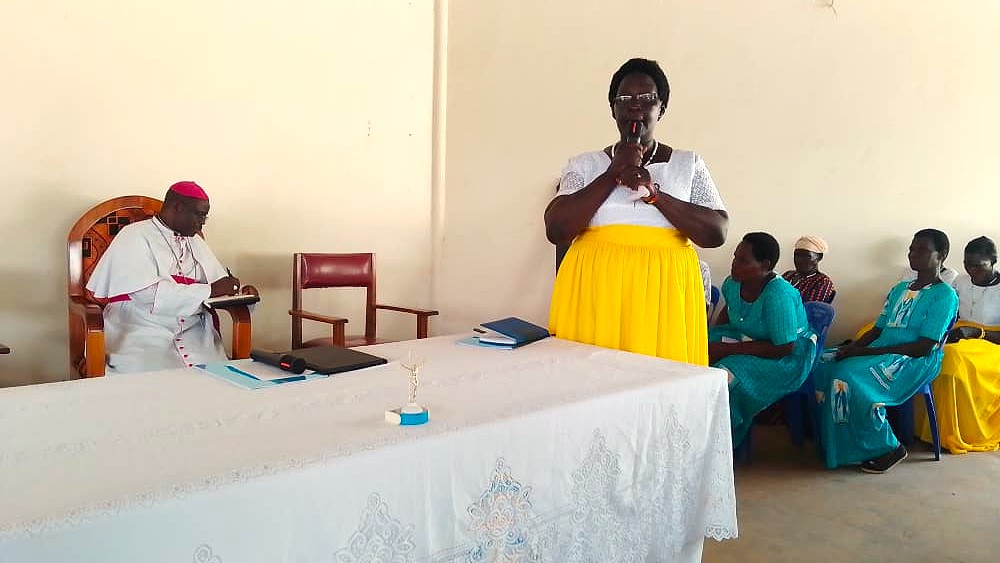
Bishop Wanok made the call on Friday while addressing more than 200 members of the Women’s Guild from parishes and sub-parishes across Lira Diocese who gathered at the Ordination Ground at Uganda Martyrs, Lira Cathedral, for a visit and fellowship with their Bishop.

The Bishop cautioned Christians against being easily drawn into emerging religious movements without carefully examining their teachings and beliefs.

He noted that some new religious groups claim that Christ is present only within their particular church or movement, urging Christians to be cautious of teachings that can create confusion and division among the faithful.

Bishop Wanok encouraged Christians who were born and baptized in the Christian faith to remain grounded in their faith, discern religious teachings carefully and promote unity rather than division.

He also called on the Women’s Guild to strengthen unity and love within their families and communities.

The Bishop thanked the women for taking time to visit him, saying such fellowship strengthens the bond between the clergy and the faithful.

Women’s Guild Presents Activity Report

The visit also provided an opportunity for the Women’s Guild to present its report on activities carried out across the Diocese from 2023 to date.

Presenting the report, the Diocesan Women’s Guild Coordinator, Imat Anna Lumumba Odongo, described women as an important pillar in the life and mission of the Church.

“Women are the backbone of the Church. When we fold our arms, the Church dies; when we open our hands, the Church flourishes,” she said.

Odongo said the Guild’s activities are anchored on five key pillars: faith; sharing love and supporting people in need; promoting unity in the Church; serving God, communities and families; and promoting respect, accountability and the visibility of Christian women.

She said the women are engaged in both spiritual and physical activities, including evangelisation, prayer, supporting priests and catechists, caring for vulnerable people and establishing small income-generating projects.

Among the economic initiatives are Village Savings and Loan Associations (VSLAs), livestock rearing and other parish-based projects.

Odongo cited Lira Cathedral as an example, where women saved 78 million shillings through their VSLA but distributed the entire amount among members at the end of the saving cycle.

She appealed to Bishop Wanok to help the Guild identify someone who could train the women in better savings and investment practices so that part of their savings can remain in a common pool and be invested for future growth.

Several parishes have already developed initiatives aimed at making the Guild more self-sustaining.

At Ngetta Parish, women operate a VSLA and other savings initiatives, including a project locally referred to as “chai,” through which members contribute savings that are used to purchase household items for selected members.

The women have acquired items including saucepans, mattresses, cups, plates and mats, while plans are underway to purchase iron sheets.

At Anai Parish, women have similar initiatives, including tents that are hired out to generate income. In Omoro, the Guild has invested in cattle, increasing its herd from three cows to ten, while women in Agwatta are involved in rearing sheep and goats.

Odongo said the Guild has also encouraged women to undertake household-level projects, including keeping chickens, pigs and other livestock, as part of efforts to strengthen household livelihoods.

She singled out Ngetta Parish as a leading example in implementing the initiative, saying it could become a model parish for other Women’s Guild groups.

The Coordinator said the strength of the Women’s Guild was also demonstrated during major diocesan events, including Diocesan Day celebrations and priestly ordinations, where the women provided the support requested by organising committees.

Guild Highlights Challenges

Despite the achievements, Odongo said the Guild continues to face challenges related to resources, registration fees, cultural practices and changes in leadership.

She said the annual registration fee of 3,000 shillings, which is shared among the chapel, parish and diocesan offices, is sometimes not paid by some members, making it difficult for women’s representatives to carry out activities.

She also raised concerns over cultural practices that restrict women from participating in certain activities, urging Christian women to remain guided by their faith while navigating such cultural expectations.

Another concern was the frequent change of Women’s Guild leaders before they complete their terms.

Odongo appealed for greater consultation between priests and women when selecting Guild leaders, saying frequent changes can disrupt development and undermine leaders who have already been trained and established in their roles.

She suggested that leaders be allowed to complete their three terms where possible and continue serving as advisers after retirement.

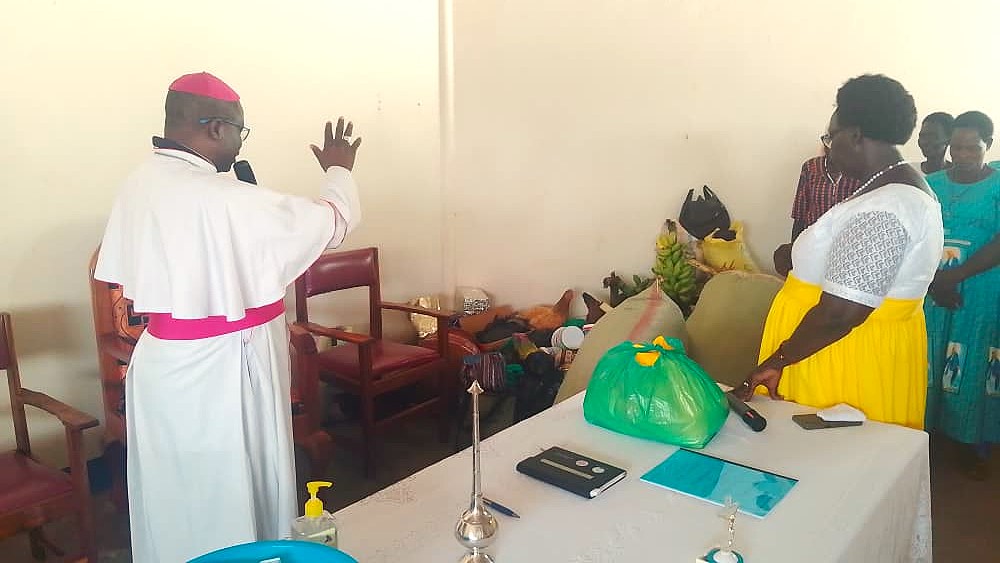
The Women’s Guild also presented an offertory to Bishop Wanok, consisting of food and other items as a gesture of appreciation and solidarity with their Bishop.

Some of the women who spoke after the meeting said the Bishop’s message had strengthened their faith and encouraged them to promote unity, responsibly manage their families and remain committed to Christian values.

For many of the participants, the opportunity to meet and personally greet their Bishop was also described as a meaningful spiritual experience.

The visit brought together Women’s Guild members from across Lira Catholic Diocese, reflecting the Guild’s continued role in the spiritual, pastoral and socio-economic life of the Diocese.

End

Lira Diocese Joins Gulu, Nebbi in Delivering Food Aid to Hunger-Stricken Karamoja

Lira Diocese has joined Gulu Archdiocese and Nebbi Diocese in delivering food assistance to communities in Karamoja facing a severe hunger crisis, as the Catholic Church in the Ecclesiastical Province of Gulu strengthens its collective response to the growing humanitarian situation.

By Flavia Oyuu, Communications Office, Lira Diocese

The assistance follows an appeal from the Bishop of Kotido Diocese, Rt. Rev. Dominic Eibu, MCCJ, to fellow Catholic bishops in Uganda to support communities struggling with severe food shortages following prolonged drought and poor harvests.

In response, dioceses across the country launched food collection campaigns, with Lira Diocese mobilising Christians and other people of goodwill through Caritas Lira Diocese, the charitable arm of the Diocese.

Lira Diocese flags off 4.1 tonnes of maize

In Lira, the Vicar General, Monsignor Innocent Valente Opio, flagged off the Diocese’s consignment on behalf of the Bishop of Lira Diocese, Rt. Rev. Sanctus Lino Wanok.

At the time of the flag-off, 4.1 tonnes of maize had been loaded onto the truck for transportation to Karamoja.

Monsignor Opio said the contribution was an expression of Christian love and charity towards people who are struggling to find food.

“We believe that if we can offer a meal to someone who is at the point of death, it can sustain life,” he said.

He expressed appreciation to Christians, priests, religious and other people of goodwill in Lira Diocese for responding to the appeal.

Sharing despite Lango’s own challenges

Monsignor Opio acknowledged that the generosity of the people of Lango came at a difficult time, as prolonged drought has also affected food production in the sub-region.

He said many families in Lango have little food left for their own livelihoods, yet they were still willing to share what they had with people facing an even more severe crisis in Karamoja.

“They are still able to sacrifice a cup or two, a kilo or so of what they saved in the house for their livelihood to share with those who have nothing to eat,” he said.

He described the gesture as an incredible demonstration of love and charity.

The Lira Diocese campaign, which had been running for about a month, mobilised maize and beans from parishes, households, farmers, businesses and other well-wishers.

During a press conference in Lira on August 28, Caritas Lira Programme Manager Francis Ojok said the Diocese had already collected about four tonnes of maize and more than 900 kilograms of beans, while appealing for additional contributions because the supplies remained insufficient compared to the need.

Gulu Archdiocese contributes food and other supplies

The relief effort has now expanded into a joint response by the dioceses of the Ecclesiastical Province of Gulu.

According to Rev. Sr. Martha Nambi, Communications Coordinator of Gulu Archdiocese, the Archdiocese has contributed 3.5 tonnes of maize grain, 843 kilograms of beans, 225 kilograms of posho, two sacks of second-hand clothes and UGX 310,000 in cash.

The Gulu Archdiocese contribution forms part of the joint consignment being taken to Karamoja.

Gulu Archdiocese, Lira Diocese and Nebbi Diocese are expected to converge along the route and proceed together to Karamoja to deliver the assistance as an Ecclesiastical Province.

The joint team was flagged off by the Archbishop of Gulu, Most Rev. Raphael p’Mony Wokorach, who blessed and sent off the team carrying the collected assistance.

The three dioceses’ joint response demonstrates the Church’s commitment to standing with communities facing hunger, regardless of the geographical or diocesan boundaries separating them.

A call rooted in Christian charity

The flag-off in Lira was preceded by a reading from 1 John 3:17, which asks:

“But if anyone has the world’s goods and sees his brother in need yet closes his heart against him, how does God’s love abide in him?”

Monsignor Opio said the people of Karamoja are brothers and sisters who deserve the solidarity of the wider Christian community.

He thanked the people of Lango for giving despite their own difficulties and prayed for an improvement in weather conditions so that families in Lango and elsewhere can once again produce enough food for their households.

“We pray for this divine providence so that in the near future we can have plenty of food in our homes that we can also share with those who are suffering,” he said.

The journey to Karamoja

The food collected by the participating dioceses is being transported by road to Karamoja, where it will be handed over to the Church in the affected area.

Government officials and other stakeholders in Karamoja are also expected to participate in receiving the relief supplies.

The initiative comes at a time when communities in Karamoja continue to experience serious food shortages, with vulnerable families struggling to meet their daily food needs.

For Lira Diocese, the dispatch of the 4.1 tonnes of maize marks an important step in translating the appeal for solidarity into practical assistance.

And while the people of Lango are themselves facing the effects of drought and poor harvests, their willingness to give from the little they have has become part of a wider Catholic response stretching across the Ecclesiastical Province of Gulu.

Monsignor Opio wished the team a safe journey to Karamoja and appealed for continued prayers for both the people receiving the assistance and those who contributed to the relief effort.

“Keep us in prayer,” he told the faithful.