en English
ar Arabiczh-CN Chinese (Simplified)nl Dutchen Englishfr Frenchde Germanit Italianpt Portugueseru Russianes Spanish
What are you looking for?

Monthly Archives: August 2026

Lira Diocese Intensifies Appeal for Food Aid as Hunger Crisis Deepens in Karamoja

Lira Diocese has intensified its appeal to the people of Lango and other people of goodwill to contribute food and financial assistance towards families affected by a severe hunger crisis in Karamoja.

By Flavia Oyuu, Communications Office, Lira Diocese

The appeal was renewed on Friday, August 28, 2026, during a press conference held at the Apostolic Social Centre in Lira City, as the Diocese moves towards the climax of a month-long food collection campaign initiated in response to an appeal from the Bishop of Kotido Diocese, Rt. Rev. Dominic Eibu, MCCJ.

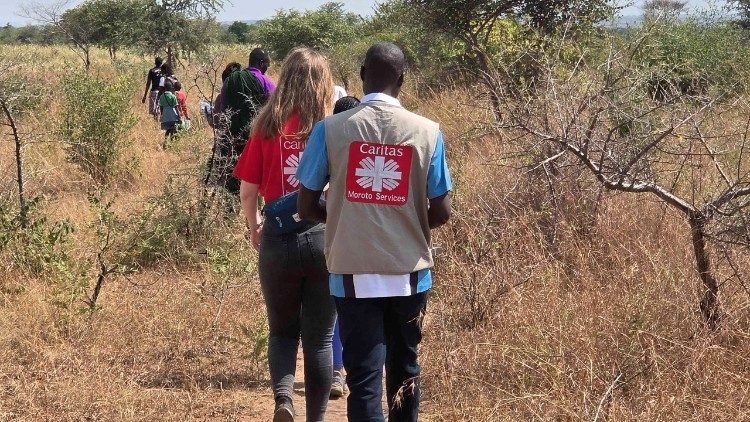
The campaign is being coordinated by Caritas Lira Diocese, with food being collected from parishes and communities across the Diocese for delivery to the affected communities in Karamoja.

Speaking to the press, Francis Ojok, Programme Manager at Caritas Lira Diocese, said the situation in Karamoja remains critical despite relief efforts already being undertaken by the government and other organisations.

He said health facilities in Karamoja have reported receiving patients who are severely malnourished and lacking adequate food and water.

“The Karamoja people are in deep food crisis and we are mobilising any other person here, person of goodwill, to give a generous contribution, so that at least we provide something for them to eat,” Ojok said.
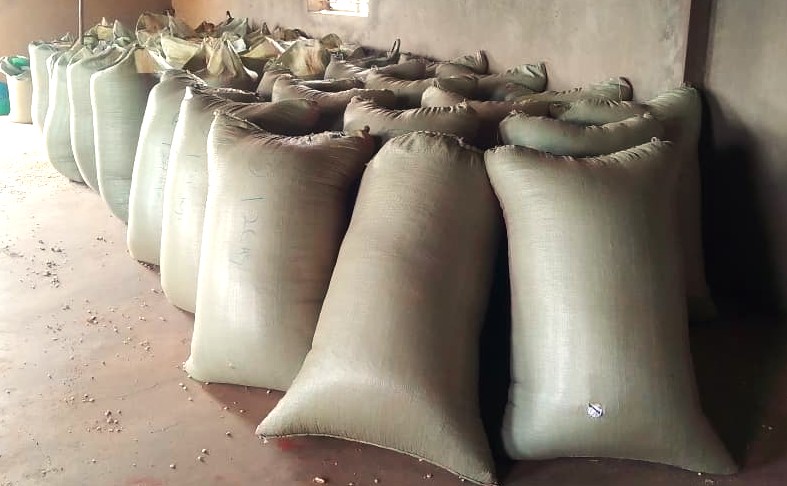
Four tonnes of maize, 900kg of beans collected

Ojok said the response from Christians and other well-wishers across Lira Diocese has already yielded four tonnes of maize and more than 900 kilograms of beans, which are currently stored at the Apostolic Social Centre.

The food is being repacked and prepared for transportation to Karamoja.

However, he said the supplies collected so far are still insufficient given the magnitude of the need.

He appealed to farmers, produce dealers, business people, maize millers, petty traders and ordinary households across Lango to contribute whatever they can.

“If you have a cup of maize, bring it for us. If you have a basin full, bring it for us,” he appealed.

Ojok stressed that the campaign is not restricted to Catholics, saying hunger affects people regardless of their religion, tribe or social background.

He also appealed to people to remember that the circumstances facing Karamoja today could affect another community tomorrow.

“Today is Karamoja, tomorrow will be Lango,” he said, pointing to the vulnerability of communities facing climatic and food-related challenges.

Lango communities also facing food challenges

While the campaign is primarily responding to the urgent situation in Karamoja, the Diocese also acknowledges that some communities in the Lango sub-region are themselves struggling with food insecurity following poor harvests.

The Women’s Desk Coordinator for Lira Diocese, Imat Anna Lumumba, said this makes the call for solidarity particularly significant.

She explained that the Diocese is appealing for contributions from those who are able to share, while recognising that not everyone has the capacity to give large quantities of food.

Lumumba said the Diocese is therefore planning a road drive around Lira City in the coming days to collect food directly from people who may be willing to contribute but cannot travel to the Apostolic Social Centre.

The collection drive is expected to move through different parts of the city, including along Aduku Road, targeting households, produce dealers, business people, factories and other well-wishers.

“We are doing this irrespective of religious affiliation, cultural [background], anybody who is willing to give us something,” Lumumba said.

She added that the Diocese is collecting non-perishable food items that can safely be transported to Karamoja.

“What we have collected in the store, it is already repacked, ready to be taken, but we are seeing it is not enough. We need to add more,” she said.

Parishes to coordinate food collection

The Diocese has directed all parishes across Lira Diocese to mobilise food from their respective communities.

Once food has been collected, the parishes are expected to contact Caritas Lira, which will arrange to pick up the donations and consolidate them for transportation.

The Diocese plans to transport the collected supplies by road to Karamoja, where they will be handed over to the Diocese of Kotido. Government officials and other stakeholders in Karamoja are also expected to participate in receiving the assistance.

The initiative follows an appeal by Bishop Dominic Eibu of Kotido Diocese to fellow Catholic bishops in Uganda for assistance as communities in Karamoja struggle with severe food shortages following poor harvests and prolonged climatic challenges.

The Uganda Episcopal Conference subsequently called on dioceses across the country to mobilise support for affected communities in Karamoja.

Every contribution matters

Caritas Lira says the appeal is not limited to large donations, emphasising that even small contributions can help provide food to vulnerable families.

Ojok urged the people of Lango and other well-wishers to respond according to their ability.

“There is nothing which is too little not to be shared. What you have, though it is a cup full, you can give; you can divide it to your brother to eat.”

He said the food collected in Lira will be consolidated and transported to Karamoja as part of the Diocese’s commitment to stand with communities facing hunger.

The campaign also seeks to mobilise support beyond the Catholic community, with the Diocese calling upon all people of goodwill, regardless of religious or cultural affiliation, to participate.

How to donate

People in Lira City who wish to donate food can take their contributions to the Apostolic Social Centre, opposite Uganda Martyrs Cathedral, where they can hand them over to Ongom Paul.

For food donations:
Ongom Paul — 0782 300 690

For financial contributions:
Imat Lucy Pia, Diocesan Treasurer — 0772 604 501

For coordination and further information:
Imat Anna Lumumba, Women’s Desk Coordinator and Vice Chairperson of the food relief programme — 0772 697 295

The Diocese is appealing to individuals, families, farmers, produce dealers, businesses, institutions, parishes and other organisations to contribute towards the effort.

As Caritas Lira prepares for the final phase of the collection, the message from the Diocese is simple: whatever one can share can help put food on the table of a hungry family in Karamoja.

“Today is Karamoja, tomorrow will be Lango.”

Lira Diocese joins national Catholic Church drive to combat hunger crisis in Karamoja

The Catholic Church in Uganda has intensified its response to the worsening food crisis in Karamoja, a sub-region located in the northeastern corner of Uganda, bordering Kenya and South Sudan. Lira Diocese is mobilising food assistance for the most vulnerable families.

By Fr. Isaac Ojok, Communications Office, Lira Diocese

The crisis began to escalate between April and July this year after a prolonged drought destroyed crops, leaving many households without food and severely affecting their livelihoods.

In response to the humanitarian situation, the Bishop of Kotido Diocese, Bishop Dominic Eibu, MCCJ, appealed to his brother bishops across the country to support the people of Karamoja through donations of food and other essential supplies.

National appeal

Following this diocesan appeal, the Chairman of the Uganda Episcopal Conference (UEC), Bishop Joseph Anthony Zziwa of Kiyinda-Mityana Diocese, called on all bishops in their respective dioceses to organise relief efforts for the people of Kotido and Moroto dioceses, where thousands of families continue to face acute food shortages.

Responding to this call, Lira Diocese, together with other dioceses across Uganda, has launched a diocesan-wide campaign encouraging Christians to donate food items as an expression of Christian charity and solidarity with their brothers and sisters in Karamoja. The initiative aims to provide immediate relief to families affected by the prolonged drought while demonstrating the Church’s commitment to caring for those most in need.

Lira Diocese’s response

In Lira Diocese, the campaign is being coordinated by Caritas Lira Diocese, the Church’s official charitable and humanitarian arm. Christians in parishes across the diocese are donating food items such as maize flour (Posho), beans, and other non-perishable foods, which will be transported to the affected communities in Karamoja.

Every family in Lira Diocese is being encouraged to contribute whatever they can afford, however small, to help alleviate the suffering. Reports indicate that children, pregnant and breastfeeding mothers, and the elderly are among the most affected by the food crisis, with many showing signs of severe malnutrition.

Speaking during the launch on the diocesan Catholic radio station – Radio Wa, the Vicar General of Lira Diocese, Monsignor Valente Innocent Opio, appealed to the lay faithful to respond generously to the humanitarian call.

“Let every family share whatever it can afford. Feeding the hungry is not only an act of charity but also a command from our Lord Jesus Christ,” Monsignor Opio said, referring to the Gospel of Matthew 25:35, where Christ identifies Himself with those who hunger.

The campaign has already recorded encouraging progress, with thousands of Kilograms of maize and other food items collected from generous Christians across the diocese.

Bishop of Kotido’s urgent appeal

Meanwhile, the Government of Uganda, through the Ministry of Disaster Preparedness and Refugees, has also begun distributing relief supplies, including beans and maize flour including other essential supplies, to the affected communities.

Speaking in an interview with Vatican News on 20 August 2026, Bishop Dominic Eibu said the hunger crisis in Kotido Diocese remains severe even as humanitarian assistance was being mobilised. He expressed deep gratitude for the campaigns but also concern that many vulnerable families have yet to receive support. He has since called for a stronger and urgent more coordinated response to the crisis.

According to Bishop Eibu, reports from parish priests serving in various Catholic parishes across Kotido Diocese indicate that, despite the relief efforts already undertaken, many households continue to endure acute food shortages and are struggling to meet their basic needs.

“During my meeting with the parish priests, they told me that many families have still not been reached with assistance,” Bishop Eibu said. “The situation remains critical, and we urgently appeal for greater solidarity and support to ensure that no family is left behind.”

Karamoja, located in north-eastern Uganda, is a semi-arid region that frequently experiences prolonged droughts, making communities highly vulnerable to food insecurity.

The Karamojongs traditionally depend on pastoralism, with livestock serving as their primary source of livelihood. However, recurring drought and harsh climatic conditions have significantly undermined their ability to sustain themselves.

End

Lira Diocese Priests and Deacons Begin Annual Retreat at Alokolum

By Fr. Isaac Ojok, Communications Office, Lira Diocese

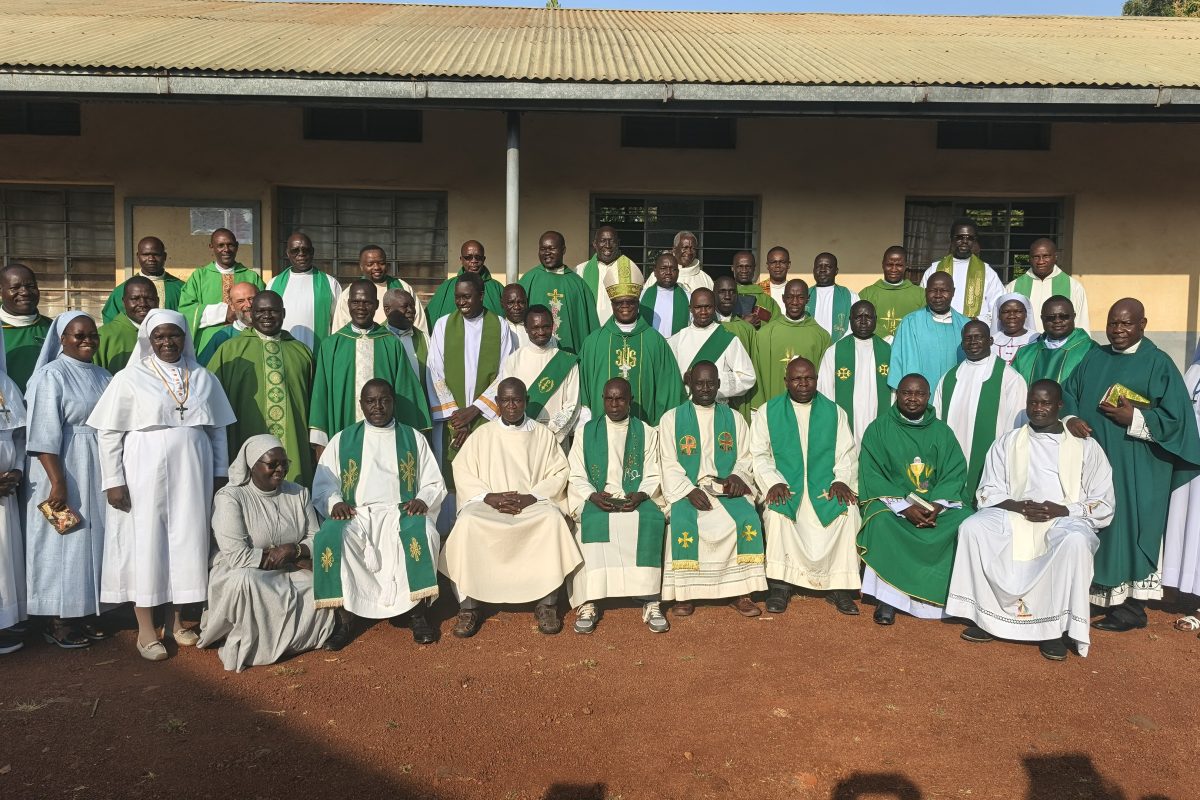
GULU — Priests and deacons of Lira Diocese have begun their annual spiritual retreat at Uganda Martyrs National Major Seminary, Alokolum, Gulu, in a week-long period dedicated to prayer, reflection and renewal of their priestly vocation.

The retreat began on Sunday, August 16, 2026, and will run until August 22 under the theme “Brother, I need you,” drawn from Matthew 11:28.

This year’s retreat is being facilitated by Rev. Fr. John Baptist Masayi, Director of St. Augustine Institute at the Uganda Catholic Secretariat.

Officially welcoming the participants, the Vicar General of Lira Diocese, Monsignor Innocent Valente Opio, encouraged the priests and deacons to make the retreat a genuine opportunity to encounter God through prayer, silence and personal reflection.

Monsignor Opio urged the participants to observe silence and avoid unnecessary conversations throughout the retreat, saying a recollected atmosphere is essential for fruitful prayer and reflection.

He acknowledged the many responsibilities priests carry in their daily ministry, including pastoral work in parishes, diocesan institutions and other apostolates.

The Vicar General said the retreat therefore provides an important opportunity for the clergy to temporarily step away from their demanding responsibilities and concentrate on renewing their relationship with God.

A time to step away and renew

For several years, Lira Diocese has held its annual priests’ retreat at Alokolum, outside the Diocese, as a way of providing the clergy with a serene environment away from their usual pastoral responsibilities.

According to Monsignor Opio, the setting allows the priests and deacons to devote themselves more fully to prayer, reflection and spiritual renewal without the distractions associated with their normal assignments.

On behalf of the Bishop of Lira Diocese, he also expressed appreciation to Fr. Masayi for accepting the invitation to lead this year’s retreat.

The annual retreat forms an important part of the spiritual life of the clergy, giving them time to examine their lives and ministry, deepen their relationship with God and renew their commitment to serving the Church.

Beyond personal spiritual growth, the retreat is also intended to strengthen the clergy for their continued service to the People of God.

Faithful urged to pray for the clergy

As the priests and deacons spend the week in prayer and reflection, the lay faithful of Lira Diocese have been encouraged to remember them in their prayers.

The faithful are particularly urged to pray that the retreat will bring the clergy renewed strength, wisdom, holiness and zeal as they continue their pastoral ministry.

A spiritually renewed priest, the Diocese notes, is better prepared to proclaim the Gospel, celebrate the Sacraments and accompany the faithful with joy, compassion and dedication.

The retreat will conclude on August 22, 2026, after which the priests and deacons will return to their respective pastoral assignments.

End

Dokolo Catholic Parish Launches UGX 600 Million Drive to Renovate Church

By Fr. Isaac Ojok, Communications Office, Lira Diocese

Dokolo Catholic Parish has launched a fundraising campaign to raise UGX 600 million for the renovation of its parish church, which has developed structural challenges after decades of use.

The fundraising drive will culminate in a Grand Fundraising event on September 26, 2026, at the parish, as the Catholic community seeks to restore and improve the historic church.

The parish priest, Rev. Fr. Augustine Odongo, said the renovation project is ready for implementation once the required funds are mobilised.

He said the estimated cost of the project is UGX 600 million and that the renovation is intended to address the deteriorating condition of the church while creating a safer and more conducive environment for worship.

“This project is not merely about repairing a building. It is about preserving our spiritual home and creating a safe, dignified, and welcoming place where future generations can continue to encounter Christ,” Fr. Odongo said.

The church, which serves as the headquarters of Dokolo Deanery, has been affected by years of use, with the ageing iron-sheet roof leaking during heavy rains and cracks developing in parts of the walls.

The parish also says the growing number of faithful has created a need for additional space, while the renovation will seek to modernise and beautify the church without losing its historical and spiritual character.

A parish with a long history

Founded in 1958 and dedicated to St. Francis Xavier, Dokolo Catholic Parish has grown into an important centre of evangelisation in the Diocese of Lira.

The parish currently has 61 chapels, excluding those under Bata Sub-Parish, and serves a number of primary and secondary schools within its pastoral jurisdiction.

It also coordinates pastoral activities among the neighbouring parishes of St. John Fisher Amolatar, St. Luke the Evangelist Aputi, St. Francis of Assisi Abuli and Our Lady of Fatima Agwata.

Over the years, the parish has contributed to the growth of the Catholic Church through vocations, producing seven diocesan priests, while several deacons and seminarians continue their formation.

The parish community is largely dependent on agriculture and small-scale businesses for its livelihood and is characterised by the peaceful coexistence of the Lango and Kumam communities.

Renovation to support pastoral ministry

According to the parish leadership, the renovation is expected not only to improve the physical condition of the church but also to strengthen pastoral activities, faith formation and the parish’s wider social and educational programmes.

The parish says the improved church will provide a more suitable environment for worship and enable it to continue serving as a centre for evangelisation and community engagement.

During the recent pastoral visit of Rt. Rev. Sanctus Lino Wanok, Bishop of Lira Diocese, to Dokolo Deanery, parish leaders, youth, women and other stakeholders expressed their commitment to the renovation project.

Their support, according to the parish, reflects a shared desire to preserve the church’s history while preparing it to serve future generations.

Grand fundraising event

Fr. Odongo said the main fundraising event will take place at Dokolo Catholic Parish on September 26, 2026.

The event is expected to attract government officials, Members of Parliament, local leaders and other invited guests. The communication says Rt. Hon. Robinah Nabbanja, Prime Minister of Uganda, is expected to attend, alongside other cabinet ministers and distinguished guests.

The parish has appealed to parishioners, members of the diaspora, friends of the Church, development partners and other people of goodwill to support the renovation campaign.

The initiative forms part of wider efforts within Lira Diocese to improve Church infrastructure. Similar renovation works are ongoing at Assumption of the Blessed Virgin Mary Bala Parish, where Christians are renovating the presbytery, and at St. Paul’s Catholic Parish Aboke, where renovation of the parish church is also underway.

The parish leadership says contributions towards the Dokolo Catholic Parish Church renovation can be made through the parish priest, Rev. Fr. Augustine Odongo, or the assistant parish priest, Rev. Fr. George Ochieng.

For contributions and further information:
Rev. Fr. Augustine Odongo – Parish Priest: +256 778 975 538
Rev. Fr. George Ochieng – Assistant Parish Priest: +256 770 453 858

The parish has placed the project under the words of Psalm 127:1: “Unless the Lord builds the house, the builders labour in vain.”

End

Community Paralegals Urged to Strengthen Land Dispute Prevention in Dokolo

By Flavia Oyuu, Communications Office, Lira Diocese

Land stakeholders in Dokolo District have called for stronger collaboration between community-based paralegals, local government authorities, land governance institutions, police and other justice actors to prevent land disputes from escalating into costly court battles.

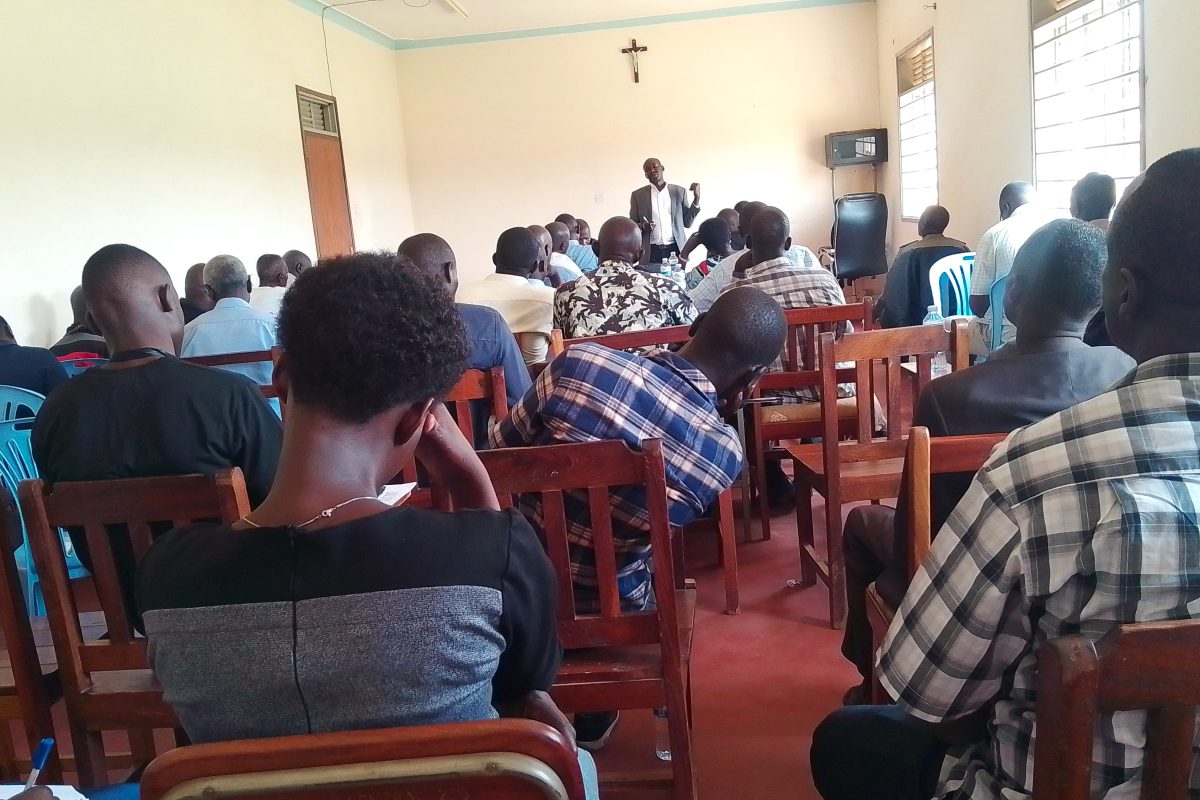
The call was made on Tuesday, August 11, 2026, during a stakeholder engagement meeting held at the Daniel Comboni Offices in Bar Ogole, Lira City, under the theme “Strengthening the Functionality of Community-Based Paralegals Through Collaboration with Decentralised Justice and Land Governance Institutions.”

The meeting, organised by PELUM Uganda in partnership with Caritas Lira, brought together about 60 participants, including community-based paralegals, police officers, Dokolo District Land Board members, Area Land Committee members, sub-county chairpersons, LC1 leaders, civil society organisations and other stakeholders involved in land governance and justice.

The meeting served as a quarterly reflection for community-based paralegals working in Dokolo District and its sub-counties, particularly Amwoma Sub-county, where the paralegals have been trained to provide basic legal awareness, support communities to understand their land rights and help mediate disputes within their communities.

Speaking during the meeting, PELUM Uganda Program Manager for Advocacy, James Cleto Mumbere, said the organisation works with member organisations, including Caritas Lira, to strengthen the capacity of communities to sustainably manage their resources and protect their land rights.

He said the meeting was intended to strengthen collaboration among the different institutions involved in land matters and assess how the paralegals were carrying out their work.

“We are here today to have a quarterly reflection meeting with the community-based paralegals,” Mumbere said, adding that the engagement also brought together district land boards, Area Land Committees, police, civil society organisations and representatives of religious and cultural institutions.

He said the discussions focused on how paralegals were sensitising communities about land rights, creating awareness and mediating cases that fall within their capacity.

According to Mumbere, the work of the paralegals is beginning to extend beyond land matters, with some being entrusted by their communities to monitor children who are absent from school.

He said secure land tenure was also important for agricultural production and food security because farmers were unlikely to invest confidently in their land where ownership remained uncertain.

Prevent disputes before they reach court

A major concern raised during the meeting was the financial and social burden associated with prolonged land cases in courts of law.

Counsel Egum Moses urged community-based paralegals to focus on prevention and alternative dispute resolution, while recognising the limits of their mandate and referring complex cases to the appropriate institutions.

He said early intervention could prevent disputes from developing into prolonged court cases, which often require significant financial resources and may take years to resolve.

Moses encouraged the paralegals to work with religious leaders, cultural leaders, clan leaders and other recognised community structures where appropriate to resolve disputes peacefully before they escalate.

He also emphasised the importance of proper documentation when acquiring land.

He advised people buying land to ensure that agreements clearly indicate the land being purchased, its size, location, purchase price, payment arrangements, date and witnesses.

He noted that informal or incomplete agreements can become a source of conflict when circumstances change or one of the parties later disputes the transaction.

The need for proper documentation was also linked to land registration and security of ownership, with participants encouraged to take steps to have their land properly documented and registered.

Land disputes affecting women, children and other vulnerable people

The meeting also highlighted the vulnerability of women, children and other disadvantaged groups in land-related disputes, particularly in matters involving inheritance and succession.

Moses urged stakeholders to promote women’s land rights and ensure that widows and children are not unfairly deprived of land following the death of a family member.

He also raised concerns about the consequences of people dying without wills, particularly in families where there are multiple spouses and children.

The discussions revealed that lack of knowledge about land laws, family inheritance disputes, inadequate documentation, corruption and political interference continue to complicate land governance.

Participants also identified disputes involving children’s inheritance as one of the issues requiring greater community sensitisation.

At one point, the facilitator asked participants how many had already prepared their wills. The room fell silent, with only one participant indicating that he had a rough sketch of a will.

The moment underscored the need for greater awareness about succession planning and the importance of putting one’s wishes in writing before death.

Dokolo Land Board reports progress in land registration

The Chairperson of the Dokolo District Land Board, Moses Ejor Ongom, explained the role of the District Land Board and Area Land Committees in the land registration process.

He said the District Land Board works alongside Area Land Committees, which play an important role in verifying applications and ensuring that necessary procedures are followed before applications are approved.

The board also handles applications for different forms of land ownership and plays a role in determining compensation rates for land affected by government projects.

The meeting heard that efforts to sensitise communities about land registration have resulted in increased applications for registration in the district.

According to information shared during the meeting, the District Land Board has received about 6,000 files for land registration, approved approximately 4,000 and uploaded about 400 onto the Land Information System.

The progress was presented as an indication of growing awareness among communities about the importance of securing formal documentation for their land.

Police call for early intervention

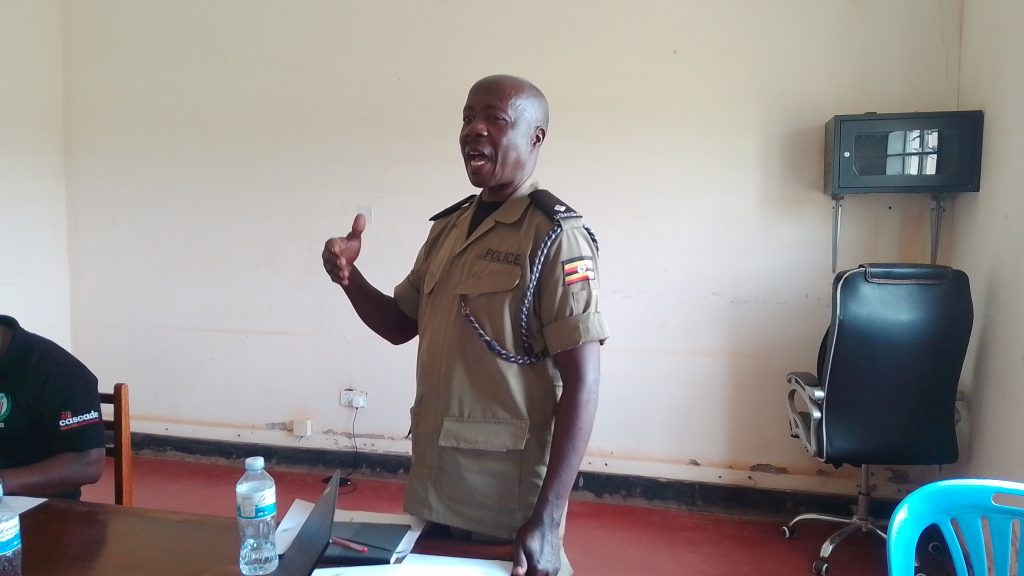
The Officer in Charge of Amwoma Police Station and Community Liaison Officer, Olwit Joseph, said police have an important role in preventing crimes that may arise from land disputes, although land ownership disputes themselves are generally handled through the appropriate land governance and justice institutions.

He said land conflicts can sometimes result in criminal offences including fighting, assault, malicious damage and, in serious cases, murder.

He explained that police work with Area Land Committees and other relevant institutions when dealing with land-related complaints, while intervening where criminal offences have been committed.

The police therefore encouraged community structures to identify and address conflicts before they develop into criminal incidents.

Paralegals taking justice closer to communities

Community-based paralegals trained by Caritas Lira are drawn from the communities they serve, with about ten trained paralegals operating in each participating sub-county.

Their role is particularly important for vulnerable people who may not have the financial means or knowledge required to pursue cases through formal courts.

Through sensitisation and mediation, the paralegals help community members understand land ownership, inheritance, succession, women’s rights and other aspects of land governance, while referring matters beyond their capacity to the appropriate authorities.

One of the experiences shared during the meeting demonstrated how the model is beginning to take root at community level.

A trained paralegal from Amwoma explained that after completing his training, his LC1 leadership handed over land-related matters in the community to him. He subsequently organised a community meeting attended by residents, the LC1 chairperson and members of the local leadership, through which land issues were discussed and addressed.

His responsibilities have since expanded beyond land matters. He was also asked to help monitor school attendance in the community, moving from household to household to establish whether parents were sending their children to school.

For PELUM Uganda and Caritas Lira, the experience demonstrates how trained community members can become important links between vulnerable communities and formal justice, land governance and local government institutions.

Stakeholders call for continued sensitisation

The participants agreed that communities still require more information about land laws, land registration procedures, inheritance, succession and the rights of women and children.

Caritas Lira Program Coordinator Francis Ojok said the engagement was intended to strengthen coordination among the different actors involved in land matters and help communities understand the correct procedures for acquiring and securing land.

He said land remains a primary factor of production and that people need to understand the steps involved in lawfully acquiring and securing ownership.

The LC3 Chairperson of Amwoma Sub-county, Opono Denis, urged participants to take the lessons from the meeting back to their communities, saying many conflicts are rooted in limited knowledge and poor planning.

He called for continued community sensitisation and encouraged stakeholders to work towards transforming land-related conflicts into peaceful solutions.

The meeting ended with a renewed call for stronger collaboration between community-based paralegals and decentralised justice and land governance institutions so that disputes can be identified and addressed early.

The stakeholders emphasised that prevention, awareness and peaceful mediation should remain the first line of response, while cases that fall outside community mechanisms should be referred to the appropriate land, police or judicial institutions.

For communities where land is the foundation of homes, agriculture and livelihoods, the message from the meeting was clear: knowing one’s rights, documenting ownership and resolving disputes early can prevent a land disagreement from becoming a much bigger problem.