en English
ar Arabiczh-CN Chinese (Simplified)nl Dutchen Englishfr Frenchde Germanit Italianpt Portugueseru Russianes Spanish
What are you looking for?

Monthly Archives: February 2026

“Serve Without Fear”: Bishop Wanok Challenges CCR Members on Faith and Self-Reliance

Bishop Wanok observed that fear remains one of the major obstacles hindering effective ministry within the CCR. He likened this to the biblical story of Jonah, who initially feared preaching to the people of Nineveh and attempted to flee, only to be renewed after spending three days in the belly of a fish before courageously proclaiming God’s message.

By Flavia Oyuu, Communications Office, Lira Diocese

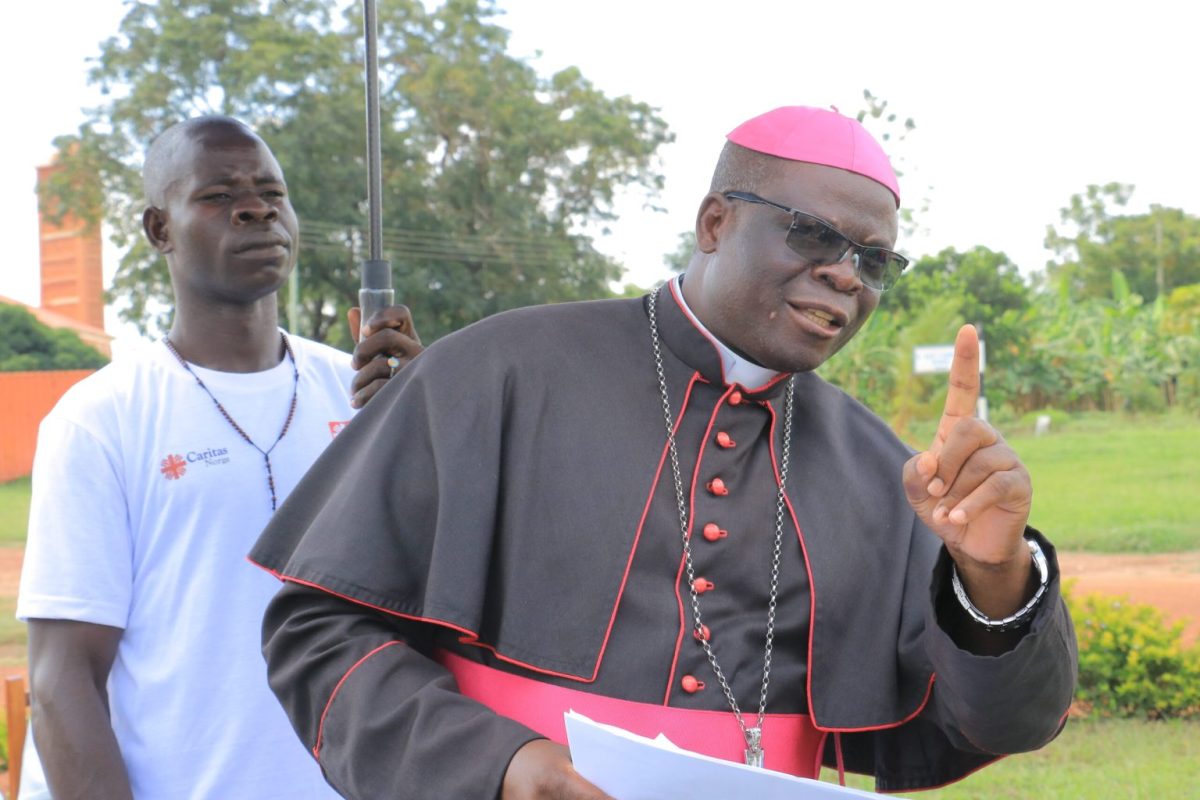
The Bishop of Lira Diocese, Rt. Rev. Sanctus Lino Wanok, has called upon members of the Catholic Charismatic Renewal (CCR) to strive for financial independence before engaging in ministry, cautioning that dependence on those they minister to can undermine their service.

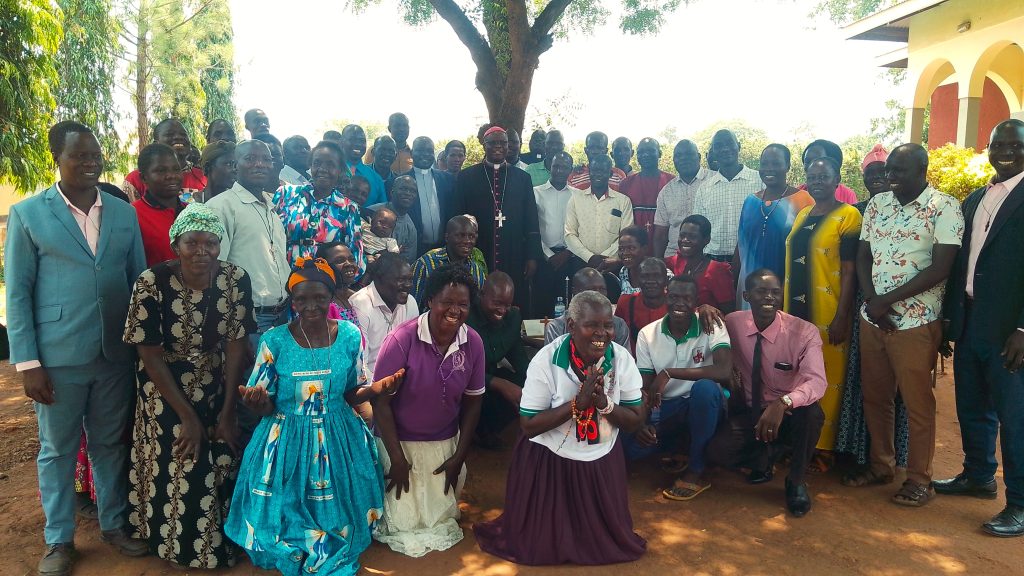
The Bishop made the call on Tuesday, February 25, 2026, during a courtesy visit by CCR diocesan leaders at his temporal residence at Nazareth Family Center, as his permanent residence nears completion.

The CCR leaders used the visit to seek pastoral guidance from the Bishop on various challenges facing the movement in the diocese.

Bishop Wanok observed that fear remains one of the major obstacles hindering effective ministry within the CCR. He likened this to the biblical story of Jonah, who initially feared preaching to the people of Nineveh and attempted to flee, only to be renewed after spending three days in the belly of a fish before courageously proclaiming God’s message.

He encouraged CCR members to renew their faith, repent, and begin afresh with courage and strength drawn from God in their ministry.

Drawing inspiration from St. Paul, who supported himself as a tent maker, the Bishop urged CCR members to have sustainable sources of livelihood to ensure financial stability, rather than relying on those they serve spiritually.

Emphasizing practical self-reliance, Bishop Wanok reiterated his vision that every household in the diocese should aim to rear at least 100 chickens as a means of livelihood. He said this initiative would also support those engaged in ministry to serve freely without financial pressure.
The Bishop further noted the importance of the CCR movement in the Catholic Church and urged its members to embrace humility, set aside pride, and dedicate themselves fully to serving God.

Speaking during the visit, Rev. Fr. Morris Otyang, the Spiritual Director of CCR Lira Diocese, explained that the meeting is an annual engagement during which CCR leaders present reports, share challenges, seek guidance, and receive blessings from the Bishop.

Fr. Otyang noted that some parishes have never participated in CCR meetings, raising concerns about the movement’s visibility across the diocese. He explained that limited parish participation makes it difficult to organize crusades and ministry activities, which would otherwise help Christians better understand CCR.

He added that many Christians mistakenly associate CCR only with healing and deliverance, yet the movement also runs programs in evangelization and outreach, scripture study and formation, social justice and charity, and ecumenical engagement, among others.

Fr. Otyang also reported that the leaders who met the Bishop were recently elected and are working well together. As part of their responsibilities, they mobilized resources to facilitate training for about 20 priests and religious in healing and deliverance at the Emmaus Center, Katikamu.

He noted with pride that Lira Diocese has consistently performed well in training programs at Emmaus Center, resulting in a strong pool of trained Emmaus Pastoral Workers (EPWs) to support pastoral activities. However, he cited poor coordination within the Gulu Ecclesiastical Province as a continuing challenge.

Meanwhile, Abibi Tonny Albo, the Provincial Coordinator of the Gulu Ecclesiastical Province, thanked the Bishop for granting the CCR leaders audience despite his busy schedule. He informed the Bishop about the ongoing construction of the Upper Room Spiritual Center, a facility intended to serve as a hub for CCR programs and formation of the laity. He said financial constraints have hindered completion of the project, and the current structure is insufficient to accommodate the growing number of trained EPWs.

Albo further observed that the Diocesan Students Outreach Ministry is facing challenges, particularly in capacity building. He said limitations in public speaking skills, especially in English, have affected outreach to universities and secondary schools.

He, however, noted that despite these challenges, the Lira Diocese Students Outreach Team remains the best-performing in Uganda.

End
Bishop Wanok Calls Faithful to “Choose Life” at Start of Lent

By Fr. Isaac Ojok, Communications Office, Lira Diocese

Barogole, Lira Diocese- February 22, 2026

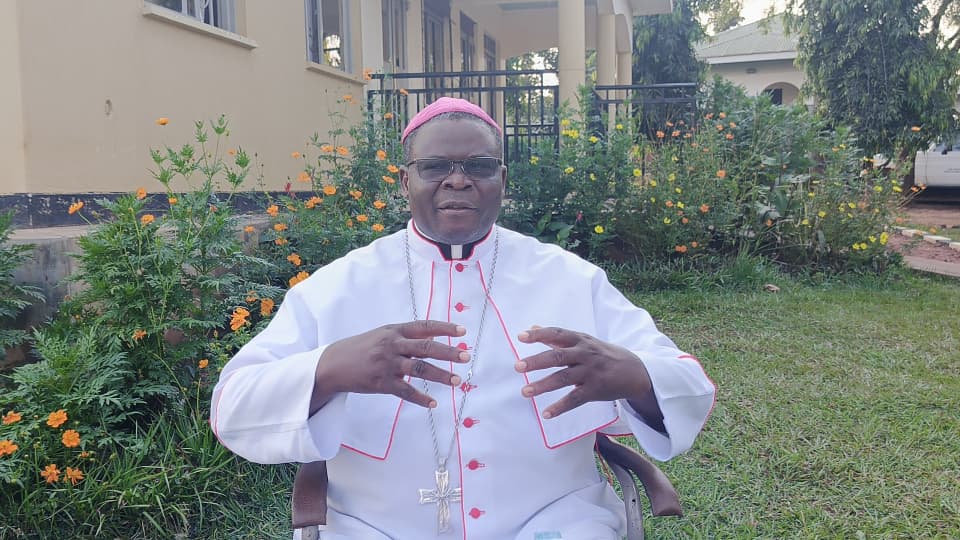
The Rt. Rev. Sanctus Lino Wanok, Bishop of Lira Diocese, on Sunday 22th February 2026 urged Christians to rediscover their true identity in God and to resist temptation by choosing life in Christ, as he presided over the Eucharistic celebration for the First Sunday of Lent at his residence, Nazareth Family Centre, Barogole.

In his homily themed “From the Garden to the Desert and Choosing Life,” Bishop Wanok reflected on the spiritual journey from the Garden of Eden to the desert where Jesus faced temptation, describing the biblical scenes as “mirrors in which we see our own lives.”

From Dust to Dignity

Drawing from the Book of Genesis, the Bishop reminded the faithful that human beings are both fragile and sacred.

“We are dust, fragile, weak, limited. But we are also God’s breath — sacred, dignified, loved,” he said, noting that Lent begins with the humbling but hopeful reminder of Ash Wednesday: “Remember that you are dust, and to dust you shall return.”

He cautioned that sin begins when people forget their identity as creatures dependent on God. “We are creatures, not gods. We are receivers, not masters of life,” he emphasized.

The Root of Temptation: Distrusting God

Reflecting on the fall of Adam and Eve, Bishop Wanok said temptation often begins with doubt.

According to the Bishop, sin promises fulfillment but ultimately leads to shame, fear, and hiding from God. “Sin always promises more, but delivers less,” he told the congregation.

Christ the New Adam

Referencing the Letter of St. Paul to the Romans, Bishop Wanok highlighted the contrast between Adam’s disobedience and Christ’s obedience. While sin entered the world through one man, he noted, grace has overflowed through Jesus Christ.

“Sin is real, but grace is greater,” he proclaimed, describing this as the central hope of the Lenten season.

He drew a striking comparison between Adam and Jesus: “Adam said yes to temptation in a garden full of food. Jesus says no to temptation in a desert of hunger. This is the turning point of history.”

The Three Areas of Temptation

The Bishop explained that Jesus’ temptations in the desert, bread, spectacle, and power, reflect the same struggles faced by believers today: attachment to comfort, pride and self-promotion, and the desire for control without obedience to God.

He noted that Jesus overcame temptation not through displays of power, but through trust in the Father and fidelity to the Word of God.

Lent as Spiritual Medicine

Encouraging practical commitment during the 40-day season, Bishop Wanok described prayer, fasting, and almsgiving as “medicine for the soul.”

“These are not punishments,” he said. “They restore trust in God, free us from slavery to appetite, and break the grip of selfishness.”

Quoting Psalm 51, he called on the faithful to seek a clean heart, a steadfast spirit, and restored joy in salvation, stressing that God desires “not perfect people, but repentant hearts.”

A Message to All

Addressing different groups in society, the Bishop challenged young people to seek meaning beyond pleasure and popularity, encouraged families to rebuild prayer and forgiveness in their homes, and reminded leaders to pursue service over power.

To those struggling or wounded, he offered reassurance: “Christ has already entered your desert.”

A Call to Choose Life

Concluding his homily, Bishop Wanok urged Christians not to see Lent as a season of guilt, but as a time of renewed hope.

“From Adam to Christ, from failure to grace, from temptation to victory, God is offering us again what was lost in the Garden: friendship with Him,” he said.

The First Sunday of Lent marks the beginning of the Church’s 40-day spiritual preparation for Easter, inviting the faithful to deeper conversion and renewed commitment to God.

End

Lira Diocese Education Secretary Urges Lango to Reduce Dependence on Foreign Aid

She emphasized that excessive dependence on foreign donors continues to widen development gaps, particularly in infrastructure such as schools and health facilities.

By Flavia Oyuu, Communications Office, Lira Diocese

The Education Secretary of Lira Diocese, Rev Sr. Agnes Atala, MSMMC has called on leaders and residents of the Lango sub-region to shift away from over-reliance on international donors and embrace local resource mobilization for sustainable development.

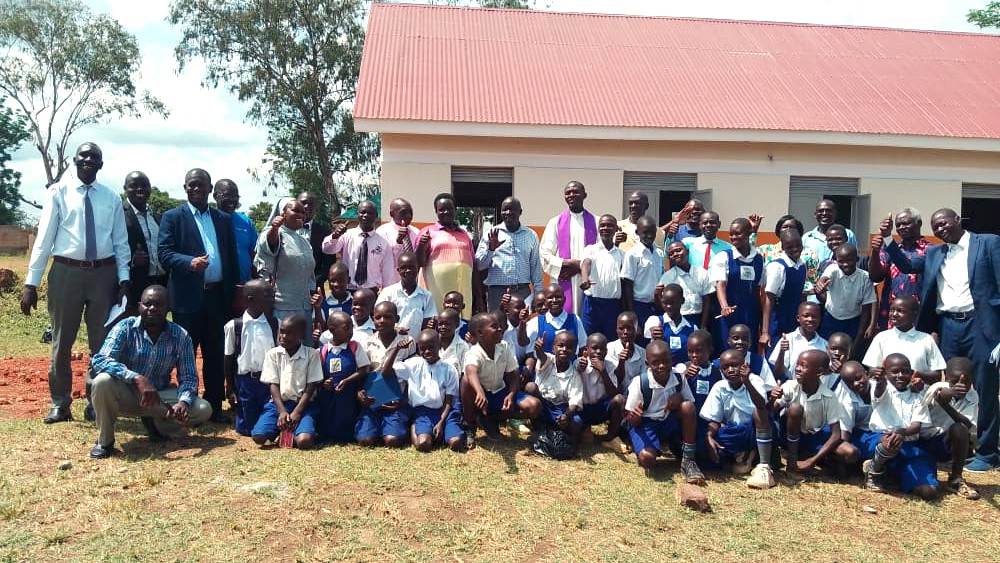
Sr. Atala made the remarks during the official commissioning of a renovated classroom block at Anai Primary School in Anai Ward, Lira City West Division, and Lira City. The renovation was undertaken by Lira Diocese with funding support from the SPICMA a UK based Organization.

She emphasized that excessive dependence on foreign donors continues to widen development gaps, particularly in infrastructure such as schools and health facilities. According to Sr. Atala, meaningful and sustainable development can only be realized if local communities cultivate a culture of contributing towards their own progress.

She encouraged residents to develop a passion for supporting community initiatives, noting that many Western donors sacrifice personal resources to support development projects abroad.

The Parish Priest of St Peters Anai Catholic Parish, Rev. Fr. Isaac Ojok, who authored the project proposal seeking support from the U.K.-based charity, revealed that the diocese secured a grant of 22 million shillings to renovate two classroom blocks at Anai Primary School.

Fr. Ojok, who also serves as the Diocesan Communications Secretary, said the renovated classrooms symbolize partnership, dedication, and a shared vision in delivering quality education. He added that the Church remains committed to nurturing children’s moral values and urged school administrators to maintain the facility responsibly.

He further noted that foundation bodies play a vital role in complementing government efforts in education service delivery.

Lira City Mayor, Sam Atul, commended the school’s headteacher for his commitment to improving academic performance. He disclosed that in the next financial year, the City Council has earmarked funds to fence the school to curb increasing cases of intruders vandalizing school and teachers’ property.

The headteacher, Ojok Joel Rokko, expressed gratitude to Lira Diocese and the SPICMA organization for renovating two classrooms that will benefit Primary Three learners. He noted that the structures had previously been dilapidated and dusty, affecting the learning environment.

Rokko also highlighted the school’s 2025 Primary Leaving Examination (PLE) performance, where out of 50 candidates, eight scored Division One, 37 obtained Division Two, and five achieved Division Three.

END

210 Young Christians Confirmed In Dokolo Catholic Parish During Bishop Wanok’s Pastoral Visit

Bishop Wanok expressed deep concern over the growing number of street children in the Lango sub-region, attributing the situation largely to neglect within homes.

By Flavia Oyuu, Communication’s Office, Lira Diocese

Christians in Dokolo District were spiritually uplifted as Rt. Rev. Sanctus Lino Wanok, Bishop of Lira Diocese, conducted a two-day Pastoral Visit during which he confirmed a total of 210 young Christians.

The Pastoral Visit, marked by prayer, teaching, and sacramental celebration, was not merely ceremonial. It served as a strong pastoral call especially to parents to reclaim their God-given responsibility in nurturing and guiding their children.

The Bishop presided over the confirmation of 145 young Christians at St. Francis Xavier Dokolo Catholic Parish on the first day . In his homily, he urged parents to take an active role in the moral and spiritual upbringing of their children.

Bishop Wanok expressed deep concern over the growing number of street children in the Lango sub-region, attributing the situation largely to neglect within homes. He reminded parents that the family remains the first school of faith, discipline, and values, and that their involvement is crucial in shaping responsible and upright citizens.

Addressing the wider Christian community, the Bishop also reflected on the gift of the Holy Spirit, calling on the faithful to embrace His guidance and teachings. He encouraged them to allow the Holy Spirit to strengthen their faith and lead them on the path of righteousness.

The second day of the Pastoral Visit saw the Bishop confirm 65 young Christians at St. Mary’s Nursery and Primary School. The occasion coincided with the school’s 10th anniversary celebrations, which the Bishop officiated.

He commended the school administration and teachers for their dedication to education, describing learning as a transformative journey that molds children into capable and confident individuals prepared to face the world. Bishop Wanok also praised the discipline exhibited by the pupils, noting that it reflected the school’s commitment to holistic formation.

Impressed by the progress made, the Bishop pledged his continued support towards the development of the institution.

The Bishop’s Visit was not only a moment of sacramental grace, but also a message of hope and renewal. Through his words of wisdom, guidance, and encouragement, Bishop Wanok left a lasting impact on young Christians, parents, teachers, and the wider community.

End

Bishop Sanctus Lino Wanok and Sheikh Ibrahim Okello Call for Spiritual Renewal During Lent and Ramadan

“The danger is not in doing well,” he noted, “but in turning good deeds into performances.” He described Lent not as a form of spiritual theater, but as an expression of hidden love rooted in sincerity and humility.

By Flavia Oyuu, Communications Office, Lira Diocese

At the beginning of the Lenten season, the Bishop of Roman Catholic Diocese of Lira, Sanctus Lino Wanok, has called on Catholics to deeply reflect on the three pillars of Lent: prayer, fasting, and almsgiving.

While leading the first Mass of Lent at Uganda Martyrs Cathedral this morning, Bishop Wanok urged Christians to focus not merely on performing these acts, but on the intention behind them. He emphasized that Jesus teaches believers not to perform righteous deeds to be seen by others, not to pray to impress, and not to fast in order to appear holy.

“The danger is not in doing well,” he noted, “but in turning good deeds into performances.” He described Lent not as a form of spiritual theater, but as an expression of hidden love rooted in sincerity and humility.

The Bishop encouraged the faithful to use this season as a time of honest self-examination, posing reflective questions: Where is my heart divided? What needs to be torn away? What attachments are weakening my love for God? Where do I need reconciliation?

He further explained that each of the three pillars of Lent serves a deeper spiritual purpose. Fasting weakens attachment to comfort, almsgiving reduces attachment to possessions, and prayer diminishes reliance on self-sufficiency. Together, he said, they create space for God in one’s life.

Bishop Wanok reminded the congregation that while the ashes received on Ash Wednesday will eventually fade, the grace of the Lenten season can leave a lasting spiritual mark. He stressed that Lent is not about gloominess, but about freedom, freedom from sin, pride, and anything that hinders wholehearted love for God.

“We begin in humility, as dust, but we journey toward Easter and the promise of resurrection,” he said. “Today we acknowledge who we are, and we remember whose we are.”

As the Lenten season begins, Bishop Wanok’s message calls on the faithful to move beyond outward observance and embrace genuine interior transformation. Through sincere prayer, sacrificial fasting, and generous almsgiving, Christians are invited to prepare their hearts for Easter with humility, freedom, and renewed devotion.

In Lira Urban West Archdeaconry in the Diocese of Lango, the Archdeacon Rev. Canon Dr. Jacky Otto Olima, has urged Christians to use the Lenten season as a time for reconciliation and restoring broken relationships through forgiveness.

Speaking to the media, Rev. Canon Dr. Olima encouraged believers to forgive those who may have wronged or offended them in the past, emphasizing that Lent is a period of reflection, healing, and spiritual renewal.

He noted that the recent political elections left many people hurt, heartbroken, oppressed, and disappointed. According to him, such emotional and social tensions have contributed to increased sin in the Lango sub-region, including murder and other forms of injustice.

Rev. Canon Dr. Olima further revealed that the church will dedicate this Lenten season to three key petitions before God, including prayers for unity in the aftermath of the political period and a renewed call for forgiveness among the faithful.

The Archdeacon emphasized that true observance of Lent goes beyond fasting and prayer, calling on Christians to actively pursue peace and reconciliation. He urged the community to embrace forgiveness and unity as essential steps toward healing divisions and fostering harmony within society.

Meanwhile, the District Khadi of the Lango Muslim Supreme Council, Sheikh Ibrahim Okello, has called on Muslim communities to faithfully observe the holy month of Ramadan by fasting from pre-dawn to sunset and dedicating more time to prayer and reading the Holy Qur’an.

Speaking to the media, Sheikh Okello emphasized that Ramadan is not only about abstaining from food and drink, but also about spiritual and physical discipline. He encouraged Muslims to use the sacred period to strengthen their faith and avoid negative behaviors such as gossiping, backbiting, lying, and engaging in unnecessary arguments.

He described Ramadan as a time of deep spiritual renewal and heightened devotion, where believers are given an opportunity to draw closer to Allah through prayer, reflection, and good deeds.

However, Sheikh Okello clarified those certain vulnerable groups including pregnant and breastfeeding women, the sick, the elderly and young children are exempt from fasting, in accordance with Islamic teachings.

Sheikh Okello urged the faithful to make meaningful use of the holy month by nurturing discipline, compassion, and self-control. He noted that when observed with sincerity and commitment, Ramadan becomes a powerful period of transformation for both individuals and the wider community.

End